- All Drug Categories
- Home
- Anti-cancer Drugs
- Healthcare Products
- Medical Information
- Statement
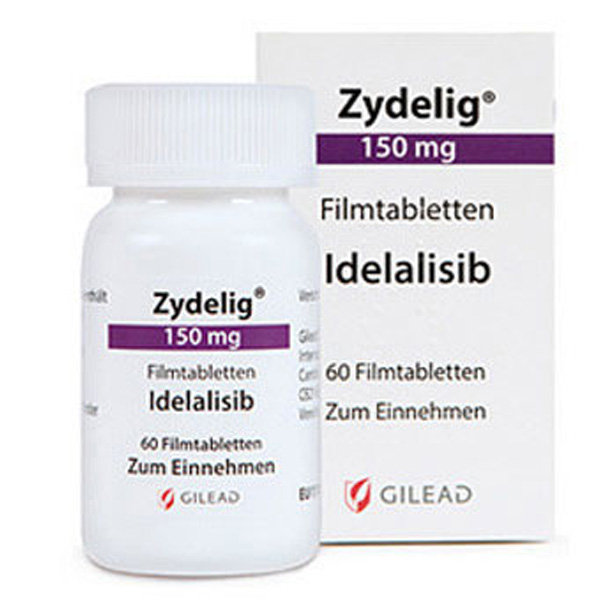
All Names: Zydelig、ldelalisib、艾代拉里斯、艾代拉利司、艾德拉尼
Indications:Suitable for patients with recurrent chronic lymphocytic leukemia (CLL), when used in combination with rituximab, and for patients with other comorbidities who can be considered suitable for treatment with only rituximab.
Manufacturer:Gilead Sciences,USA
Customs Clearance Procedure:If the customs requires the package for customs clearance, please pay the customs clearance fee according to the content of EMS SMS and customs regulations.
Idelalisib is an oral small molecule PI3K δ inhibitor developed by Gilead Sciences in the United States. It is mainly used to treat relapsed chronic lymphocytic leukemia (CLL), relapsed follicular B-cell non Hodgkin lymphoma (FL), and relapsed small lymphocytic lymphoma (SLL).
1、 Drug name
1. Common name: Idelalisib
2. Product Name: Zydelig
2、 Indications
1. Recurrent chronic lymphocytic leukemia (CLL): Used in combination with rituximab, suitable for patients with recurrent CLL who consider the use of rituximab alone as an appropriate treatment option due to other comorbidities.
2. Recurrent follicular B-cell non Hodgkin lymphoma (FL): suitable for FL patients who have experienced relapse after receiving at least two systemic treatments.
3. Recurrent small lymphocytic lymphoma (SLL): suitable for SLL patients who have experienced relapse after receiving at least two systemic treatments.
3、 Specifications and characteristics
1. Specification: 150mg/tablet.
2. Appearance: 150mg tablets: pink, oval shaped, film coated tablets, with "GSI" engraved on one side and "150" engraved on the other side.
4、 Main components
Active ingredient: Idelalisib, is a phosphatidylinositol 3-kinase (PI3K δ) inhibitor.
5、 Usage and dosage
1. Recommended dosage: The recommended starting dose is 150 milligrams, taken orally twice a day. It can be taken with meals or on an empty stomach, and the pill should be swallowed whole. Treatment should be continued until the disease progresses or unacceptable toxicity occurs.
2. Dose adjustment: When specific toxic reactions occur, dose adjustment should be made according to the instructions in the manual.
3. Hepatotoxicity: If the elevation of alanine aminotransferase/aspartate aminotransferase is greater than 5-20 times the normal upper limit, medication should be suspended. After it returns to ≤ 1 times the normal upper limit, medication can be resumed at a dose of 100 milligrams twice a day; If it is greater than 20 times the normal upper limit or recurrent liver toxicity, the medication should be permanently discontinued.
4. Diarrhea: When moderate diarrhea occurs (4-6 bowel movements per day compared to baseline), maintain the original dosage and closely monitor; When severe diarrhea occurs (with an increase of ≥ 7 bowel movements per day) or hospitalization is required, medication should be suspended and resumed at a dose of 100 milligrams twice a day after recovery; When life-threatening diarrhea occurs, medication should be permanently discontinued.
5. Pneumonia: Any symptomatic pneumonia should be permanently discontinued.
6. Neutropenia: When the absolute neutrophil count is below 0.5 g/L, medication should be discontinued. After recovery to ≥ 0.5 g/L, medication can be resumed at a dose of 100 mg twice daily.
7. Other severe or life-threatening toxicities: Suspend medication and resume at a dose of 100 milligrams twice daily after the toxicity subsides. If the relevant toxicity occurs again, the medication should be permanently discontinued.
6、 Medication precautions
1. Omission treatment: If the missed dose is less than 6 hours, it should be taken immediately and the next dose should be taken at the usual time. If the missed dose exceeds 6 hours, the missed dose should be skipped and the next dose should be taken at the regular time.
2. Usage: Can be taken with food or on an empty stomach. The pill should be swallowed whole and should not be chewed or crushed.
7、 Medication for special populations
1. Pregnant women: Based on animal research, it may cause harm to the fetus. Pregnant women are prohibited from using contraception, and women with fertility should use effective contraceptive measures during and at least one month after treatment.
2. Breastfeeding women: It is not yet clear whether it is secreted into breast milk. The importance of medication for mothers should be considered when deciding to stop breastfeeding or medication.
3. Children: The safety and efficacy in patients under the age of 18 have not yet been determined.
4. Elderly patients (≥ 65 years old): Compared with young patients, elderly patients have a higher proportion of serious adverse reactions, discontinuation of medication due to adverse reactions, and death, and require close monitoring.
5. Renal insufficiency: For patients with creatinine clearance rate ≥ 15 mL/min, dose adjustment is not necessary.
6. Liver dysfunction: There is limited data on patients with baseline liver dysfunction (alanine aminotransferase/aspartate aminotransferase>2.5 times the upper limit of normal or bilirubin>1.5 times the upper limit of normal). Such patients should closely monitor for signs of toxicity when taking medication and follow dosage adjustment guidelines.
8、 Adverse reactions
1. Serious Warning: Fatal and/or severe hepatotoxicity, severe diarrhea/colitis, pneumonia, and intestinal perforation may occur.
2. Common adverse reactions (incidence ≥ 20%): diarrhea, fever, fatigue, nausea, cough, pneumonia, abdominal pain, chills, and rash.
3. Common laboratory abnormalities (incidence ≥ 30%): neutropenia, hypertriglyceridemia, hyperglycemia, elevated alanine aminotransferase, elevated aspartate aminotransferase.
4. Other serious adverse reactions: severe skin reactions, allergic reactions, neutropenia.
9、 Contraindications
Individuals with a history of severe allergic reactions to Edeleralis, including allergic reactions and toxic epidermal necrolysis.
10、 Drug interactions
1. Medications that affect adaralis:
Strong CYP3A inducers (such as rifampicin, phenytoin, carbamazepine, St. John's wort): Avoid co administration as they significantly reduce the blood concentration of escitalopram.
Strong CYP3A inhibitors: When used in combination, close monitoring of signs of toxicity of escitalopram is necessary, and dosage adjustments should be made as needed.
2. The impact of adalis on other medications:
CYP3A substrate: Edeleralis is a potent CYP3A inhibitor, and should be avoided in combination with CYP3A substrates such as midazolam as it significantly increases the blood concentration of the substrate drug.
11、 Storage method
1. The storage temperature ranges from 20 ° C to 30 ° C (68 ° F to 86 ° F), allowing for short distance transportation up to 15 ° C to 30 ° C (59 ° F to 86 ° F).
2. Store only in original packaging.
3. Do not use if the bottle mouth seal is damaged or missing.
Zydeliginformation