- All Drug Categories
- Home
- Anti-cancer Drugs
- Healthcare Products
- Medical Information
- Statement
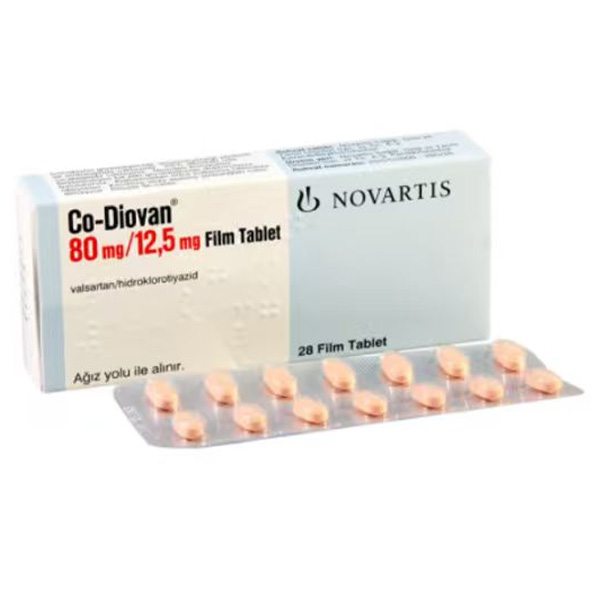
All Names: Co-Diovan、Hydrochlorothiazide and Valsartan Tablets、氢氯噻嗪缬沙坦片、复代文
Indications:Suitable for primary hypertension patients aged 18 and above who have poor blood pressure control with monotherapy (using valsartan or hydrochlorothiazide alone).
Manufacturer:Novartis, Switzerland
Customs Clearance Procedure:If the customs requires the package for customs clearance, please pay the customs clearance fee according to the content of EMS SMS and customs regulations.
Co Diovan, originally developed by Novartis, is a compound formulation of angiotensin II receptor antagonist valsartan and thiazide diuretic hydrochlorothiazide.
1、 Drug name
1. Product Name: CO-DIOVAN ® (Fu Dai Wen)
2. General ingredients: valsartan/hydrochlorothiazide
2、 Indications
Suitable for the treatment of hypertension in adults aged 18 and above. For patients with poor blood pressure control treated with monotherapy, this product can be used for combination therapy.
3、 Specifications and characteristics
This product is a film coated sheet:
80mg/12.5mg: light orange, oval, slightly convex.
4、 Main components
Active ingredients: Each tablet contains 80mg of valsartan and 12.5mg of hydrochlorothiazide.
5、 Usage and dosage
1. Regular dosage: once a day, one tablet each time. According to clinical needs, specifications such as 80mg/12.5mg, 160mg/12.5mg, and 160mg/25mg can be selected, with a maximum daily dose of 320mg/25mg.
2. Effective time: The maximum antihypertensive effect usually appears within 2 to 4 weeks after medication.
6、 Dose adjustment
1. Renal insufficiency:
Mild to moderate renal insufficiency (creatinine clearance rate>30ml/min): No dose adjustment required.
Severe renal insufficiency (creatinine clearance rate<30ml/min) or anuria: contraindicated.
2. Liver dysfunction:
Mild to moderate liver dysfunction: No dose adjustment required.
Severe liver dysfunction: prohibited.
3. Obstructive diseases of the biliary tract:
Use with special caution.
7、 Medication precautions
1. Before and after meals: This product can be taken with food or on an empty stomach. Eating can reduce the area under the blood concentration time curve of valsartan by about 48%, but it does not affect clinical efficacy.
2. Omission treatment: If missed, it should be replenished as soon as possible when remembered. If the next dose is approaching, skip the missed dose and take the next dose according to the original plan. Do not double the dose.
3. Post vomiting treatment: If vomiting occurs after taking medication, there is no need to take it again, just wait for the next regular medication time.
4. Other important matters:
During medication, regular monitoring of electrolytes (especially blood potassium and sodium), renal function, and blood pressure should be carried out.
When experiencing symptoms of low blood pressure (such as dizziness and fatigue), one should lie flat and rest, and if necessary, intravenous infusion of physiological saline should be administered.
Long term users should pay attention to sun protection, regularly check their skin, and be alert to the risk of non melanoma skin cancer.
8、 Medication for special populations
1. Pregnant women: prohibited. This product can affect the renin-angiotensin system, leading to fetal injury or even death.
2. Breastfeeding women: Not recommended for use. Hydrochlorothiazide can enter breast milk, but it is unclear whether valsartan enters breast milk.
3. Women with fertility: Pregnancy should be avoided during medication as this product poses potential risks to the fetus.
4. Children (under 18 years old): Safety and efficacy have not been established yet.
5. Elderly patients (aged 65 and above): Some elderly patients have slightly higher exposure to valsartan, but there is no clinically significant difference; The clearance rate of hydrochlorothiazide may decrease, and monitoring needs to be strengthened.
6. Individuals with renal insufficiency:
Mild to moderate: usable.
Severe (creatinine clearance rate<30ml/min): Prohibited.
7. Patients with liver dysfunction:
Mild to moderate: usable.
Severe: Disabled.
8. Biliary obstruction: Use with caution.
9. Patients with renal artery stenosis: Use with caution in patients with unilateral or bilateral renal artery stenosis, and monitor blood urea nitrogen and creatinine.
10. Patients with heart failure or myocardial infarction: Renal function should be evaluated before medication and closely monitored during treatment.
9、 Adverse reactions
1. Common adverse reactions: dizziness, fatigue, cough, diarrhea, muscle pain, joint pain, dehydration, hypotension, blurred vision, tinnitus, etc.
2. Laboratory abnormalities: elevated blood uric acid, elevated blood bilirubin, elevated blood creatinine, elevated blood urea, hypokalemia, hyponatremia.
3. Valsartan related: decreased hemoglobin, decreased hematocrit, decreased neutrophils, decreased platelets, allergic reactions, angioedema, rash, abnormal liver function.
4. Hydrochlorothiazide related:
Extremely common: elevated blood lipids and hypokalemia.
Common: hypomagnesemia, hyponatremia, hyperuricemia, decreased appetite.
Rare: hypercalcemia, hyperglycemia, impaired glucose tolerance, thrombocytopenia, leukopenia, granulocytopenia, hemolytic anemia.
Eye: Acute angle closure glaucoma, visual impairment.
Skin: photosensitive reaction, toxic epidermal necrolysis, skin lupus like reaction.
Other: pancreatitis, cholestasis, arrhythmia, acute kidney injury, erectile dysfunction.
10、 Contraindications
1. Individuals allergic to valsartan, hydrochlorothiazide, other sulfonamide drugs, or any excipients of this product.
2. Pregnant women.
3. Biliary cirrhosis and cholestasis.
4. Anuria.
5. Severe liver dysfunction.
6. Severe renal insufficiency (creatinine clearance rate<30ml/min).
7. Refractory hypokalemia, hyponatremia, hypercalcemia, and symptomatic hyperuricemia.
8. It is used in combination with the drug containing aliskiren for patients with diabetes or renal insufficiency (glomerular filtration rate<60ml/min/1.73m ²).
11、 Drug interactions
1. Lithium agent: This product can reduce the renal clearance of lithium and increase the risk of lithium poisoning. When used together, blood lithium concentration should be closely monitored.
2. Potassium preserving drugs and potassium supplements: Valsartan has a potassium preserving effect, and caution should be exercised when used with potassium supplements, potassium diuretics, and potassium salt substitutes. Blood potassium should be monitored regularly.
3. Non steroidal anti-inflammatory drugs: can weaken the antihypertensive effect and increase the risk of kidney function damage, especially in the elderly or those with insufficient blood volume.
4. Aligilen: It is prohibited for patients with diabetes or moderate to severe renal insufficiency to use together to avoid increasing the risk of hypotension, hyperkalemia and kidney damage.
5. Other antihypertensive drugs: Thiazide diuretics can enhance the effects of other antihypertensive drugs.
6. Hypoglycemic drugs: hydrochlorothiazide may affect glucose tolerance. When used in combination with diabetes patients, blood glucose should be monitored, and the dosage of hypoglycemic drugs should be adjusted if necessary.
7. Digoxin: Hypokalemia caused by hydrochlorothiazide can induce digoxin arrhythmia, and blood potassium and electrocardiogram should be monitored when used in combination.
8. Alcohol, barbiturates, and anesthetics: can exacerbate orthostatic hypotension, and alcohol consumption should be avoided during medication.
9. Kaolaifenamide and Kaolaitepo: can reduce the absorption of hydrochlorothiazide, and should be taken at different times (at least 4 hours apart).
10. Vitamin D and calcium salts: can enhance the effect of hydrochlorothiazide on raising blood calcium, caution should be exercised.
12、 Storage method
1. Store in the original packaging box to avoid moisture.
2. Store out of sight and reach of children.
3. Expired drugs are not allowed to be used.
Co-Diovaninformation