- All Drug Categories
- Home
- Anti-cancer Drugs
- Healthcare Products
- Medical Information
- Statement
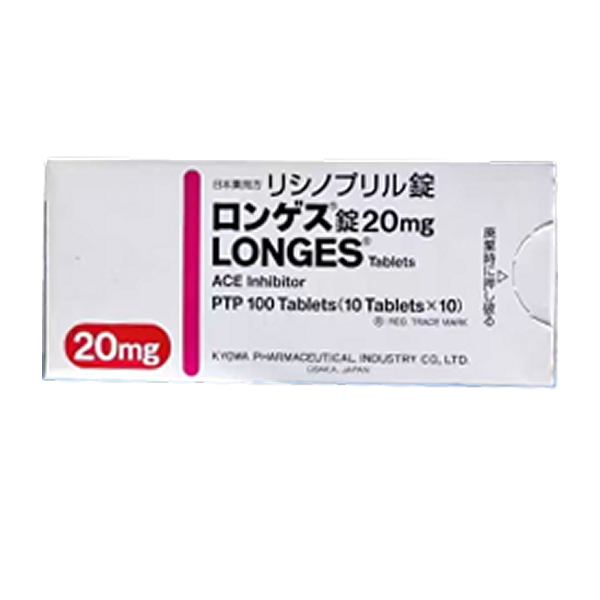
All Names: Lisinopril、Longes Tablets、ロンゲス錠、赖诺普利
Indications:Suitable for adult and children aged 6 and above with hypertension, as well as adult patients with mild to moderate chronic heart failure who have insufficient efficacy after receiving basic treatments such as digitalis preparations and diuretics.
Manufacturer:Kyowa Kirin Pharmaceutical Co., Ltd
Customs Clearance Procedure:If the customs requires the package for customs clearance, please pay the customs clearance fee according to the content of EMS SMS and customs regulations.
Lisinopril is an angiotensin-converting enzyme inhibitor that exerts a hypotensive and cardiac load improving effect by inhibiting the production of angiotensin II.
1、 Drug name
Longes, a type of angiotensin-converting enzyme inhibitor (ACEI).
2、 Indications
1. Hypertension.
2. Chronic heart failure (mild to moderate): limited to use only when the effect of basic treatments such as digitalis preparations and diuretics is still insufficient.
3、 Specifications and characteristics
1. 20mg * 100 tablets/box.
2. Oral tablets.
4、 Main components
Lysinopril hydrate.
5、 Usage and dosage
1. Hypertension (adults): usually 10-20mg, taken orally once a day.
2. Hypertension (children aged 6 and above): 0.07mg/kg, taken orally once daily.
3. Chronic heart failure (mild to moderate): Used in combination with basic treatments such as digitalis and diuretics, usually 5-10mg orally once a day. For patients with renal impairment, 2.5mg is recommended for the first time.
6、 Dose adjustment
1. Children should not exceed 20mg per day.
2. Elderly patients with heart failure are recommended to start with 2.5mg.
3. Severe renal impairment (CrCl ≤ 30mL/min or Scr ≥ 3mg/dL): dose halved or dosing interval prolonged.
7、 Medication precautions
1. Before and after meals: ACEIs are usually not significantly affected by diet.
2. Omission of medication: It is generally recommended to take it when discovered on the same day, and skip it when it is close to the next medication time. Do not double the dosage.
3. Vomiting: If medication is visible after vomiting, supplementation may be considered, but consultation with a physician is necessary.
4. Other: May cause dizziness, vertigo, and attention should be paid when operating dangerous machinery (such as driving); It is recommended to discontinue medication 24 hours before surgery.
8、 Medication for special populations
1. Pregnant women: prohibited. Women of childbearing age need to confirm that they are not pregnant before taking medication, regularly confirm during medication, and stop taking medication immediately after pregnancy.
2. Breastfeeding period: Weighing the pros and cons, animal experiments have shown that it can enter breast milk.
3. Children: There is no clinical trial data available for children under 6 years old, low birth weight infants, newborns, infants, and children with CrCl<30mL/min/1.73m ².
4. Elderly people: Starting from low doses, pay attention to excessive blood pressure reduction and renal function decline (BUN, Cr increase).
9、 Adverse reactions
1. Serious side effects (frequency unknown): angioedema (dyspnea, facial, tongue, and throat swelling), intestinal angioedema, acute kidney injury, hyperkalemia, pancreatitis, TEN, Stevens Johnson syndrome, pemphigus like symptoms, hemolytic anemia, thrombocytopenia, liver dysfunction, jaundice SIADH。
2. Common side effects (≥ 5%): cough.
3. Other (0.1-5% or less): headache, dizziness, nausea, vomiting, diarrhea, rash, itching, elevated BUN/Cr, anemia, hyperkalemia, etc.
10、 Contraindications
1. People who are allergic to the ingredients of this medicine.
2. Within 36 hours after using or discontinuing sacubitril valsartan sodium hydrate (Entresto).
3. History of angioedema (ACEI related, hereditary, acquired, idiopathic, etc.).
4. Patients undergoing plasma exchange using cellulose immobilized with dextran sulfate, polyvinyl alcohol immobilized with tryptophan, or polyethylene terephthalate adsorbers.
5. Patients undergoing hemodialysis using AN69 membrane.
6. Pregnant or potentially pregnant women.
7. Patients with diabetes who are taking aliskiren, unless their blood pressure is poorly controlled.
11、 Drug interactions
1. Combination contraindications: Sacubitril valsartan, specific plasma exchange adsorbers mentioned above, AN69 membrane dialysis.
2. Usage precautions:
Potassium sparing diuretics/potassium supplements: hyperkalemia.
Diuretics: enhance blood pressure lowering effect, caution should be exercised when using them for the first time.
Lithium preparations: risk of lithium poisoning.
NSAIDs: weaken blood pressure lowering effects and may worsen kidney function.
Stimulating enzyme preparation: excessive blood pressure reduction.
Alikiren/ARB: increases the risk of kidney damage, hyperkalemia, and hypotension.
12、 Storage method
Stored at room temperature, with a shelf life of 3 years.
Longesinformation