- All Drug Categories
- Home
- Anti-cancer Drugs
- Healthcare Products
- Medical Information
- Statement
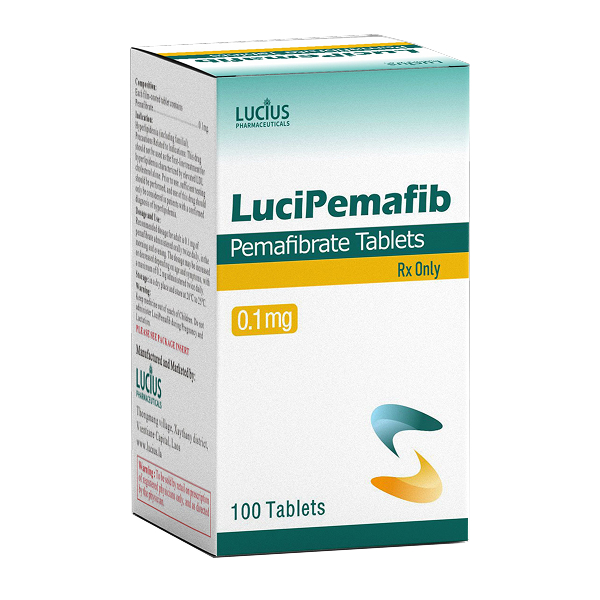
All Names: Pemafibrate、Parmodia、佩玛贝特、派龙达、パルモディア錠
Indications:Adult patients diagnosed with hyperlipidemia (including familial) and meeting the indications criteria.
Manufacturer:LUCIUS PHARMACEUTICAL (LAOS) CO., LTD
Customs Clearance Procedure:If the customs requires the package for customs clearance, please pay the customs clearance fee according to the content of EMS SMS and customs regulations.
Pemafibrate is a novel selective peroxisome proliferator activated receptor alpha (PPAR alpha) modulator, which belongs to the lipid-lowering drug category. Compared with traditional beta drugs, Pemafibrate has less impact on blood glucose, liver and kidney function, and is safer.
1、 Drug name
1. Common name: Pemafibrate
2. Product Name: Balmodia Tablets
3. Japanese name: プマィプラート Ingot
2、 Indications
1. Hyperlipidemia (including familial hyperlipidemia).
2. Note: For hyperlipidemia with elevated LDL cholesterol alone, it is not the preferred medication. Before use, a thorough examination should be conducted, and medication can only be considered after diagnosis.
3、 Specifications
0.1mg/tablet
4、 Main components
Each tablet contains active ingredient: Pemafibrate 0.10mg.
5、 Usage and dosage
1. Conventional dose: 0.1mg per dose for adults, taken orally twice a day in the morning and evening.
2. Maximum dose: The dosage can be adjusted according to age and symptoms, with a maximum dose of 0.2mg per dose, twice a day.
6、 Dose adjustment
1. Patients with renal insufficiency: those with eGFR below 30mL/min/1.73m ² should start with a low dose, reduce or extend the dosing interval, with a maximum dose of 0.2mg per day.
2. Patients with liver dysfunction: Children Pugh A grade cirrhosis and other liver dysfunction patients. If necessary, consider reducing the dosage, and be cautious when increasing the dosage.
7、 Medication precautions
1. Before and after meals: It is recommended to take it after meals. Research has shown that postprandial administration has a slight decrease in Cmax and AUC compared to fasting administration (geometric mean ratios of 0.873 and 0.911, respectively), but the overall effect is not significant.
2. Leakage treatment: It is recommended to consult a doctor or pharmacist. The general principle is to take the missed dose as soon as possible after discovery, and skip the missed dose if it is close to the next medication time.
3. Vomiting treatment: If vomiting occurs immediately after taking medication, it may be necessary to take additional medication. It is recommended to consult a doctor.
4. Usage: If packaged in PTP, it should be taken out of the PTP tablet to avoid swallowing sharp edges and damaging the esophagus.
8、 Medication for special populations
1. Pregnant women: prohibited. Animal experiments have shown embryonic toxicity.
2. Breastfeeding women: breastfeeding is not recommended. Animal experiments have shown that drugs can be secreted into breast milk.
3. Children: Clinical trials for efficacy and safety have not yet been conducted.
4. Elderly people: generally with low physiological function, medication should be administered with caution and closely monitored.
5. Patients with renal insufficiency: those with eGFR below 30mL/min/1.73m ² need to reduce their dosage. Mild to moderate renal insufficiency patients may have increased exposure, but the degree dependence is not significant.
6. Patients with liver dysfunction: severe liver disorders, Child Pugh B/C cirrhosis, or biliary obstruction are contraindicated. People with fatty liver and mild cirrhosis have increased exposure and should be cautious.
7. Individuals with a history of gallstones: use with caution as this medication has been reported to have formed gallstones.
9、 Adverse reactions
1. Major side effects:
Rhabdomyolysis (incidence unknown): characterized by muscle pain, fatigue, elevated CK, elevated blood/urine myoglobin, and may be accompanied by acute kidney injury. If symptoms appear, the medication should be stopped immediately.
2. Other side effects (with an incidence rate of over 1%): cholelithiasis.
3. The incidence rate is below 0.1% -1%: abnormal liver function, elevated AST, elevated ALT, elevated CK, increased myoglobin in blood, muscle pain, rash, pruritus, diabetes (including worsening), increased glycosylated hemoglobin, increased low-density lipoprotein, and increased blood uric acid.
10、 Contraindications
1. Individuals with a history of allergies to the ingredients of this medication.
2. Severe liver dysfunction, Child Pugh B or C cirrhosis, or biliary obstruction.
3. Patients with gallstones (with reports of gallstones formation).
4. Pregnant or potentially pregnant women.
5. Patients currently using cyclosporine and rifampicin.
11、 Drug interactions
1. Taboo of co use (prohibited from co use):
Cyclosporine (can cause an increase in the blood concentration of this drug); Rifampicin (can cause an increase in the blood concentration of this drug).
2. Caution when using:
HMG CoA reductase inhibitors (statins): They are prone to rhabdomyolysis, especially in individuals with abnormal kidney function who have a higher risk.
Clopidogrel: can cause an increase in the blood concentration of this drug, and may be reduced if necessary.
Fluconazole: can cause an increase in the blood concentration of this drug.
Anion exchange resin (cholesteryl amine, colchicine): may reduce the blood concentration of this drug, it is recommended to take it at different times.
Strong CYP3A inducers (carbamazepine, phenobarbital, phenytoin, St. John's wort, etc.): can cause a decrease in the blood concentration of this drug and weaken its efficacy.
12、 Storage method
Store at room temperature. After opening, it should be stored away from moisture. After tablet segmentation, it should be stored away from moisture and at room temperature, and used up within 4 months. The validity period is 3 years.
Pemafibrateinformation