- All Drug Categories
- Home
- Anti-cancer Drugs
- Healthcare Products
- Medical Information
- Statement
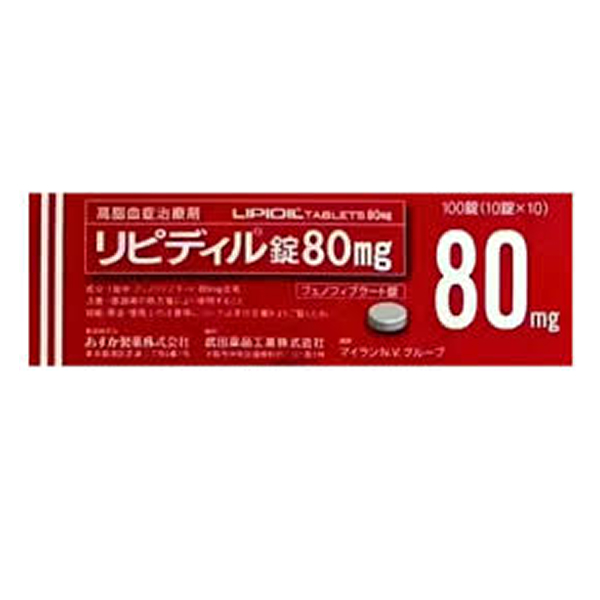
All Names: Fenofibrate、Lipidil、非诺贝特片
Indications:It should be used after diagnosis of hyperlipidemia and should not be used as a preventive medication for hyperlipidemia. For hyperlipidemia (IIa type) with only elevated total cholesterol, it is not recommended as the first-line treatment drug. The therapeutic effect on hyperlipidemia (type I) mainly characterized by elevated chylomicrons is not yet clear. Before starting medication treatment, strict lifestyle interventions (including dietary control, exercise therapy) must be implemented, and other cardiovascular risk factors such as hypertension and smoking must be actively addressed.
Manufacturer:Aska Pharmaceutical Co., Ltd.
Customs Clearance Procedure:If the customs requires the package for customs clearance, please pay the customs clearance fee according to the content of EMS SMS and customs regulations.
Fenofibrate tablets are a type of lipid-lowering medication primarily used for the treatment of hyperlipidemia. It activates peroxisome proliferator activated receptor alpha (PPAR alpha), regulates gene expression related to lipid metabolism, effectively reduces serum total cholesterol and triglyceride levels, and increases high-density lipoprotein cholesterol levels.
1、 Drug name
Lipidil tablets, trade name: Lide tablets, active ingredient is fenofibrate (Japanese version of Febrilat).
2、 Indications
Hyperlipidemia (including familial hyperlipidemia).
3、 Specifications and characteristics
1. Specification: 80mg per tablet.
2. Appearance: White to slightly yellowish white pigment tablets.
4、 Main components
Each tablet contains 80mg of fenofibrate.
5、 Usage and dosage
1. Adult standard dose: once a day, orally after meals, 106.6mg to 160mg each time.
2. The daily dose should not exceed 160mg.
6、 Dose adjustment
1. Total cholesterol and triglycerides are both high (type IIb and III): starting from 106.6mg/day.
2. Only high triglycerides (type IV and V): can start from 53.3mg/day.
3. History of abnormal liver function or liver disorders: starting from 53.3mg/day.
4. Serum creatinine level of 1.5-2.5mg/dL or creatinine clearance rate of 40-60mL/min: starting from 53.3mg or extending the dosing interval.
5. Serum creatinine ≥ 2.5mg/dL or creatinine clearance rate<40mL/min: administration is prohibited.
7、 Medication precautions
1. After meals (poor absorption on an empty stomach).
2. Missed intake: It should be taken regularly once a day to avoid missed intake.
3. Vomiting: If vomiting occurs shortly after taking medication, it may affect absorption and should be treated according to medical advice.
8、 Medication for special populations
1. Pregnant women: Do not use.
2. Breastfeeding period: Do not use (milk can enter during animal experiments).
3. Children: No clinical trials have been conducted.
4. Elderly people: Starting from 53.3mg/day, pay attention to kidney function and regularly monitor serum creatinine.
5. Patients with liver dysfunction: Prohibited for use in patients with liver damage; Patients with abnormal liver function or a history of liver disorders should reduce their dosage.
6. Patients with renal dysfunction: see dosage adjustment item.
9、 Adverse reactions
1. Major side effects:
Rhabdomyolysis (frequency unknown): characterized by muscle pain, weakness, elevated CK, elevated myoglobin, and may be accompanied by acute kidney injury.
Liver damage (frequency unknown): Hepatitis, jaundice, and significant increase in AST/ALT. If AST or ALT continues to exceed the normal upper limit by 2.5 times or 100 units, the medication should be discontinued.
Pancreatitis (frequency unknown): severe abdominal pain, nausea, vomiting, and elevated amylase/lipase levels.
2. Other side effects:
Liver: Abnormal liver function test values (AST, ALT, ALP, LDH, γ - GTP elevation, etc.), liver enlargement.
Skin: rash, itching, urticaria, depilation, photosensitivity, erythema multiforme.
Digestive tract: nausea, vomiting, constipation, diarrhea, loss of appetite, stomach discomfort, abdominal pain, dry mouth, bloating, stomatitis, intestinal distension, heartburn.
Kidney: Abnormal renal function test values (BUN, elevated creatinine, etc.).
Muscle: CK elevation, weakness, muscle pain, myopathy, stiffness.
Blood: anemia, increased/decreased white blood cells, increased eosinophils, increased/decreased platelets.
Mental nerves: headache, dizziness, instability.
Biliary tract: cholelithiasis, cholecystitis.
Other: Positive anti nuclear antibody, general fatigue, palpitations, swelling, lower limb pain, abnormal taste, edema, fever, erectile dysfunction, frequent urination, elevated homocysteine in blood, numbness, and hot flashes.
10、 Contraindications
1. Individuals who are allergic to the ingredients of this medication.
2. Patients with liver dysfunction.
3. Renal dysfunction patients with serum creatinine ≥ 2.5mg/dL or creatinine clearance rate<40mL/min.
4. Patients with gallbladder disease (with reports of gallstones formation).
5. Pregnant or potentially pregnant women, as well as breastfeeding women.
11、 Drug interactions
1. Anticoagulants (Warfarin): Enhance anticoagulant effect and require monitoring of prothrombin time.
2. HMG CoA reductase inhibitors (pravastatin, simvastatin, etc.): prone to rhabdomyolysis with acute kidney injury.
3. Sulfonylurea hypoglycemic drugs (such as glibenclamide): enhance hypoglycemic effects and can cause hypoglycemia.
4. Anion exchange resin (colexamine): may delay or reduce absorption, and should be administered at intervals of 1 hour (before) or 4-6 hours (after).
5. Cyclosporine: can aggravate renal function damage, caution should be exercised.
12、 Storage method
Store at room temperature. The validity period is 3 years.
Lipidilinformation