- All Drug Categories
- Home
- Anti-cancer Drugs
- Healthcare Products
- Medical Information
- Statement
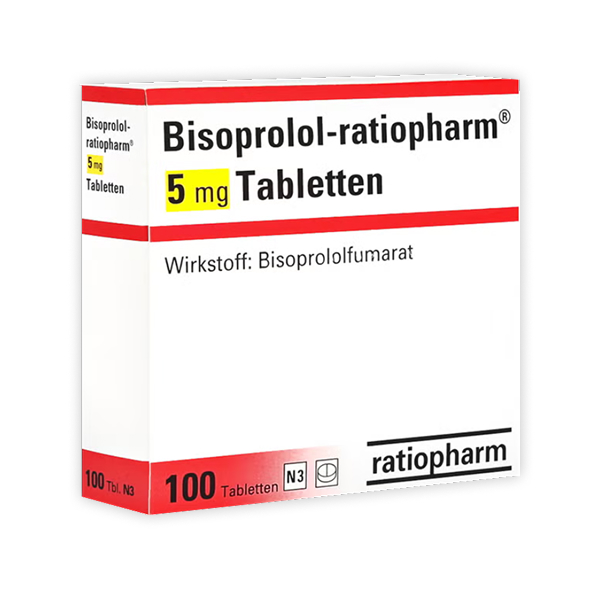
All Names: Bisoprolol fumarate tablets、Mainteate、富马酸比索洛尔片、博苏
Indications:Suitable for adult hypertension, angina pectoris, premature ventricular contractions, chronic heart failure, and atrial fibrillation, it can effectively control blood pressure, reduce angina attacks, improve heart rhythm, and stabilize heart function.
Manufacturer:德国ratiopharm GmbH
Customs Clearance Procedure:If the customs requires the package for customs clearance, please pay the customs clearance fee according to the content of EMS SMS and customs regulations.
Bisoprolol fumarate tablets are a highly selective β 1-adrenergic receptor antagonist and do not have endogenous sympathetic nerve stimulation effects. This drug exerts multiple pharmacological effects such as lowering blood pressure, reducing myocardial oxygen consumption, and regulating cardiac rhythm by inhibiting overactivated sympathetic nervous system.
1、 Drug name
Bisoprolol Fumarate Tablets (Trade Name: Maintea)
2、 Indications
1. Intrinsic hypertension (mild to moderate).
2. Angina pectoris.
3. Ventricular extraventricular contractions.
4. Chronic heart failure caused by ischemic heart disease or dilated cardiomyopathy.
5. Frequent atrial fibrillation.
3、 Specifications
Specification: 5mg/tablet.
4、 Main components
Active ingredient: Bisoprolol fumarate.
5、 Usage and dosage
1. Intrinsic hypertension, angina pectoris, and ventricular premature contractions: Adults usually take 5mg orally once a day (calculated as bisoprolol fumarate). It can be adjusted appropriately according to age and symptoms.
2. Follow the doctor's advice for other indications.
6、 Dose adjustment
1. Chronic heart failure: The maintenance dose must be set based on patient tolerance, starting from a daily dose of 0.625mg or lower. When resuming medication after stopping for more than 2 weeks, the dosage should be gradually increased starting from the low dose.
2. Elderly patients: Starting from small doses, observe the patient's condition and administer medication with caution.
3. Patients with severe impairment of kidney or liver function: Drug excretion or metabolism may be delayed, and the effect may be enhanced.
7、 Medication precautions
1. Before and after meals: Food has no effect on drug absorption.
2. Leakage of medication: It should be noted that patients who have been taking medication for a long time (especially those with angina) should not stop taking medication without authorization. If medication needs to be stopped, it should be gradually reduced under the guidance of a doctor.
3. Vomiting: If severe vomiting occurs, seek medical attention promptly.
4. Other precautions:
Long term administration requires regular check of cardiac function (pulse, blood pressure, electrocardiogram, X-ray, etc.). When symptoms of bradycardia or hypotension occur, medication should be reduced or discontinued.
It is best to stop taking medication 48 hours before surgery.
Dizziness and vertigo may occur, and attention should be paid when driving or operating dangerous machinery during medication (especially in the early stages).
PTP packaged drugs need to be taken out of the aluminum foil plate before consumption to avoid accidental ingestion and esophageal damage.
8、 Medication for special populations
1. Pregnant women: Use only when the benefits of treatment outweigh the risks. It is necessary to fully observe the status of the mother and fetus, and closely monitor the newborn after birth.
2. Breastfeeding women should consider the benefits of treatment and breastfeeding when deciding whether to continue breastfeeding or discontinue medication. Animal experiments have shown that drugs can enter breast milk.
3. Children: No clinical trials have been conducted.
4. Elderly individuals: should start with small doses and closely observe. Avoid excessive blood pressure reduction and be aware of possible arrhythmia such as bradycardia.
9、 Adverse reactions
1. Common adverse reactions (with an incidence rate of 0.1-5% or higher) include bradycardia, dizziness, headache, nausea, fatigue, edema, difficulty breathing, rash, etc.
2. Major side effects: including heart failure, complete atrioventricular block, severe bradycardia, sick sinus syndrome, etc.
10、 Contraindications
1. Patients with severe bradycardia, atrioventricular block (grade II, III), and sick sinus syndrome.
2. Patients with diabetes ketoacidosis and metabolic acidosis.
3. Patients with cardiogenic shock.
4. Patients with right heart failure caused by pulmonary arterial hypertension.
5. Heart failure patients who require intravenous administration of cardiac stimulants or vasodilators.
6. Patients with decompensated heart failure.
7. Patients with severe peripheral circulatory disorders.
8. Untreated patients with pheochromocytoma.
9. Patients with a history of allergies to the ingredients of this medication.
11、 Drug interactions
1. Prohibition of co use: Unless otherwise indicated, the following co medications should be noted:
2. Be cautious when combining:
Other sympathetic nervous system inhibitors (such as reserpine): may lead to excessive sympathetic nervous system suppression.
Hypoglycemic drugs (insulin, etc.): may enhance hypoglycemic effects and mask hypoglycemic symptoms (tachycardia, sweating, etc.).
Calcium antagonists (verapamil, diltiazem, etc.), digoxin and other cardiac glycosides: may enhance inhibition of heart conduction and contraction, leading to bradycardia and atrioventricular block.
Clotrimazole and Guannabenzyl: Discontinuation of medication may exacerbate rebound hypertension.
Class I (propafenone, procainamide, etc.) and Class III (amiodarone) antiarrhythmic drugs: may excessively inhibit cardiac function.
Non steroidal anti-inflammatory drugs (such as indomethacin): may weaken the antihypertensive effect of this drug.
Fingolimod: When used in combination, it may cause severe bradycardia or heart block.
12、 Storage method
Store at room temperature.
Mainteateinformation