- All Drug Categories
- Home
- Anti-cancer Drugs
- Healthcare Products
- Medical Information
- Statement
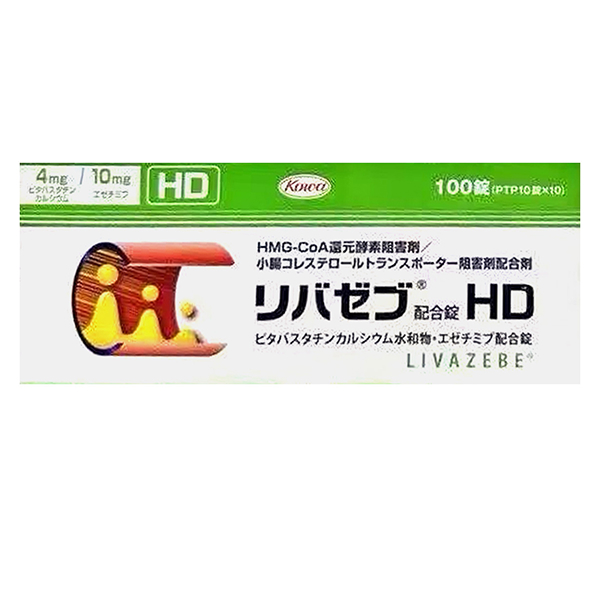
All Names: Pitavastatin Calcium and Ezetimibe Tablets、Livazeb、利巴塞布、匹伐他丁钙依折麦布片
Indications:Suitable for treating hypercholesterolemia and familial hypercholesterolemia. Libasib is not the first-line preferred treatment for this indication. Before using Lebaseb, a thorough examination must be conducted to confirm the diagnosis. For patients with homozygous familial hypercholesterolemia (HoFH), consideration should be given to using levodopa as an adjuvant therapy for non pharmacological therapies such as LDL fractionation, or when such therapy is not feasible.
Manufacturer:Japan Xinghe Corporation
Customs Clearance Procedure:If the customs requires the package for customs clearance, please pay the customs clearance fee according to the content of EMS SMS and customs regulations.
Libaseb is a fixed dose compound formulation that contains two lipid-lowering active ingredients with complementary mechanisms of action: pitatadine calcium and ezetimibe. The combination of two drugs can comprehensively and efficiently reduce total cholesterol (TC), low-density lipoprotein cholesterol (LDL-C), apolipoprotein B (ApoB), and triglycerides (TG) through a dual inhibition mode (synthesis and absorption), and increase high-density lipoprotein cholesterol (HDL-C) levels.
1、 Drug name
Livazeb Combination Tablets LD/HD (Livazeb Combination Tablets LD/HD)
2、 Indications
Hypercholesterolemia, familial hypercholesterolemia
3、 Specifications and characteristics
Each tablet contains 4.0mg/ezetimibe calcium hydrate and 10.0mg ezetimibe. It is a light yellow, circular film coated tablet.
4、 Main components
Active ingredients: Pitavastatin Calcium Hydrate, Ezetimibe
5、 Usage and dosage
Adult dosage: once a day, one tablet per dose (LD or HD), taken orally after meals.
6、 Dose adjustment
1. In principle, LD is suitable for patients who are currently using a combination of 2mg of pitavastatin and 10mg of ezetimibe, or if the efficacy of 2mg of pitavastatin is insufficient.
2. In principle, HD is suitable for patients who are currently using a combination of 4mg of pitavastatin and 10mg of ezetimibe, or if the efficacy of 4mg of pitavastatin is insufficient, or if the efficacy of LD is insufficient.
3. Patients with liver dysfunction: The maximum dose of pitavastatin is 2mg per day.
4. When the dosage of pitavastatin increases to 4mg, attention should be paid to the prodromal symptoms of rhabdomyolysis such as CK elevation, muscle pain, and muscle weakness.
7、 Medication precautions
1. Before and after meals: Take after meals. Fasting administration may affect the blood concentration of pitavastatin (reducing Cmax by 42.5%), but has little effect on AUC.
2. Omission: It is recommended to follow the routine treatment of blood lipid drugs. If it is close to the next medication time after omission, it should be skipped and not taken twice.
3. After vomiting: If vomiting occurs shortly after taking medication, it may be considered to take additional medication; Otherwise, handle it as usual.
8、 Medication for special populations
1. Pregnant women and women who may become pregnant: contraindications. Animal experiments have shown a risk of maternal death and fetal skeletal abnormalities.
2. Breastfeeding women: taboo. Pivatatin can enter rat milk.
3. Children: No efficacy and safety clinical trials have been conducted.
4. Elderly people: When physiological function declines and side effects occur, dosage should be reduced. Rhabdomyolysis is prone to occur.
5. Patients with liver dysfunction:
Severe liver dysfunction or biliary obstruction: contraindicated.
Moderate liver dysfunction: Not recommended for use.
Individuals with a history of liver disease (excluding the above two categories): may worsen liver damage.
6. Patients with renal dysfunction: Combination with beta drugs can easily lead to rhabdomyolysis and rapid deterioration of renal function, requiring close monitoring.
9、 Adverse reactions
1. Major side effects (incidence unknown):
Allergic reactions (anaphylactic shock, angioedema).
Rhabdomyolysis (muscle pain, weakness, elevated CK, myoglobinuria, acute kidney injury).
Muscle disease.
Immune mediated necrotizing myopathy.
Liver dysfunction and jaundice.
Thrombocytopenia.
Interstitial pneumonia.
Myasthenia gravis (occurring or worsening).
2. Other side effects (less than 1% or frequency unknown): rash, itching, urticaria, dry mouth, nausea, vomiting, abdominal pain, constipation, diarrhea, elevated ALT/AST/γ - GTP, proteinuria, elevated BUN/creatinine, headache, dizziness, insomnia, joint pain, fatigue, etc.
10、 Contraindications
1. Individuals with a history of allergies to the ingredients of this medication.
2. Severe liver dysfunction or biliary obstruction.
3. Patients currently using cyclosporine.
4. Pregnant women, women who may become pregnant, and breastfeeding women.
11、 Drug interactions
1. And use taboos:
Cyclosporine: The blood concentration of pitavastatin increases (Cmax 6.6 times, AUC 4.6 times), and the blood concentration of ezetimibe and cyclosporine increases, making it prone to rhabdomyolysis.
2. And please note:
Betrate drugs: prone to rhabdomyolysis with worsening renal function.
Anion exchange resin (such as colexamine): may reduce the blood concentration of pitavastatin and ezetimibe, and should be separated by more than 2 hours (2 hours before or 4 hours after resin administration).
Erythromycin: Pirvastatin Cmax increased by 3.6 times, AUC increased by 2.8 times.
Rifampicin: Pivastatin Cmax increased by 2.0 times, AUC increased by 1.3 times.
Warfarin and others: may increase INR and need to be monitored.
12、 Storage method
After opening the aluminum-plastic packaging, store it away from moisture and light.
13、 Manufacturer
Kowa Company, Ltd
Livazebinformation