- All Drug Categories
- Home
- Anti-cancer Drugs
- Healthcare Products
- Medical Information
- Statement
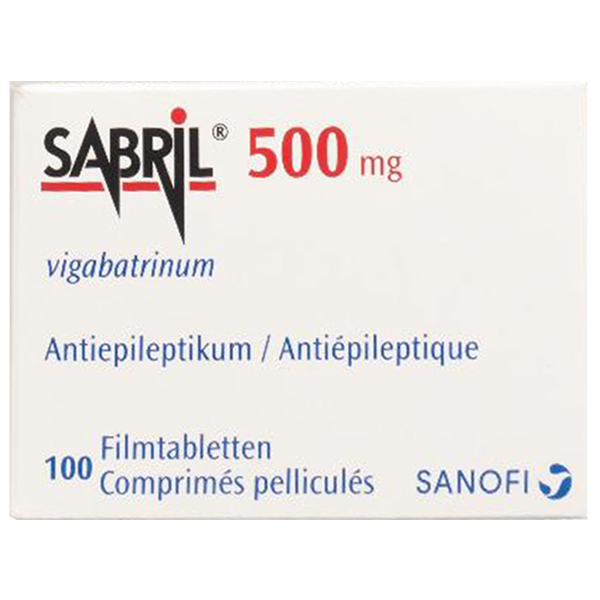
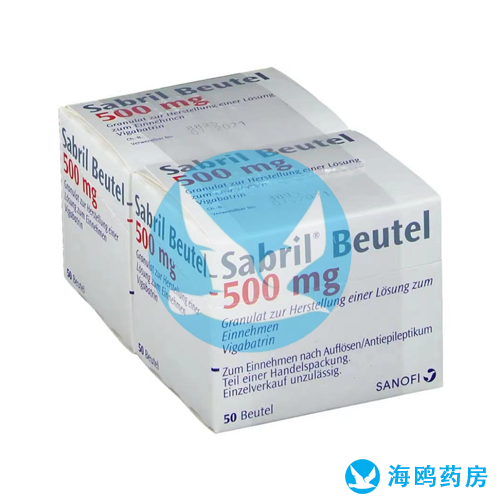
All Names: Vigabatrin、Sabril、Sabrilex、氨己烯酸片、喜保宁
Indications:Adult and pediatric patients aged 2 years and above with refractory complex partial epilepsy seizures, and pediatric patients aged 1 month to 2 years with infantile spasms.
Manufacturer:Sanofi,France
Customs Clearance Procedure:If the customs requires the package for customs clearance, please pay the customs clearance fee according to the content of EMS SMS and customs regulations.
Sabril is an antiepileptic drug that belongs to the gamma aminobutyric acid (GABA) aminotransferase inhibitor. It irreversibly inhibits GABA metabolizing enzymes, increases GABA concentration in the brain, enhances GABAergic neurotransmission, and exerts antiepileptic effects.
1、 Drug name
1. Product Name: Sabril
2. Common name: Vigabatrin
2、 Indications
1. Difficult to treat complex partial seizures (CPS): Used as an adjuvant therapy for patients aged 2 years and older, when there is insufficient response to multiple alternative therapies. Not suitable for first-line treatment.
2. Infantile Spasms (IS): Used as monotherapy for infants aged 1 month to 2 years, limited to patients with potential benefits greater than the risk of permanent vision loss.
3、 Specifications and characteristics
Tablets: 500mg, white, oval shaped, film coated, double convex surface, with one side marked and the other side engraved with "OV111".
4、 Main components
Active ingredient: Vigabatrin.
5、 Usage and dosage
1. Difficult to treat complex partial seizures (adults aged 17 and above): initial dose 1000mg/day (500mg twice daily). According to the patient's condition, an increase of 500mg/day per week can be made. The recommended maintenance dose is 3000mg/day (1500mg twice daily). 6000mg/day does not increase additional benefits and increases the risk of adverse events.
2. Difficult to treat complex partial seizures (children aged 2 to 16): The dosage is calculated based on body weight and taken orally in two doses. Those weighing over 60kg should be given the adult dose.
3. Infantile spasms (1 month to 2 years old): Initial dose 50mg/kg/day (25mg/kg twice daily). The dose can be increased by 25-50mg/kg/day every 3 days, with a maximum maintenance dose of 150mg/kg/day (75mg/kg twice daily).
6、 Dose adjustment
1. Renal insufficiency (adults and children ≥ 2 years old):
Mild (CLcr>50-80mL/min): dose reduction of 25%.
Moderate (CLcr>30-50mL/min): Reduce dosage by 50%.
Severe (CLcr>10-30mL/min): dose reduction of 75%.
Renal insufficiency (infant): No adjustment information available.
2. Timing for discontinuation of ineffective treatment:
Difficult to treat complex partial seizures: If there is no significant clinical benefit within 3 months, the medication should be discontinued.
Infantile spasms: If there is no significant clinical benefit within 2-4 weeks, the medication should be discontinued.
7、 Medication precautions (missed intake, vomiting, administration method)
1. Usage: Can be taken with food or on an empty stomach.
2. Handling of missed doses: Before taking medication, it is necessary to communicate with the doctor about the remedial plan for missed doses.
3. Infant vomiting/lactation: Before medication, it is necessary to communicate with a doctor about the treatment plan for infant vomiting or partial medication.
4. Discontinuation requirements: Sudden cessation of medication is strictly prohibited. It must be gradually reduced under the guidance of a doctor to avoid withdrawal seizures or status epilepticus.
5. Driving and mechanical operation: May cause drowsiness and fatigue. Do not drive or operate complex machinery until the effects of medication are confirmed.
8、 Medication for special populations
1. Pregnancy: There is a risk of fetal toxicity based on animal data. There is a registration program for exposure during pregnancy, and patients are encouraged to register themselves (NAAED Pregnancy Registry).
2. Breastfeeding period: Aminocaproic acid can be secreted through breast milk, but breastfeeding is not recommended due to the potential risk of serious adverse reactions.
3. Elderly people (≥ 65 years old): Due to the high risk of renal dysfunction, careful dosage selection and monitoring of renal function are necessary. Patients with low creatinine clearance have experienced moderate to severe sedation and confusion for several days after a single dose.
4. The safety and efficacy have been established for pediatric populations aged 1 month to 2 years (infantile spasms) and 2 to 16 years (refractory complex partial seizures). The safety of refractory complex partial seizures under 1 month of age and under 2 years of age has not been established.
5. Renal function impairment: see dosage adjustment in item 6.
9、 Adverse reactions
1. Warning: Permanent loss of vision. The risk increases with dose and cumulative exposure, and there is no absolute safe dose. Can cause bilateral concentric field of view narrowing (tubular field of view) and visual impairment. The risk may continue even after discontinuing the medication.
2. The most common adverse reactions that lead to discontinuation of medication are seizures and depression.
3. Common in adults (≥ 5% and higher than placebo): blurred vision, drowsiness, dizziness, abnormal coordination, tremors, fatigue.
4. Common in children (3-16 years old): weight gain.
5. Common infantile spasms include drowsiness, bronchitis, ear infections, and acute otitis media.
6. Serious risks: Abnormal MRI signals in infants (thalamus/basal ganglia/brainstem/cerebellum), myelin edema, neurotoxicity, suicidal ideation and behavior, anemia, peripheral neuropathy, edema.
10、 Contraindications
None.
11、 Drug interactions
1. Phenytoin: can moderately reduce the plasma concentration of phenytoin, and adjust the dose of phenytoin if necessary.
2. Clonazepam: can increase the peak concentration (Cmax) of Clonazepam by 30% and increase its adverse reactions.
3. Oral contraceptives: unlikely to affect the efficacy of steroid oral contraceptives.
4. Laboratory test interference: can inhibit ALT/AST activity (up to 90% of patients), interfering with early liver injury monitoring; May cause false positive urine amino acids.
12、 Storage method
Tablets and powders: Store at 20 ° C to 25 ° C (68 ° F to 77 ° F), USP controls room temperature storage.
Sabrilinformation