- All Drug Categories
- Home
- Anti-cancer Drugs
- Healthcare Products
- Medical Information
- Statement
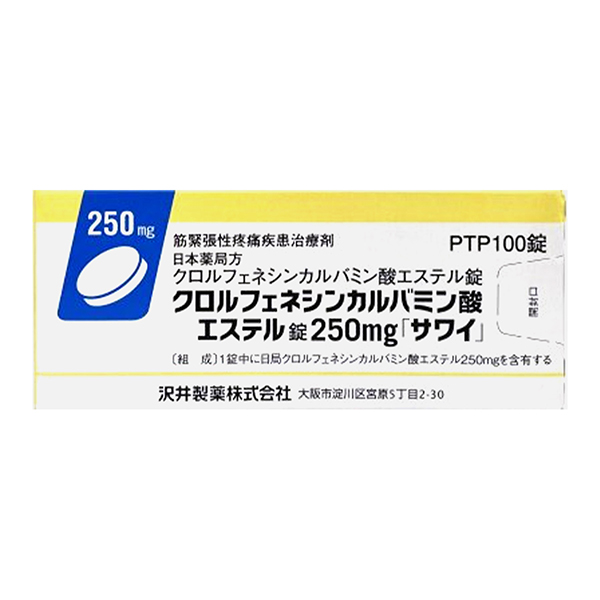
All Names: Chlorphenesin Carbamate Tablets、日本氯苯胺氨基甲酸酯片、クロルフェネシンカルバミン酸エステル錠
Indications:Suitable for adult patients with painful spasms related to motor vehicle diseases, including patients with diseases covered by the above indications such as lower back pain and spinal deformity.
Manufacturer:Sawai Corporation, Japan
Customs Clearance Procedure:If the customs requires the package for customs clearance, please pay the customs clearance fee according to the content of EMS SMS and customs regulations.
Attention should be paid to possible drowsiness, headache, indigestion, and hematological changes during the use of Japanese chloroaniline carbamate tablets.
1、 Drug name
1. Product Name: Chloroaniline Aminoformate Ingot
2. Common name: Chloroaniline Aminoformate
2、 Indications
Painful spasms associated with motor system diseases:
Lumbar and back pain, deformity of the spine, disc herniation, spinal separation/spondylolisthesis, spinal osteoporosis, neck, shoulder, and wrist syndrome.
3、 Specifications and characteristics
1. Specification: 250mg per tablet.
2. Dosage form: White vegetarian tablets.
3. 250mg specification: diameter 9.0mm, thickness 5.5mm, weight approximately 360mg, identification code "SW175".
4、 Main components
1. Active ingredient: Chlorophenesin Carbamate.
2. Additives: carboxymethyl cellulose calcium, light anhydrous silicic acid, crystalline cellulose, magnesium stearate, hydroxypropyl cellulose.
5、 Usage and dosage
1. 250mg specification: The standard dosage for adults is 1 tablet per time (250mg), taken orally 3 times a day. It can be adjusted according to age and symptoms.
2. Administration method: PTP packaged drugs should be taken out of the aluminum foil before administration, and direct ingestion of PTP sheets is strictly prohibited.
6、 Dose adjustment
1. Elderly people: It is necessary to reduce usage and pay attention to observation.
2. Liver function impairment: contraindicated for patients with liver dysfunction; Patients with a history of liver disease should be evaluated with caution.
3. Renal function impairment: According to foreign pharmacopoeias, it is recommended to use with caution.
4. Children: Clinical trials for children have not yet been conducted, and safety has not been established.
7、 Medication precautions (before and after meals, missed doses, vomiting, etc.)
1. Medication timing: Not clearly defined before or after meals.
2. Missed ingestion/vomiting: No specific treatment plan provided.
3. Precautions for operation: May cause drowsiness, decreased attention and reflex motor ability. It is prohibited to drive a car or engage in dangerous mechanical operations during medication.
4. PTP ingestion warning: It must be taken after removing PTP. Ingestion of sharp PTP tablets can puncture the esophageal mucosa, leading to serious complications such as perforation and mediastinitis.
5. Long term medication: Cases of medication administered for more than 8 weeks are limited. It is recommended to undergo regular blood, urine routine, and liver function tests for long-term medication.
8、 Medication for special populations
1. Pregnant women: Use only when the benefits of treatment outweigh the risks.
2. Breastfeeding women: It is necessary to consider both the necessity of treatment and the benefits of breastfeeding before deciding whether to continue or discontinue breastfeeding.
3. Children: Not recommended for use as clinical trials have not been conducted.
4. Elderly people: Physiological functions usually decline, it is recommended to reduce dosage and closely observe.
5. Patients with liver dysfunction: Absolute contraindication.
6. Patients with renal dysfunction: Use with caution.
9、 Adverse reactions
1. Major adverse reactions (frequency unknown):
Shock.
Toxic epidermal necrolysis (TEN).
2. Other adverse reactions (by frequency):
0.1-1% below: dizziness/shaking sensation, drowsiness, abdominal pain, indigestion, nausea, gastrointestinal disorders, rash.
Less than 0.1%: Headache/heaviness, fatigue, lethargy, diarrhea, constipation, dry mouth, glossitis, nausea, leukopenia, thrombocytopenia, swelling/swelling, itching, stomatitis, fever.
Unknown frequency: stomach discomfort, heartburn, loss of appetite, rash/medication rash.
3. Note: Abdominal pain includes stomach pain and discomfort; Digestive disorders include bloating, satiety, stomach heaviness, heartburn, and loss of appetite; The rash includes drug rash.
10、 Contraindications
1. Individuals with a history of allergies to this drug or similar compounds (such as metoclopramide).
2. Patients with liver dysfunction.
11、 Drug interactions
1. Combined medications: phenothiazine (chlorpromazine hydrochloride, etc.), central nervous system inhibitors (barbiturates, etc.), monoamine oxidase inhibitors, alcohol.
2. Clinical strategy: There may be a mutually reinforcing effect, and attention should be paid to adjusting the dosage.
3. Mechanism/risk factors: unknown.
12、 Storage method
Special temperature control conditions are not clearly indicated. Refer to general drugs stored at room temperature indoors to avoid contact with children.
13、 Manufacturer
Manufacturing and sales party: Sawai Pharmaceutical Co., Ltd.
Chlorphenesin Carbamate Tabletsinformation