- All Drug Categories
- Home
- Anti-cancer Drugs
- Healthcare Products
- Medical Information
- Statement
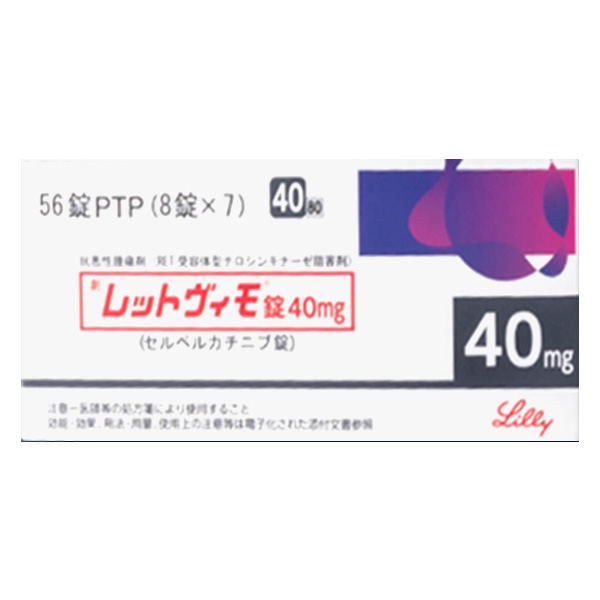
All Names: Selpercatinib、Retevmo、LOXO-292、塞普替尼、赛普替尼、塞尔帕替尼
Indications:Suitable for patients confirmed to have RET gene fusion or RET gene mutation through testing, including adults and children and adolescents aged 2 years and above.
Manufacturer:Eli Lilly,USA
Customs Clearance Procedure:If the customs requires the package for customs clearance, please pay the customs clearance fee according to the content of EMS SMS and customs regulations.
Retevmois a highly selective and potent kinase inhibitor that works by targeting the mutated or fused form of the RET (RearrangedDuringTransfection) gene.
1、 Drug name
1. Common name: Serpatinib
2. Product Name: RETEVMO ®
3. English name: Selpercatinib
2、 Indications
Used for the treatment of locally advanced or metastatic solid tumors in adult and pediatric patients aged 2 years and above with RET gene abnormalities confirmed by FDA approved testing methods.
3、 Specifications and characteristics
Capsule: 40mg (gray opaque, printed with "Lilly", "3977" and "40mg"); 80 milligrams (blue opaque, printed with "Lilly", "2980", and "80mg").
4、 Main components
1. Active ingredient: Serpatinib.
2. Accessories: Capsules contain colloidal silica, microcrystalline cellulose, etc. Tablets contain cross-linked carboxymethyl cellulose sodium, hydroxypropyl cellulose, mannitol, microcrystalline cellulose, sodium stearoyl fumarate, etc.
5、 Usage and dosage
1. Patient selection: Based on the detection of RET gene fusion (NSCLC, thyroid cancer, etc.) or specific RET gene mutations (MTC) in tumor specimens.
2. Recommended dosage:
Patients aged 12 and above: those weighing less than 50 kilograms, take 120 milligrams orally twice a day; For those weighing ≥ 50 kilograms, take 160 milligrams orally twice a day.
Children aged 2 to<12 years old: Administered based on body surface area (BSA): BSA 0.33-0.65 square meters, 40 milligrams, three times a day; BSA 0.66-1.08 square meters, 80 milligrams, twice daily; BSA 1.09-1.52 square meters, 120 milligrams, twice daily; BSA ≥ 1.53 square meters, 160 milligrams, twice daily.
3. Usage: Swallow whole pills/tablets, do not crush or chew. Can be taken with or without food, unless in combination with proton pump inhibitors (see precautions). Treatment should continue until disease progression or unacceptable toxicity occurs.
6、 Dose adjustment
1. General principle: Provide a four tiered reduction plan for adverse reactions, including first, second, third, and permanent discontinuation. For example, the current dose of 160 milligrams twice daily can be reduced to 120 milligrams, 80 milligrams, and 40 milligrams twice daily, respectively. If it is still intolerable, the medication will be permanently discontinued.
2. Specific adverse reactions:
Hepatotoxicity (grade 3 or 4): Suspend administration until it returns to grade 1 or baseline, then reduce the dosage level by 2 and gradually increase.
Interstitial lung disease/pneumonia: Level 2 suspension and reduction; If diagnosed at level 3 or 4, the medication will be permanently discontinued.
Hypertension: paused when grade 3 persists, reduced and restored after control; Level 4 permanent discontinuation of medication.
QT interval prolongation: Level 3 pause, reduce or discontinue medication after recovery; Level 4 permanent discontinuation of medication.
Bleeding event: Level 3 or Level 4 pause; Permanently discontinue medication for those who are seriously or life-threatening.
Hypersensitivity reaction: Level 1-3 pause, use corticosteroids, reduce dosage levels by 3 to recover, gradually increase to the original dosage.
Drug interactions: Avoid combination with potent/moderate CYP3A inhibitors. If it cannot be avoided, the dosage of this product should be reduced (for example, for the current 160 milligrams twice daily, when combined with potent inhibitors, it should be reduced to 80 milligrams twice daily).
Liver dysfunction: Patients with severe liver dysfunction need to reduce their dosage (for example, from the current 160 milligrams twice daily to 80 milligrams twice daily).
7、 Medication precautions
1. Dietary impact: It can usually be taken with or without food. If used in combination with proton pump inhibitors, it must be taken with food. If used in combination with H2 receptor antagonists, this product should be taken 2 hours before or 10 hours after taking the latter. If used in combination with local antacids, they should be taken every 2 hours.
2. Omission treatment: If missed, it should not be taken again unless it is more than 6 hours before the next dose, and the next dose should be taken according to the original plan.
3. Vomiting after taking medication: If vomiting occurs after taking medication, additional doses should not be taken, and the next dose should be taken according to the original plan.
4. Dysphagia patients: 40mg tablets can be used to prepare a suspension for oral administration or administered through a gastric/nasogastric tube. Only 40mg tablets can be used for preparation.
8、 Medication for special populations
1. Pregnant women: Based on animal data, this product may cause fetal harm. Women with fertility should take effective contraceptive measures during treatment and within one week after the last dose; Female partners with male fertility should also take effective contraceptive measures during the same period. It is recommended that women with fertility undergo a pregnancy test before treatment.
2. Breastfeeding women: It is recommended not to breastfeed during the treatment period and within one week after the last dose.
3. Children: The safety and efficacy of specific indications for patients aged 2 years and above have been established. Need to monitor the condition of growth plates (epiphyses). The safety and efficacy of patients under 2 years old have not been established.
4. Elderly patients: No overall differences in safety or efficacy were observed compared to younger patients.
5. Patients with liver and kidney dysfunction: Severe liver dysfunction requires reduced dosage. Mild to severe renal insufficiency does not require dose adjustment. The recommended dosage for patients with end-stage renal disease has not been established.
9、 Adverse reactions
1. Serious adverse reactions: including hepatotoxicity, interstitial lung disease/pneumonia, hypertension, QT interval prolongation, bleeding events, hypersensitivity reactions, tumor lysis syndrome, impaired wound healing, hypothyroidism, and slipped femoral head epiphysis in pediatric patients.
2. Common adverse reactions:
Adult solid tumor patients (≥ 25%): edema, diarrhea, fatigue, dry mouth, hypertension, abdominal pain, constipation, rash, nausea, headache.
Pediatric solid tumor patients (≥ 25%): musculoskeletal pain, diarrhea, nausea, bleeding, fever, abdominal pain, headache, vomiting, fatigue, cough, rash, coronavirus infection, upper respiratory tract infection, edema.
10、 Contraindications
None.
11、 Drug interactions
1. Combination use should be avoided: avoid combination with proton pump inhibitors, H2 receptor antagonists, local acting antacids (if necessary, adjust the administration method, see precautions), and strong/medium acting CYP3A inducers.
2. Caution/dosage adjustment is required for combination use: avoid combining with potent/moderate CYP3A inhibitors (if necessary, reduce the dosage of this product and strengthen electrocardiogram monitoring). Avoid co administration with CYP2C8/CYP3A substrates and certain P-gp/BCRP substrates (if necessary, adjust the dosage according to the drug instructions). The combination of drugs known to prolong QT interval requires enhanced electrocardiogram monitoring.
12、 Storage method
Store at room temperature of 20 ° C to 25 ° C (68 ° F to 77 ° F), and allow for brief storage between 15 ° C to 30 ° C (59 ° F to 86 ° F).
Retevmoinformation