- All Drug Categories
- Home
- Anti-cancer Drugs
- Healthcare Products
- Medical Information
- Statement
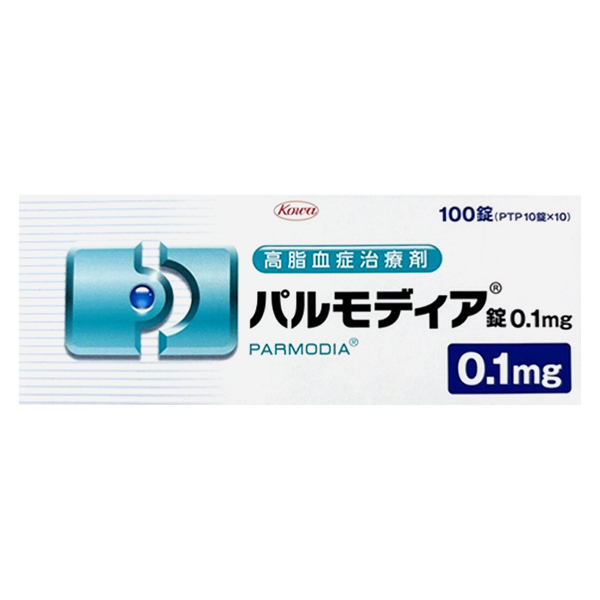
All Names: Pemafibrate、Parmodia、佩玛贝特、派龙达、パルモディア錠
Indications:Adult patients diagnosed with hyperlipidemia (including familial) and meeting the indications criteria.
Manufacturer:Japan Xinghe Corporation
Customs Clearance Procedure:If the customs requires the package for customs clearance, please pay the customs clearance fee according to the content of EMS SMS and customs regulations.
Pemafibrate is a novel selective peroxisome proliferator activated receptor alpha (PPAR alpha) modulator, which belongs to the lipid-lowering drug category. Compared with traditional beta drugs, Pemafibrate has less impact on blood glucose, liver and kidney function, and is safer.
1、 Drug name
1. The name of the drug is Pemafibrate, also known as プラート
2. The product name in Japan is Palmodia tablets.
2、 Indications
1. Used for treating hyperlipidemia (including familial hyperlipidemia).
2. However, it should be noted that for patients with only elevated low-density lipoprotein cholesterol, it is not recommended as the first choice medication.
3、 Specifications and characteristics
1. The drug specification is that each tablet contains 0.10 milligrams of pembrolizumab.
2. The medicine is a white, round, scored film coated tablet with a diameter of 7.1 millimeters, a thickness of 2.9 millimeters, and a weight of 125 milligrams. The surface of the tablet is printed with the "Paracel 0.1" label.
4、 Main components
The active ingredient is Pemabert.
5、 Usage and dosage
1. Conventional usage: Typically, adults take 0.1 milligrams once, twice a day, orally in the morning and evening.
2. Dose adjustment: It can be adjusted appropriately according to age and symptoms, but the maximum dosage is 0.2 milligrams per dose, twice a day.
3. After opening: The divided tablets should be stored under moisture-proof and room temperature conditions, and used up within 4 months.
6、 Special dose adjustment (based on renal function)
For patients with renal insufficiency, if the estimated glomerular filtration rate is less than 30 milliliters per minute per 1.73 square meters, the dosage should be started at a low dose, reduced, or the dosing interval extended, and the maximum daily dose should not exceed 0.4 milligrams (0.2 milligrams per dose, twice a day).
7、 Medication precautions
1. Before and after meals: Medication is not significantly affected by diet, and can be taken on an empty stomach or after meals. A study showed that the geometric mean ratio of bioavailability of postprandial medication compared to fasting was about 0.91, indicating slightly lower postprandial absorption but little impact.
2. Missed dose: The general recommendation is to skip the missed dose and take the next dose according to the original plan if it is close to the next medication time. Do not take double the dose at once.
3. Vomiting: If vomiting occurs shortly after taking medication (such as within 1-2 hours), it may affect drug absorption. It is recommended to consult a doctor or pharmacist to see if additional medication is needed.
4. Basic treatment: Medication should be taken on the basis of sufficient dietary therapy, and consideration should be given to combining exercise therapy and controlling other risk factors such as hypertension and smoking.
5. When used in combination with anion exchange resins (such as colexamide and coletimibe), it may reduce the blood concentration of the drug. It is recommended to keep the medication interval as wide as possible.
8、 Medication for special populations
1. Patients with renal dysfunction:
For patients with severe kidney injury or undergoing dialysis, there are clear dosage adjustment requirements under the usage and dosage items. Patients with moderate renal insufficiency should also be cautious, as the combined use of statins may increase the risk of rhabdomyolysis.
2. Patients with liver dysfunction:
Prohibited: Patients with severe liver injury, Child Pugh classification B or C cirrhosis, and biliary obstruction.
Caution: Patients with mild liver injury (such as Child Pugh A cirrhosis) or a history of liver disease may need to reduce dosage, but caution should be exercised when increasing dosage.
Pregnant women and women at risk of pregnancy: prohibited.
Breastfeeding women: It is best to avoid breastfeeding, as animal experiments have shown that drugs can be secreted through breast milk.
Children: Safety and efficacy have not been established.
Elderly people: Physiological functions may decrease, medication should be taken with caution and closely monitored.
9、 Adverse reactions
1. Serious adverse reactions (frequency unknown):
Rhabdomyolysis: Muscle pain, weakness, elevated creatine kinase, and other symptoms may occur, which can cause acute kidney injury. Once it occurs, medication should be stopped immediately and handled properly.
Liver dysfunction and jaundice.
2. Other common adverse reactions (incidence ≥ 1%): cholelithiasis.
3. Other adverse reactions (incidence 0.1-1%): abnormal liver function, elevated AST/ALT, elevated creatine kinase, increased myoglobin in blood, muscle pain, rash, pruritus, diabetes (or worsening), increased glycosylated hemoglobin, increased low-density lipoprotein, increased uric acid in blood, etc.
10、 Contraindications
1. Patients with a history of allergies to the ingredients of this medication.
2. Patients with severe liver injury, Child Pugh classification B or C cirrhosis, or biliary obstruction.
3. Patients with gallstones (with reports of promoting the formation of gallstones).
4. Pregnant or potentially pregnant women.
5. Patients currently using cyclosporine or rifampicin (co administration is prohibited).
11、 Drug interactions
1. Prohibition of co use (contraindications):
Cyclosporine and rifampicin (which can significantly increase the blood concentration of the drug).
2. Interactions to be noted (use with caution):
Statins (such as atorvastatin, simvastatin, pravastatin, etc.): Combination use may increase the risk of rhabdomyolysis, especially in patients with renal dysfunction. Close monitoring is necessary when it must be used together.
Clopidogrel, clarithromycin, HIV protease inhibitors (such as ritonavir), fluconazole: These drugs may increase the blood concentration of the drug, and when used in combination, consideration should be given to reducing the dose of the drug.
Strong CYP3A inducers (such as carbamazepine, phenobarbital, phenytoin, St. John's wort, etc.): may reduce the blood concentration of this drug and weaken its efficacy.
12、 Storage method
1. This medicine should be stored at room temperature.
2. Pay attention to moisture prevention and avoid storing in damp environments.
3. The drug has an expiration date of 3 years.
13、 Manufacturer
The manufacturer and seller of this drug is Kowa Company, Ltd.
Pemafibrateinformation