- All Drug Categories
- Home
- Anti-cancer Drugs
- Healthcare Products
- Medical Information
- Statement
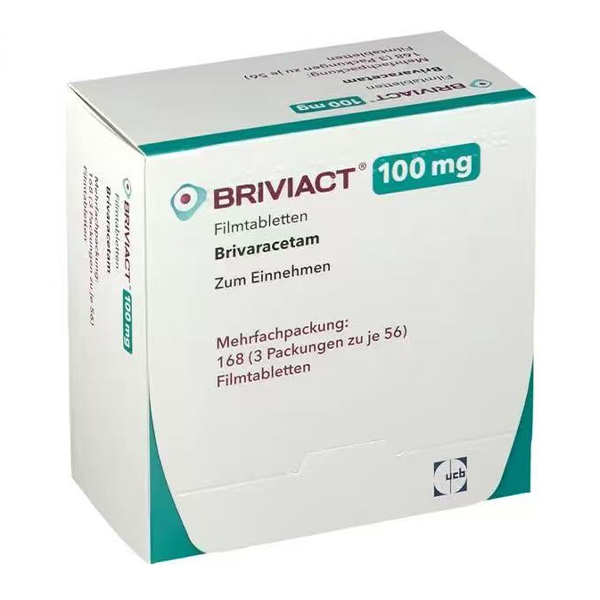
All Names: Brivaracetam、Briviact、布立西坦
Indications:As an adjuvant therapy, it is used to control focal seizures in epilepsy patients aged 16 and above.
Manufacturer:比利时UCB
Customs Clearance Procedure:If the customs requires the package for customs clearance, please pay the customs clearance fee according to the content of EMS SMS and customs regulations.
Briviact is a novel antiepileptic drug developed by Belgian biopharmaceutical company UCB. The drug was approved by the US Food and Drug Administration (FDA) in February 2016 as an adjuvant therapy for focal epileptic seizures, becoming a structural derivative and innovative optimized version of levetiracetam.
1、 Drug name
1. Common name: Brivaracetam
2. Product Name: BRIVIACT
2、 Indications
Used for the treatment of local epileptic seizures (with or without secondary generalized seizures) in patients aged 1 month and above.
3、 Specifications and characteristics
Tablet: 100mg: Green gray, oval shaped film coated tablet, engraved with "u100"
4、 Main components
Active ingredient: Brivaracetam
Appearance: White to off white crystalline powder, highly soluble in water.
5、 Usage and dosage
1. Adults and children (≥ 1 month):
Adults (16 years old and above): The recommended starting dose is 50mg each time, twice a day. According to the efficacy and tolerability, it can be adjusted to 25mg to 100mg twice a day.
Children (weight ≥ 50kg): 25mg to 50mg each time, twice a day, with a maintenance dose of 25mg to 100mg each time, twice a day.
Children (weight 20kg to<50kg): 0.5mg/kg to 1mg/kg twice a day, with a maintenance dose of 0.5mg/kg to 2mg/kg twice a day.
Children (weight 11kg to<20kg): 0.5mg/kg to 1.25mg/kg twice a day, with a maintenance dose of 0.5mg/kg to 2.5mg/kg twice a day.
Children (weight<11kg): 0.75mg/kg to 1.5mg/kg twice daily, with a maintenance dose of 0.75mg/kg to 3mg/kg twice daily.
2. Usage: Can be taken with food or on an empty stomach; Tablets should be swallowed whole and should not be chewed or crushed.
6、 Dose adjustment
1. Liver dysfunction:
Adults: The recommended starting dose is 25mg twice a day, and the maximum maintenance dose is 75mg twice a day.
Children: The starting dose and maximum maintenance dose are reduced accordingly based on weight and age.
2. Combined use with rifampicin: As rifampicin reduces the blood concentration of bupivacaine, it is recommended to increase the dose of bupivacaine to twice the original dose.
7、 Medication precautions
1. Before and after meals: can be taken with food or on an empty stomach.
2. Missed dose: If missed or vomiting occurs after taking medication, the next dose should be taken at the regular time and double the dose should not be taken.
3. Discontinuation of medication: Medication should be gradually stopped to avoid sudden cessation of medication leading to an increase in seizure frequency or status epilepticus.
4. Driving and operating machinery: may cause drowsiness and dizziness, avoid driving or operating machinery during medication.
8、 Medication for special populations
1. Pregnant women: may cause harm to the fetus. It is recommended that pregnant women register with the North American Antiepileptic Drug Pregnancy Registry for monitoring.
2. Breastfeeding women: Burixitan can be secreted into breast milk, and the pros and cons should be weighed during treatment.
3. Elderly people: Dosage selection should be cautious, usually starting with low doses.
4. Renal insufficiency: No dose adjustment required, but not recommended for end-stage renal disease dialysis patients.
9、 Adverse reactions
1. Common adverse reactions (≥ 5% and higher than placebo):
Sleepiness/sedation, dizziness, fatigue, nausea/vomiting, constipation, ataxia/balance disorder, irritability.
2. Serious adverse reactions:
Suicide ideation and behavior, neurological reactions (such as drowsiness, ataxia), psychiatric symptoms (such as aggression, anxiety, hallucinations), allergic reactions (bronchospasm, angioedema), severe skin reactions (Stevens Johnson syndrome, toxic epidermal necrolysis).
Specific reactions to injections: taste disorders, euphoria, drunkenness, and pain at the injection site.
Hematological abnormalities: Decreased white blood cells and neutrophils.
10、 Contraindications
Do not use for individuals allergic to budesonide or any excipient ingredients.
11、 Drug interactions
1. Rifampicin: significantly reduces the concentration of bupivacaine, requiring an increase in the dose of bupivacaine.
2. Carbamazepine: Burixitan may increase the concentration of the active metabolite of carbamazepine (carbamazepine epoxide), and if necessary, consider reducing the dose of carbamazepine.
3. Phenytoin: Bruxetine may increase the blood concentration of phenytoin, and phenytoin levels should be monitored when used in combination.
4. Levetiracetam: The combination of the two has no additional therapeutic benefits.
5. Oral contraceptive pills: High dose budesonide (200mg twice daily) may reduce exposure to ethinylestradiol and levonorgestrel, but has no clinically significant effect.
12、 Storage method
1. Tablets and oral solutions: Store at room temperature of 15 ° C to 30 ° C. Oral solution should be discarded if not used within 5 months after opening.
2. General requirement: Keep out of reach of children.
Briviactinformation