- All Drug Categories
- Home
- Anti-cancer Drugs
- Healthcare Products
- Medical Information
- Statement
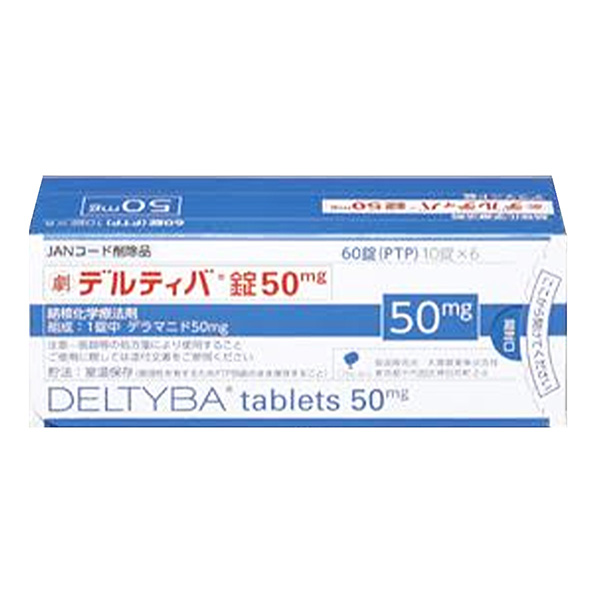
All Names: Deltyba、Delamanid、德拉马尼、德尔巴
Indications:Adult patients with multidrug-resistant tuberculosis who are sensitive to Dramani.
Manufacturer:Otsuka Pharmaceutical, Japan
Customs Clearance Procedure:If the customs requires the package for customs clearance, please pay the customs clearance fee according to the content of EMS SMS and customs regulations.
Delamanid mainly exerts its bactericidal effect by inhibiting the synthesis of methoxy mycolic acid and keto mycolic acid in MTB cell walls.
1、 Drug name
1. Common name: Delamanid
2. Product Name: Deltyba
3. English name: Delamanid
2、 Indications
Suitable for treating multidrug-resistant pulmonary tuberculosis. Only applicable to tuberculosis strains that are sensitive to this agent.
3、 Specifications and characteristics
1. Specification: Each tablet contains 50mg of Delamani.
2. Appearance: Brown yellow film coated tablets. The diameter of the tablet is about 11.7 millimeters, the thickness is about 5.3 millimeters, and the weight is about 536 milligrams. The tablet is printed with the identification code "DLM50".
4、 Main components
Active ingredient: Delamanid
5、 Usage and dosage
1. Regular dosage: Adults usually take 100 milligrams (2 tablets) once, twice a day (after breakfast and dinner), orally.
2. Usage: It is necessary to take it after meals to improve drug absorption.
6、 Dose adjustment
1. Patients with liver function impairment: Due to the potential increase in plasma concentrations of the prototype drug and metabolites, as well as the risk of side effects such as prolonged QT interval, caution should be exercised.
2. Patients with renal impairment: No specific adjustment plan provided, but the medication is mainly excreted through feces.
3. Children: The safety and efficacy of patients under 18 years old have not been established (clinical trials have not been conducted).
7、 Medication precautions
1. Medication and eating: must be taken after meals. When taken on an empty stomach, the peak blood concentration (Cmax) and total exposure (AUC) will significantly decrease (approximately 0.53 times and 0.56 times after meals, respectively).
2. Forgetting to take medication (missing doses): It is usually recommended to take the usual dosage on time after the next meal, and it is not recommended to take double the dose at once.
3. Vomiting treatment: If vomiting occurs shortly after taking medication, consult a doctor or pharmacist; If it is close to the next medication time, skip the dose for vomiting and take the next dose on time.
4. Monitoring during medication: Regular electrocardiograms (monitoring QT interval), electrolyte and serum albumin tests should be performed before and during medication.
5. Usage restrictions: To ensure efficacy and prevent drug resistance, it must be used in combination with at least three other sensitive anti tuberculosis drugs. The experience of using continuously for more than 6 months is limited, and it is necessary to weigh the pros and cons before deciding whether to continue.
8、 Medication for special populations
1. Pregnant women and women who may become pregnant: Do not use. Animal experiments have shown a risk of embryo death and abnormal fetal development.
2. Breastfeeding women: It is not recommended to breastfeed during medication. Animal experiments have shown that drugs can be secreted through breast milk.
3. Children: Safety has not been established. There are reports abroad that children experience hallucinations after taking medication.
4. Elderly: Use with caution and closely monitor the patient's condition, as their overall physiological function usually declines.
5. Patients at risk of QT interval prolongation, including those with congenital long QT syndrome, severe bradycardia, electrolyte imbalances (such as hypokalemia), heart disease, and hypoalbuminemia, should use with caution.
9、 Adverse reactions
1. Major side effects:
QT interval prolongation (with an incidence rate of over 5%): may lead to arrhythmia.
2. Other major side effects:
Mental nervous system: dizziness, headache, drowsiness, insomnia, sensory abnormalities, anxiety, tremors, hallucinations (previously reported in children).
Digestive system: nausea, vomiting, abdominal pain, gastritis, loss of appetite, diarrhea.
Circulating system: palpitations, atrioventricular block, out of phase contractions, abnormal blood pressure.
Others: anemia, abnormal liver function, rash, joint pain, hypokalemia, etc.
10、 Contraindications
1. Patients with a history of allergies to the ingredients of this medication.
2. Pregnant or potentially pregnant women.
11、 Drug interactions
1. Medications that can prolong QT interval: in combination with quinolone antibiotics such as moxifloxacin and levofloxacin; Antiarrhythmic drugs such as quinidine and amiodarone; The combination of drugs such as sulpiride and haloperidol can increase the risk of QT interval prolongation.
2. Medications that can cause hypokalemia: When used in combination with aminoglycoside antibiotics (such as kanamycin), diuretics (such as furosemide), amphotericin B, etc., they can increase the risk of arrhythmia.
3. Anti tuberculosis drugs: combination administration of rifampicin, isoniazid, pyrazinamide, and ethambutol may reduce the blood concentration of Dramani (about 45%).
4. Anti HIV drugs: When used in combination with lopinavir/ritonavir, can increase the concentration of Dramani; There is no significant effect when used in combination with Lawful Veyronine.
12、 Storage method
Due to the hygroscopicity of this product, please store it in its original packaging (PTP packaging) to avoid moisture.
Delamanidinformation