- All Drug Categories
- Home
- Anti-cancer Drugs
- Healthcare Products
- Medical Information
- Statement
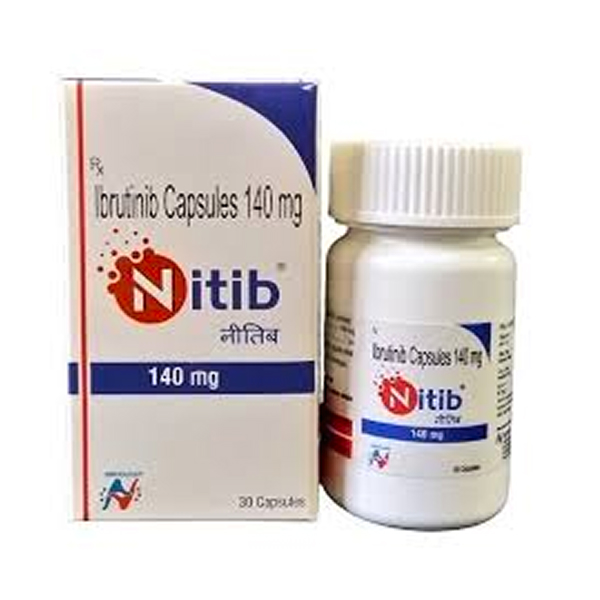
All Names: Ibrutix、lbrucent、Imbruvica、Ibrutinib、伊布替尼、亿珂、依鲁替尼
Indications:Suitable for adult patients with CLL/SLL, CLL/SLL with 17p deletion, WM, and cGVHD who have failed at least one systemic treatment in children and adults aged 1 year and above.
Manufacturer:Haideron, India
Customs Clearance Procedure:If the customs requires the package for customs clearance, please pay the customs clearance fee according to the content of EMS SMS and customs regulations.
Ibrutinib is a small molecule kinase inhibitor that inhibits the proliferation and survival of malignant B lymphocytes by blocking the B cell receptor (BCR) signaling pathway, while regulating the tumor microenvironment. It is used to treat various B cell malignancies and chronic graft-versus-host disease (cGVHD).
1、 Drug name
Ibrutinib, trade name: IMBRUVICA.
2、 Indications
1. Adult chronic lymphocytic leukemia (CLL)/small lymphocytic lymphoma (SLL).
2. CLL/SLL with 17p deletion in adults.
3. Adult Fahrenheit macroglobulinemia (WM).
4. Used for chronic graft-versus-host disease (cGVHD) in children and adult patients aged 1 year and above who have failed first-line or multi line systemic therapy.
3、 Specifications and characteristics
Capsules: 140mg.
4、 Main components
The active ingredient is Ibrutinib.
5、 Usage and dosage
1. CLL/SLL and WM: The recommended dose for adults is 420mg, taken orally once daily.
2. CGVHD: 420mg once daily for patients aged 12 and above; Patients aged 1 to 12 years old should take 240mg/m ² once daily (maximum not exceeding 420mg).
3. It should be taken at a roughly fixed time every day. Capsules or tablets should be swallowed whole/whole, and should not be opened, broken, chewed, or crushed.
6、 Dose adjustment
1. Adverse reaction adjustment: Depending on the severity of the adverse reaction (such as heart failure, arrhythmia, or other grade 3-4 toxicity), medication can be suspended and reduced to 280mg/d or 140mg/d (for adults) after recovery, and to 160mg/m ²/d or 80mg/m ²/d for children accordingly; Severe or recurrent toxicity requires permanent discontinuation of medication.
2. Adjustment of CYP3A inhibitor combination:
Moderate CYP3A inhibitor: Ibrutinib reduced to 280mg once daily.
Fluconazole (200mg bid) or Posaconazole suspension (100mg qd/bid or 200mg bid): Reduce to 140mg once daily.
Posaconazole suspension (200mg tid or 400mg bid), Posaconazole intravenous or sustained-release tablets (300mg qd): reduce to 70mg once daily.
Other strong CYP3A inhibitors: avoid co administration; Irutinib can be temporarily suspended for short-term use (≤ 7 days).
3. Adjustment of liver dysfunction (adult B-cell malignancies):
Mild (Child Pugh A): 140mg once daily.
Moderate (Child Pugh B): 70mg once daily.
Severe (Child Pugh C): Avoid use.
7、 Medication precautions
1. Dietary impact: Taking it together with high-fat and high calorie meals can significantly increase blood drug concentration (Cmax increases by 2-4 times, AUC is about 2 times), but the instructions do not require fasting or postprandial, and a fixed method of administration is necessary.
2. Missed medication: If you forget to take your medication on the same day, you can take it as soon as possible; The next day, resume regular use and do not double the dosage.
3. Vomiting: No specific guidance provided. If it is uncertain whether it will be absorbed after vomiting, it is recommended to take the next dose according to the usual time without supplementation.
4. Avoid eating grapefruit and Seville orange together.
8、 Medication for special populations
1. Pregnancy: Based on animal research, it can cause fetal damage. Effective contraception is required for women with fertility during medication and one month after discontinuation.
2. Breastfeeding: It is not recommended to breastfeed during the medication period or within one week after discontinuing the medication.
3. Children: cGVHD can be used for children aged 1 and above; Other indications have not been established in children.
4. Older adults: Anemia, pneumonia, thrombocytopenia, hypertension, and atrial fibrillation are more common in patients aged 65 and above.
5. Liver function impairment: see dosage adjustment. Serious damage to avoid use.
6. Renal function impairment: Mild to moderate impairment does not require adjustment, and there is no data for severe impairment (CrCl<25mL/min) or dialysis patients.
9、 Adverse reactions
1. Most common (≥ 30%): thrombocytopenia, diarrhea, fatigue, musculoskeletal pain, neutropenia, rash, anemia, bruising, nausea.
2. Serious adverse reactions: bleeding (fatal), infection (including PML, PJP), arrhythmia (atrial fibrillation, ventricular tachycardia), heart failure, hypertension, second primary malignant tumor (common non melanoma skin cancer), hepatotoxicity (including drug-induced liver injury), tumor lysis syndrome.
10、 Contraindications
None.
11、 Drug interactions
1. Strong or moderate CYP3A inhibitors: Increasing exposure to erlotinib requires adjusting the dosage or avoiding co administration.
2. Strong CYP3A inducers (such as rifampicin): significantly reduce the concentration of ibrutinib and avoid co administration.
3. Combined use with anticoagulant or antiplatelet drugs: increases the risk of major bleeding.
12、 Storage method
1. Room temperature ranges from 20 ° C to 25 ° C, with a brief allowance of 15 ° C to 30 ° C.
2. Capsules should be kept in their original bottles, while tablets should be kept in their original packaging.
Ibrutinibinformation