- All Drug Categories
- Home
- Anti-cancer Drugs
- Healthcare Products
- Medical Information
- Statement
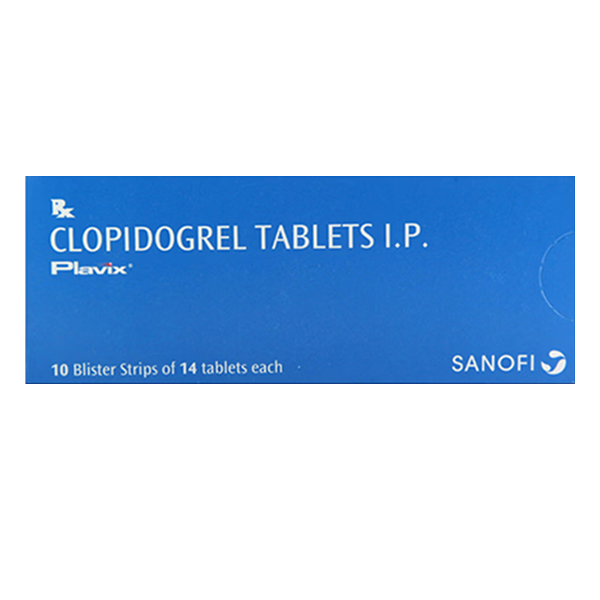
All Names: Plavix、Clopidogrel Bisulfate、硫酸氢氯吡格雷、波立维
Indications:Clopidogrel hydrogen sulfate needs to be combined with aspirin for acute coronary syndrome (non ST segment elevation, ST segment elevation) to reduce the incidence of myocardial infarction and stroke. It can also be used for patients with recent myocardial infarction, recent ischemic stroke, or diagnosed peripheral arterial disease to reduce their incidence of myocardial infarction and stroke.
Manufacturer:Sanofi,France
Customs Clearance Procedure:If the customs requires the package for customs clearance, please pay the customs clearance fee according to the content of EMS SMS and customs regulations.
Clopidogrel Bisulfate is an oral thienopyridine antiplatelet drug that irreversibly inhibits platelet aggregation by suppressing the P2Y12ADP receptor on the surface of platelets.
1、 Drug name
Clopidogrel bisulfate tablets (Plavix, clopidogreltables)
2、 Indications
Acute coronary syndrome (ACS):
1. Non ST segment elevation ACS (unstable angina/NSTEMI), when combined with aspirin, reduces the risk of myocardial infarction and stroke.
2. ST segment elevation myocardial infarction (STEMI), when combined with aspirin, reduces the risk of myocardial infarction and stroke.
3. Recent myocardial infarction, recent stroke, or diagnosed peripheral arterial disease: reducing the risk of myocardial infarction and stroke.
3、 Specifications and characteristics
75mg: Pink, round, double convex, thin film coated piece, with "75" engraved on one side and "1171" engraved on the other side.
4、 Main components
Active ingredient: Clopidogrel bisulfate.
5、 Usage and dosage
1. Acute coronary syndrome (requiring rapid onset): a single oral loading dose of 300mg, followed by 75mg once daily.
2. Recent myocardial infarction, recent stroke, or peripheral arterial disease: 75mg once daily, no loading dose required.
6、 Dose adjustment
1. Elderly patients: No need to adjust dosage.
2. Renal function impairment: Patients with severe and moderate renal impairment have limited experience and do not require dose adjustment.
3. Liver function damage: No need to adjust dosage.
4. CYP2C19 slow metabolizer (carrying two functionally deficient alleles): Consider switching to other P2Y12 inhibitors.
7、 Medication precautions
1. Before and after meals: can be taken with food or on an empty stomach. When taken with a high-fat breakfast, the peak concentration of active metabolites decreased by 57%, but had no significant effect on 24-hour AUC, and the mean platelet inhibition decreased by<9%.
2. Missing medication: Take it as soon as possible after remembering it; If it is close to the next medication time, skip the missed dose and take the next dose according to the original plan. Do not double the dosage.
3. Vomiting: If vomiting occurs within a short period of time after taking medication, it may not be fully absorbed, and it is necessary to consult a doctor to determine if additional medication is needed.
4. Preoperative discontinuation of medication: Discontinue medication 5 days before surgery due to the risk of major bleeding.
5. Delivery/Intraspinal Blockage: Try to discontinue use 5-7 days before delivery, delivery, or Intraspinal Blockage.
8、 Medication for special populations
1. Pregnancy: No clear association has been found with major birth defects, miscarriage, or adverse fetal outcomes in current post market case reports. However, as myocardial infarction and stroke are medical emergencies, treatment should not be discontinued due to pregnancy concerns. The use during delivery or labor increases the risk of maternal bleeding and hematoma.
2. Breastfeeding: There is currently no data on the presence of drugs in human breast milk; No adverse effects on breastfed infants were observed in a small number of post marketing cases. The benefits of breastfeeding should be balanced against maternal medication needs.
3. Children: Safety and efficacy have not been established yet (CLARINET trial did not show benefits).
4. Elderly: No dosage adjustment. In CURE and COMMIT trials, there was no significant increase in bleeding risk among elderly patients.
5. Renal injury: In patients with severe renal injury (CrCl5-15mL/min), the ADP induced platelet aggregation inhibition rate is reduced (about 25%).
6. Liver injury: The platelet aggregation inhibition rate in patients with severe liver injury is similar to that in healthy individuals.
9、 Adverse reactions
1. Most common: bleeding (including fatal bleeding).
2. Other important adverse reactions: thrombotic thrombocytopenic purpura (TTP, fatal, occurring within<2 weeks), bone marrow suppression, acquired hemophilia A, colitis (ulcerative or lymphocytic), pancreatitis, hepatitis, acute liver failure, allergic reactions (including rash, angioedema, serum sickness, DRESS, AGEP, Stevens Johnson syndrome, toxic epidermal necrolysis), bronchospasm, interstitial pneumonia, eosinophilic pneumonia, joint pain, taste disorders, hallucinations, hypotension, etc.
10、 Contraindications
1. Active pathological bleeding (such as peptic ulcer, intracranial hemorrhage).
2. Allergy to clopidogrel or any component (including allergic reactions).
11、 Drug interactions
1. CYP2C19 inducers (such as rifampicin): can increase the concentration of active metabolites and platelet inhibition, may increase the risk of bleeding, and avoid the use of strong inducers.
2. CYP2C19 inhibitors (such as omeprazole and esomeprazole): significantly reduce antiplatelet activity, avoid co administration.
3. Opioid drugs (such as morphine): reduce exposure to clopidogrel and consider using parenteral antiplatelet drugs.
4 NSAIDs、 Warfarin, SSRIs/SNRIs: Increased risk of bleeding.
5. Other antiplatelet drugs: Increased risk of bleeding due to additive effects.
6. Regreline (CYP2C8 substrate): Clopidogrel can increase its exposure by 3.9-5.1 times.
12、 Storage method
1. Store at 25 ° C (77 ° F), allowing short-term offset between 15 ° C-30 ° C (59 ° F-86 ° F) (USP controls room temperature).
2. Keep out of reach of children.
Plavixinformation