- All Drug Categories
- Home
- Anti-cancer Drugs
- Healthcare Products
- Medical Information
- Statement
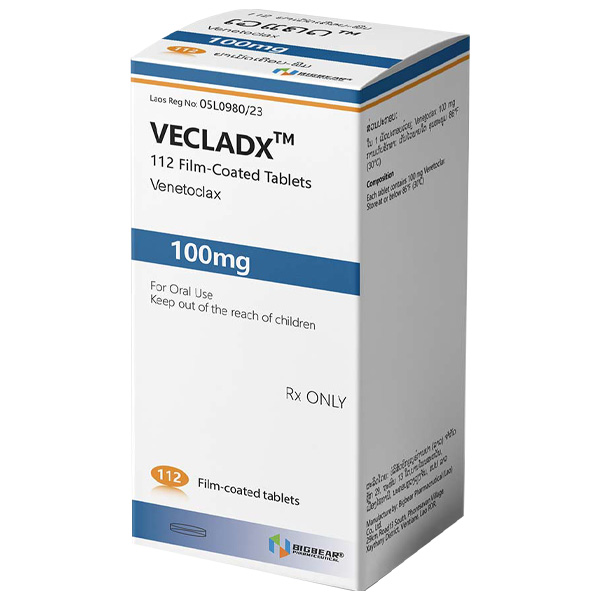
All Names: Venetoclax、Venclexta、维奈克拉、维奈托克、唯可来
Indications:Adult patients with chronic lymphocytic leukemia (CLL) or small lymphocytic lymphoma (SLL), as well as newly diagnosed acute myeloid leukemia (AML), aged ≥ 75 years or unable to receive intensified induction chemotherapy due to comorbidities.
Manufacturer:Daxiong
Customs Clearance Procedure:If the customs requires the package for customs clearance, please pay the customs clearance fee according to the content of EMS SMS and customs regulations.
The launch of Venacula provides a new treatment option for patients with hematological malignancies, especially in the treatment of acute myeloid leukemia, filling a gap in related fields in China. This drug has been included in the Chinese medical insurance catalog in 2023 and is limited to patients with acute myeloid leukemia.
1、 Drug name
1. Common name: Venera
2. Product Name: VENCLEXTA ™
2、 Indications
1. Used to treat chronic lymphocytic leukemia (CLL) patients with 17p deletion who have received at least one previous treatment.
2. This indication is granted accelerated approval based on overall response rate, and its continued approval may depend on the validation of clinical benefits in confirmatory trials.
3、 Specifications and characteristics
Specification: 100 milligrams.
4、 Main components
1. Active ingredient: Venetoclax.
2. Accessories: including copolymer ketone, colloidal silica, polysorbate 80, sodium stearoyl fumarate, calcium hydrogen phosphate, etc. The coating film contains different coloring agents and film-forming materials.
5、 Usage and dosage
1. Adopting a weekly increasing dosing regimen: 20 milligrams per day in week 1, 50 milligrams per day in week 2, 100 milligrams per day in week 3, 200 milligrams per day in week 4, and 400 milligrams per day in week 5 and beyond.
2. It should be swallowed once a day with meals and plenty of water, and should not be chewed, crushed, or broken open.
3. Treatment should continue until disease progression or unacceptable toxicity occurs.
6、 Dose adjustment
1. When hematological changes or clinical symptoms of tumor lysis syndrome (TLS) occur, drug administration should be suspended, and the dose should be reduced and restarted after recovery.
2. For non hematological or hematological toxicity (such as grade 3/4 neutropenia with infection or fever), administration can be temporarily suspended for the first occurrence, and the original dose can be continued after recovery; If it occurs again, pause and reduce the dosage to restore.
3. When used in combination with intermediate acting CYP3A inhibitors or P-gp inhibitors, the dosage should be reduced by at least 50%; When used in combination with potent CYP3A inhibitors (only during steady-state dose phase, starting and increasing phases are prohibited), the dose should be reduced by at least 75%.
4. Specific reduction plan: From 400 milligrams, it can be reduced to 300, 200, 100, 50, 20, and 10 milligrams in sequence.
7、 Medication precautions
1. It should be taken with meals at approximately the same time every day.
2. Omission treatment: If missed within 8 hours of the usual medication time, it should be immediately replenished and the normal medication time restored; If it exceeds 8 hours, skip the dose and take the medication normally the next day.
3. Vomiting after taking medication: No need to supplement, take the next dose at the normal time the next day.
4. During the initial treatment and dose escalation period, it is important to focus on preventing and monitoring tumor lysis syndrome (TLS), including adequate hydration, taking uric acid lowering drugs such as allopurinol, and monitoring blood biochemistry based on tumor burden. High risk patients may require hospitalization.
8、 Medication for special populations
1. Pregnant women: May cause fetal damage. Women of childbearing age should undergo a pregnancy test before taking medication, and effective contraception should be taken during treatment and at least 30 days after the last dose.
2. Breastfeeding period: It is recommended to discontinue medication and breastfeed.
3. Male fertility: may affect male fertility.
4. Children: Safety and efficacy have not been established.
5. Elderly patients: There is no overall difference compared to younger patients.
6. Renal injury: Renal dysfunction (CrCl<80mL/min) increases the risk of TLS and requires strengthened prevention and monitoring; Mild to moderate kidney injury does not require dose adjustment, and the dose for severe kidney injury or dialysis patients is uncertain.
7. Liver injury: Mild to moderate liver injury does not require dose adjustment but requires close monitoring of toxicity, while the dose for severe liver injury is uncertain.
9、 Adverse reactions
1. The most common adverse reactions (≥ 20%) include: neutropenia, diarrhea, nausea, anemia, upper respiratory tract infections, thrombocytopenia, and fatigue.
2. Serious adverse reactions include pneumonia, febrile neutropenia, fever, autoimmune hemolytic anemia, anemia, and TLS.
10、 Contraindications
It is prohibited to use potent CYP3A inhibitors (such as ketoconazole, clarithromycin, etc.) in combination during the initial treatment and dose escalation period.
11、 Drug interactions
1. Avoid co administration with potent or intermediate acting CYP3A inducers, intermediate acting CYP3A inhibitors, P-gp inhibitors, and P-gp substrates with narrow therapeutic windows (such as digoxin).
2. If it is necessary to use P-gp substrates with a narrow therapeutic window, they should be taken at least 6 hours before taking Venetoclase.
3. Avoid consuming grapefruit products, Seville oranges, and starfruit during treatment.
12、 Storage method
1. Store below 30 ° C (86 ° F).
2. Four weeks before treatment, it should be kept in its original packaging.
Venetoclaxinformation