- All Drug Categories
- Home
- Anti-cancer Drugs
- Healthcare Products
- Medical Information
- Statement
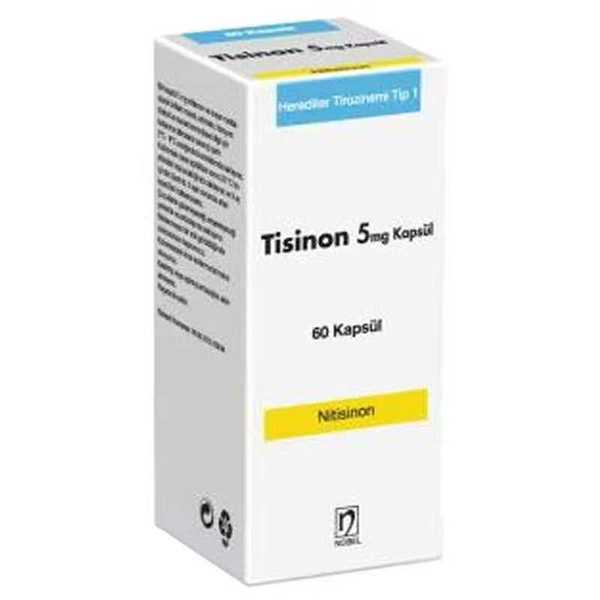
All Names: Nitisinone、Orfadin、尼替西农
Indications:Patients diagnosed with type 1 tyrosinemia (HT-1) through biochemical testing (such as elevated levels of succinylacetone in plasma or urine) should be treated in combination with a diet that restricts tyrosine and phenylalanine.
Manufacturer:土耳其Nobel
Customs Clearance Procedure:If the customs requires the package for customs clearance, please pay the customs clearance fee according to the content of EMS SMS and customs regulations.
Nitisiinone is a reversible competitive inhibitor of 4-hydroxyphenylpyruvate dioxygenase (4-HPPD), which works by intervening in the tyrosine metabolism pathway.
1、 Drug name
1. Product Name: ORFEDIN
2. Common name: Nitisinone
3. Dosage form: Capsules
2、 Indications
Suitable for the combination of tyrosine and phenylalanine dietary restrictions in the treatment of type I hereditary tyrosinemia in adults and children.
3、 Specifications
Capsules:
Specification: 5 milligrams.
4、 Main components
Active ingredient: Nitixinone
5、 Usage and dosage
1. Recommended starting dose: Oral, 0.5 milligrams per kilogram of body weight, twice daily.
2. Maintenance dose: For patients aged 5 years and above, if the concentration of succinylated acetone in serum and urine cannot be detected after taking a stable dose of nifedipine for at least 4 weeks, the total daily dose can be changed to once daily.
3. Maximum dose: The maximum daily total dose is 2 milligrams per kilogram of body weight.
4. Usage (capsules): Take at least 1 hour before or 2 hours after meals.
6、 Dose adjustment
1. Dose titration: Adjust the dose based on the biochemical and/or clinical reactions of each patient.
2. Monitoring indicators: Monitor the concentration of succinylated acetone in plasma and/or urine, liver function indicators, and levels of alpha fetoprotein.
3. Incremental condition: If succinylacetone can still be detected in the blood or urine after 4 weeks of treatment, the dose of nifedipine should be increased to 0.75 milligrams per kilogram of body weight twice a day. Based on the evaluation of all biochemical parameters, the maximum daily total dose may need to reach 2 milligrams per kilogram of body weight.
4. Reduction/discontinuation: If the biochemical reaction is satisfactory, the dosage should only be adjusted based on weight gain and should not be adjusted based on plasma tyrosine levels.
7、 Medication precautions
1. Important prerequisite: Strict dietary restrictions on tyrosine and phenylalanine must be adhered to simultaneously.
2. Omission treatment: If you forget to take your medication, you should take it as soon as possible. But if it is close to the next dose, the missed dose should be skipped and the next dose should be taken at the regular time. Do not take double the dose at once.
3. Vomiting treatment: If vomiting occurs shortly after taking medication, the medication may not be fully absorbed and should not be taken again.
8、 Medication for special populations
1. Pregnant women: There is no sufficient data yet, use only when clearly needed. Animal experiments have shown embryonic toxicity and teratogenic risks.
2. Breastfeeding women: It is not yet clear whether it is secreted into human milk. The benefits of breastfeeding, the mother's need for medication, and the potential risks to the baby should be considered comprehensively.
3. Children: Safety and efficacy have been established for the treatment of HT-1 patients.
4. Elderly: Clinical studies did not include patients aged 65 and above. Considering that elderly patients often have decreased liver, kidney, and heart function and concomitant medication, the dosage should be carefully selected.
9、 Adverse reactions
1. The most common adverse reactions (with an incidence rate greater than 1%): elevated tyrosine levels, thrombocytopenia, leukopenia, conjunctivitis, corneal opacity, keratitis, photophobia, eye pain, blepharitis, cataracts, neutropenia, nosebleeds, itching, exfoliative dermatitis, dry skin, papules, and hair loss.
2. Serious adverse reactions: thrombocytopenia, leukopenia, eye/visual abnormalities associated with elevated tyrosine levels, developmental delay, and palmar keratotic plaques.
3. Adverse reactions with an incidence rate of less than one percent include death, epilepsy, brain tumors, encephalopathy, hyperactivity, cyanosis, abdominal pain, diarrhea, rash, gastrointestinal bleeding, black stool, elevated liver enzymes, hepatomegaly, hypoglycemia, sepsis, bronchitis, etc.
10、 Contraindications
None.
11、 Drug interactions
1. CYP2C9 substrates (such as celecoxib, tolbutamide, phenytoin, warfarin):
Clinical impact: Increased exposure to co administered drugs.
Intervention measures: The dosage of co administered drugs should be halved. For drugs with narrow therapeutic indices, further dosage adjustments may be necessary to maintain effective therapeutic concentrations.
2. OAT1/OAT3 substrates (such as adefovir, ganciclovir, methotrexate):
Clinical impact: Increased exposure to co administered drugs.
Intervention measures: Monitor potential adverse reactions of co administered drugs.
12、 Storage method
Capsules: Refrigerate at 2 ° C to 8 ° C. Alternatively, patients/caregivers can store at room temperature not exceeding 25 ° C for up to 45 days. If not used up within 45 days, it should be discarded.
Nitisinoneinformation