- All Drug Categories
- Home
- Anti-cancer Drugs
- Healthcare Products
- Medical Information
- Statement
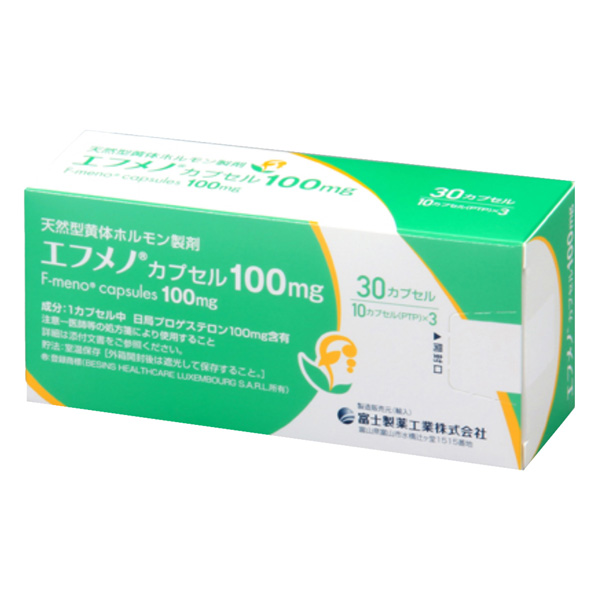
All Names: Progesterone Capsules、F-meno Capsules、黄体酮胶囊
Indications:Women with intact uterus; Being in a menopausal or ovarian dysfunction state and receiving estrogen replacement therapy; Patients who require sequential or continuous combination therapy with progesterone to protect the endometrium.
Manufacturer:Fuji Pharmaceutical Co., Ltd., Japan
Customs Clearance Procedure:If the customs requires the package for customs clearance, please pay the customs clearance fee according to the content of EMS SMS and customs regulations.
Progesterone capsules are a micronized natural oral preparation of progesterone, produced by Fuji Pharmaceutical Company in Japan.
1、 Drug name
1. Product Name: F-meno ® Capsules 100mg (エイノ) ® カプセル100mg)
2. Common name: Progesterone
2、 Indications
1. Used for menopausal disorders and ovarian deficiency symptoms, when combined with estrogen preparations, to inhibit the occurrence of endometrial hyperplasia.
2. Important restriction: Not applicable to patients without uterus.
3、 Specifications and characteristics
1. Specification: Each capsule contains 100mg of progesterone.
2. Appearance: A pale yellow spherical soft capsule. The content is a white viscous suspension of oily liquid or semi-solid.
4、 Main components
1. Active ingredient: Progesterone 100mg.
2. Accessories: Sunflower oil, soy lecithin.
3. Capsule shell ingredients: gelatin, concentrated glycerol, titanium oxide.
5、 Usage and dosage
To be used in combination with estrogen preparations, choose one of the following two options:
1. Option 1 (continuous combination): Starting from the day of estrogen administration, take 100mg of progesterone orally before bedtime every night, once a day.
2. Option 2 (Sequential Cycle): Starting from the first day of estrogen administration, from the 15th to the 28th day, take 200mg of progesterone orally before bedtime every night, once a day. This is a cycle and repeated.
6、 Dose adjustment
1. Liver injury:
Patients with severe liver dysfunction are prohibited from using it.
Patients with moderate to severe liver dysfunction may need to use the medication with caution due to its enhanced effects.
2. Kidney injury: patients with renal dysfunction may cause fluid retention, so medication should be cautious.
7、 Medication precautions
1. Meal/fasting: should avoid taking after meals. Studies have shown that taking medication after meals can lead to an increase in peak blood concentration and total exposure, and it is recommended to take it before bedtime.
2. Leakage treatment: If one dose is missed, it should be replenished as soon as possible. But if it is close to the next medication time, skip the missed dose and take the next dose at the normal time. Do not take double the dose at once.
3. Vomiting/Diarrhea: If vomiting or severe diarrhea occurs shortly after taking medication, it may lead to incomplete drug absorption. At this point, it is advisable to consult a doctor as an additional dose may be required.
4. Important reminder:
May cause drowsiness and dizziness, avoid driving motor vehicles or operating dangerous machinery after taking medication.
Long term use requires regular breast and gynecological examinations.
Sudden discontinuation of medication may cause anxiety, emotional changes, etc., and medication should be stopped according to medical advice.
8、 Medication for special populations
1. Pregnancy: The prescription information does not explicitly mention its use during pregnancy. This product is indicated for menopausal disorders and is mainly used for non pregnant women.
2. Breastfeeding: Medications may enter breast milk. It is necessary to comprehensively consider the benefits of treatment and breastfeeding before deciding whether to continue breastfeeding.
3. Children: This product is intended for adult menopausal disorders and is not suitable for children.
4. Elderly: Prescription information not specifically mentioned. Medication should be taken with caution based on the condition of liver and kidney function.
9、 Adverse reactions
1. The most common adverse reactions are irregular uterine bleeding (incidence 33.5%), breast discomfort, headache, lower abdominal pain, dizziness, bloating, constipation, and increased vaginal discharge.
2. Serious adverse reactions (frequency unknown):
Thrombosis: myocardial infarction, cerebrovascular disorders, arteriovenous thromboembolism (venous thromboembolism or pulmonary embolism), thrombophlebitis, retinal thrombosis. When experiencing lower limb pain/swelling, sudden difficulty breathing, chest pain, central nervous system symptoms (dizziness, consciousness disorders, limb paralysis, etc.), acute visual impairment, medication should be stopped immediately and medical attention sought.
Allergic reaction: Allergic shock (frequency unknown).
3. Other adverse reactions (partially listed): depression, drowsiness, edema, abnormal liver function, rash, pruritus, hypertension, etc.
10、 Contraindications
1. Individuals with a history of allergies to the ingredients of this product.
2. Diagnosed patients with undetermined genital bleeding.
3. Patients with severe liver dysfunction.
4. Patients with a past history or suspected breast cancer.
5. Patients with a history of genital cancer or suspected cases.
6. Individuals with arterial or venous thromboembolism, severe thrombophlebitis, or a history of the disease.
7. Patients with cerebral hemorrhage.
8. Patients with porphyria.
11、 Drug interactions
Liver enzyme inducer: When used in combination with antiepileptic drugs (such as phenobarbital, phenytoin, carbamazepine) or rifampicin, it may weaken the effect of this product. The reason is that these drugs have hepatic enzyme induction effects, accelerating progesterone metabolism.
12、 Storage method
1. Original packaging storage: Store unopened at room temperature.
2. Attention after opening: The outer box should be stored away from light after opening.
3. Other: Keep out of reach of children.
Progesteroneinformation