- All Drug Categories
- Home
- Anti-cancer Drugs
- Healthcare Products
- Medical Information
- Statement
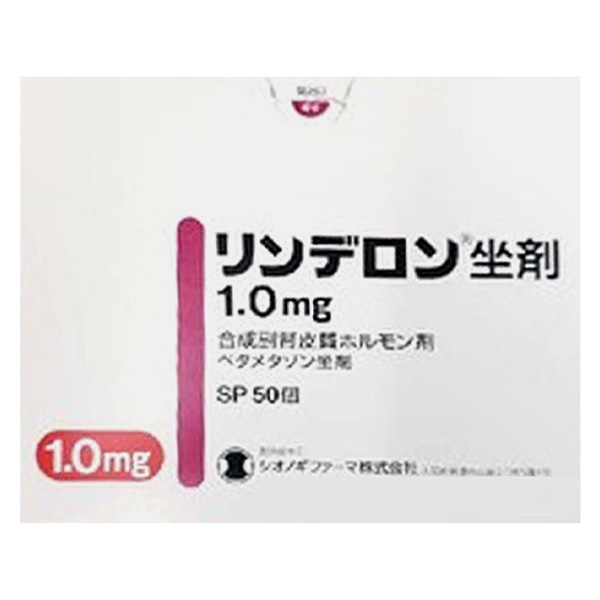
All Names: Betamethasone、Linderon Suppositories、倍他米松栓剂
Indications:An adult patient diagnosed with ulcerative colitis with lesions limited to the rectum. Before use, a doctor must fully evaluate the benefits and risks.
Manufacturer:SHIONOGI, Japan
Customs Clearance Procedure:If the customs requires the package for customs clearance, please pay the customs clearance fee according to the content of EMS SMS and customs regulations.
Betamethasone suppository is a locally applied synthetic corticosteroid suppository, with the main active ingredient being betamethasone.
1、 Drug name
1. Product Name:/リンデン Seat Gel 1.0mg
2. Domestic reference translation: Lindlong suppository 1.0mg
3. Common name: Betametasone
2、 Indications
Ulcerative colitis (proctitis type).
3、 Specifications and characteristics
This product is a soft capsule suppository for rectal use, with a dose of 1.0mg (Lindron suppository 1.0mg):
Appearance: Opaque, slightly yellowish white, teardrop shaped soft capsule formulation. The surface has a wax like luster due to lubricant. The content is a white to slightly yellow milky oily liquid.
4、 Main components
1. Active ingredient: Betamethasone
2. 1.0mg specification: Each capsule contains 1.0mg of betamethasone
5、 Usage and dosage
1. Conventional dose: Typically, the daily dose for adults in the early stages is 0.5 to 2.0 milligrams, divided into 1 to 2 insertions into the rectum.
2. Subsequent adjustments: gradually reduce the dosage based on symptoms. According to the condition, the dosage can also be adjusted appropriately.
6、 Dose adjustment
1. Course adjustment: After use, the dosage should be gradually reduced according to the improvement of symptoms, and high doses should not be maintained for a long time. If medication needs to be stopped, it should be gradually reduced under the guidance of a doctor and should not be stopped suddenly to avoid withdrawal symptoms.
2. High dose precautions: When the daily dose exceeds 2.5 milligrams, the frequency of side effects is high and should be administered with caution.
7、 Medication precautions
Usage:
1. Peel off the single package and gently insert the suppository into the rectum in the designated direction (with the tip facing forward).
2. Avoid using during bowel movements to ensure that the medication stays in the rectum for sufficient time.
3. After use, local irritation symptoms such as increased defecation sensation and fever may occur.
4. Vomiting treatment (not applicable): This product is administered rectally and there is no need to consider the impact of vomiting on drug absorption.
8、 Medication for special populations
1. Pregnant women: Use only when the benefits of treatment outweigh the risks. Animal experiments have shown teratogenic effects and may cause adrenal insufficiency in newborns.
2. Breastfeeding women should consider both the benefits of treatment and breastfeeding before deciding whether to continue or stop breastfeeding. Medications may enter breast milk.
3. Children:
Close observation is required during medication as growth and development inhibition may occur.
During long-term administration, symptoms of intracranial hypertension may occur.
4. Elderly people: when long-term administration, it is easy to induce infection, diabetes, osteoporosis, hypertension, posterior capsule cataract, glaucoma and other side effects.
5. Patients with comorbidities (should generally avoid use unless absolutely necessary for treatment):
Patients with infectious diseases and systemic mycosis: may aggravate the condition.
Patients with peptic ulcers: may inhibit tissue repair and hinder ulcer healing.
Psychiatric patients: may worsen symptoms.
Patients with tuberculosis and herpes simplex keratitis may aggravate the disease.
Patients with posterior capsule cataracts and glaucoma: may worsen the condition.
Patients with hypertension, electrolyte abnormalities, and thrombosis: may worsen the condition.
Patients with recent visceral surgery wounds: may hinder wound healing.
Acute myocardial infarction patients: There have been reports of heart rupture.
Patients with diabetes: may increase blood sugar and aggravate the condition.
Osteoporosis patients: may worsen the condition.
Patients with hypothyroidism: Prolonged half-life, prone to side effects.
Fatty liver and fat embolism patients: may worsen the condition.
Patients with myasthenia gravis: Symptoms may temporarily worsen during the initial stage of medication.
Hepatitis B virus carriers or previous infections: may cause viral proliferation and lead to hepatitis.
Patients with pheochromocytoma or paraganglioma and suspected cases: may trigger pheochromocytoma crisis.
9、 Adverse reactions
1. Major side effects:
Induced infection and exacerbation of infection (frequency unknown): including hepatitis caused by the proliferation of hepatitis B virus.
Secondary adrenal cortical insufficiency, diabetes (frequency unknown), gastrointestinal ulcer, gastrointestinal perforation (frequency unknown), pancreatitis (frequency unknown), mental disorder, depression, spasm (frequency unknown), osteoporosis, femoral head/humeral head and other aseptic necrosis, myopathy (frequency unknown), glaucoma, posterior capsule cataract (frequency unknown), thromboembolism (frequency unknown).
2. Other side effects:
Allergy: rash.
Endocrine disorders: menstrual abnormalities, Cushing's syndrome like symptoms.
Digestive system: diarrhea, nausea/vomiting, stomach pain, heartburn, bloating, dry mouth, loss of appetite or hyperactivity.
Mental nervous system: pleasure, insomnia, headache, dizziness.
Administration site: Local irritation symptoms (increased defecation sensation, fever sensation).
Musculoskeletal: Muscle pain, joint pain.
Metabolic abnormalities: Full moon face, buffalo shoulder, negative nitrogen balance, fatty liver.
Electrolytes in body fluids: edema, elevated blood pressure, hypokalemic alkalosis.
Eye: Retinal damage and eyeball protrusion caused by central serous chorioretinopathy, etc.
Blood: Increased white blood cells.
Skin: hirsutism, pigmentation, subcutaneous bleeding, purple spots, skin lines, itching, abnormal sweating, facial erythema, and seborrhea.
3. Other: weight gain, fever, fatigue, steroid nephropathy, changes in sperm count and vitality, wound healing disorders, weakened skin connective tissue, hiccups.
10、 Contraindications
The following patients are prohibited:
1. Individuals with a history of allergies to the ingredients of this medication.
2. A patient currently taking vasopressin acetate (used for nocturia caused by male nocturia).
11、 Drug interactions
1. Combination taboos:
Acetic acid vasopressin: There is a risk of causing hyponatremia.
2. Attention should be paid to the following when using in combination:
Barbital, phenytoin, rifampicin: weaken the effects of this product (induce CYP, promote metabolism).
Salicylic acid (aspirin, etc.): When this product is reduced, it can cause salicylic acid poisoning (this product promotes the excretion of salicylic acid).
Anticoagulants (warfarin potassium): weaken anticoagulant effects (this product has a procoagulant effect).
Drug use for diabetes (various oral drugs and insulin): reduce the hypoglycemic effect (this product promotes gluconeogenesis).
Diuretics (excluding potassium sparing diuretics): may cause hypokalemia (this product promotes potassium excretion).
Cyclosporine: High doses of this product can increase the blood concentration of cyclosporine (inhibit metabolism).
Erythromycin: enhances the effect of this product (inhibits metabolism).
Non depolarizing muscle relaxants (pancuronium bromide, vecuronium bromide): may weaken or enhance muscle relaxant effects.
Litojun: Combined use may cause pulmonary edema (promote water retention in the body).
12、 Storage method
1. Storage conditions: Store at room temperature. Keep away from light.
2. Validity period: 3 years.
Linderoninformation