- All Drug Categories
- Home
- Anti-cancer Drugs
- Healthcare Products
- Medical Information
- Statement
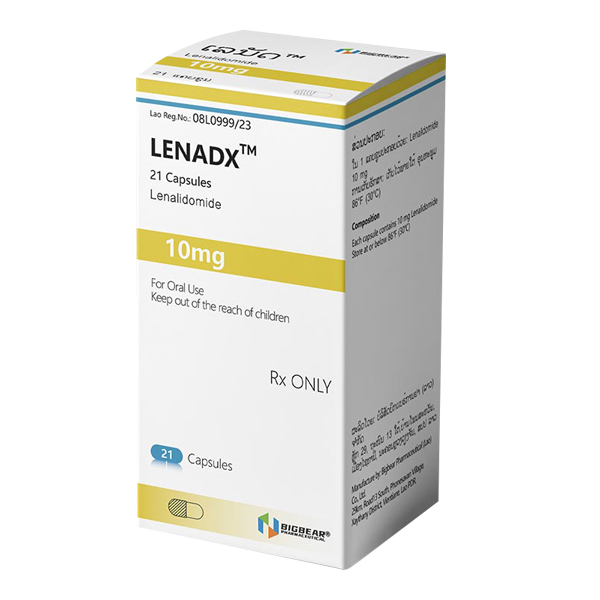
All Names: Lenalidomide、Revlimid、来那度胺、瑞复美、雷利度胺、雷利米得
Indications:Adult patients with multiple myeloma and myelodysplastic syndrome.
Manufacturer:Daxiong
Customs Clearance Procedure:If the customs requires the package for customs clearance, please pay the customs clearance fee according to the content of EMS SMS and customs regulations.
Lenalidomide is an immunomodulatory agent that belongs to the class of thalidomide analogues and has anti angiogenic and anti-tumor properties.
1、 Drug name
1. Common name: Lenalidomide
2. Product Name: REVLIMID ®
2、 Indications
1. Multiple myeloma: treatment with dexamethasone in combination for adult patients; Or as a maintenance therapy after autologous hematopoietic stem cell transplantation.
2. Myelodysplastic syndrome: used to treat adult patients with low-risk or moderate risk type 1 MDS accompanied by 5q chromosome deletion.
3. Mantle cell lymphoma: used to treat adult patients who have experienced recurrence or progression after receiving two previous therapies, one of which includes bortezomib.
4. Follicular lymphoma or marginal zone lymphoma: Used in combination with rituximab to treat previously treated adult patients.
5. Restricted use: Not recommended for the treatment of chronic lymphocytic leukemia (unless in controlled clinical trials).
3、 Specifications and characteristics
1. Specifications: 15mg, 25mg.
2. Appearance: Capsule.
4、 Main components
1. Active ingredient: Lenalidomide
2. Accessories: anhydrous lactose, microcrystalline cellulose, cross-linked carboxymethyl cellulose sodium, magnesium stearate. The capsule shell contains gelatin, titanium dioxide, and black ink, with some specifications containing FD&C Blue 2 and yellow iron oxide.
5、 Usage and dosage
1. Combination therapy for multiple myeloma: Take 25mg orally daily from day 1 to day 21 of a 28 day cycle.
2. MDS treatment: 10mg per day.
3. Mantle cell lymphoma: Take 25mg orally daily from day 1 to day 21 of the 28 day cycle.
4. Follicular/marginal zone lymphoma: 20mg orally daily from day 1 to day 21 of a 28 day cycle, for a maximum of 12 cycles.
5. Medication method: Take at a fixed time every day, and can be taken with food or on an empty stomach. The capsule should be swallowed whole and should not be opened, chewed, or crushed.
6、 Dose adjustment
1. Hematological toxicity adjustment during myeloma treatment:
Suspend administration when platelets<30000/mcL or neutrophils<1000/mcL, and reduce dosage after recovery.
2. Adjustments during MDS treatment:
When the platelet count is less than 50000/mcL (baseline ≥ 100000) or less than 50% of the baseline value (baseline<100000) within 4 weeks of treatment, adjust to 5mg per day.
3. Renal insufficiency adjustment:
Adjust the starting dose based on creatinine clearance rate (e.g. adjust to 10mg per day at 30-60mL/min).
7、 Medication precautions
1. Missing service handling: If the missed service time does not exceed 12 hours, it can be immediately replenished; If it exceeds 12 hours, skip the daily dose and take the medication normally the next day.
2. Vomiting treatment: If vomiting occurs after taking medication, there is no need to take additional medication. The next day, take the medication according to the original plan.
3. Dietary requirements: No specific fasting or postprandial intake is required.
4. Capsule damage: Avoid contact with the contents of the capsule. If skin contact occurs, immediately wash with soapy water. If mucous membrane contact occurs, rinse with plenty of water.
8、 Medication for special populations
1. Pregnant women: Prohibited, may cause fetal malformation or death.
2. Breastfeeding period: It is recommended to stop breastfeeding.
3. Renal insufficiency: The dosage needs to be adjusted according to the creatinine clearance rate.
4. Children: Safety and efficacy have not been established.
9、 Adverse reactions
1. Common reactions (≥ 20%) include: diarrhea, fatigue, anemia, constipation, neutropenia, leukopenia, peripheral edema, insomnia, muscle spasms, abdominal pain, nausea, fever, etc.
2. Serious adverse reactions include:
(1) Deep vein thrombosis and pulmonary embolism.
(2) Hepatotoxicity (including liver failure).
(3) Severe skin reactions (such as Stevens Johnson syndrome).
10、 Contraindications
1. Pregnant women.
2. Those who are severely allergic to lenalidomide.
11、 Drug interactions
1. Digoxin: Combination use may increase blood drug concentration and requires regular monitoring.
2. Erythropoietin or estrogen containing therapy: may increase the risk of thrombosis.
12、 Storage method
1. Storage conditions: 20 ° C-25 ° C (68 ° F-77 ° F), allowing for brief storage at 15 ° C-30 ° C (59 ° F-86 ° F).
2. Caution: Keep out of reach of children.
Lenalidomideinformation