- All Drug Categories
- Home
- Anti-cancer Drugs
- Healthcare Products
- Medical Information
- Statement
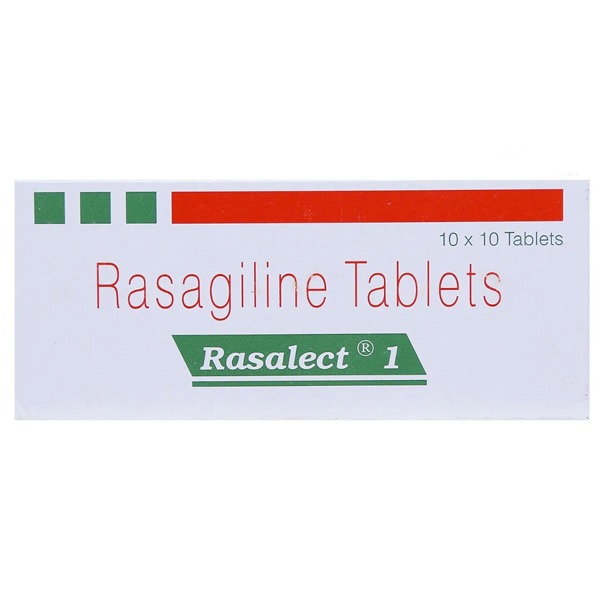
All Names: Rasagiline、 Azilect、雷沙吉兰、安齐来
Indications:Patients with primary Parkinson's disease.
Manufacturer:Sun,India
Customs Clearance Procedure:If the customs requires the package for customs clearance, please pay the customs clearance fee according to the content of EMS SMS and customs regulations.
Azilect is a selective and irreversible monoamine oxidase type B (MAO-B) inhibitor that reduces dopamine metabolism by inhibiting the activity of MAO-B enzyme in the brain, thereby increasing synaptic dopamine concentration and improving motor dysfunction in Parkinson's disease patients.
1、 Drug name
Common name: Rezajilan
English name: Rasagiline
Product Name: AZILECT ® (Azlake)
2、 Indications
Suitable for treating idiopathic Parkinson's disease (PD). It can be used as an initial monotherapy or as an adjuvant therapy for dopamine agonists or levodopa.
3、 Specifications and characteristics
1mg tablet
4、 Main components
Active ingredient: rasagiline (in the form of methanesulfonate).
5、 Usage and dosage
Conventional dosage:
Monotherapy or as adjuvant therapy for patients who have not taken levodopa: The recommended starting dose is 1mg, taken orally once daily.
As an adjuvant therapy for levodopa: the recommended starting dose is 0.5mg, taken orally once daily. If the patient tolerates a daily dose of 0.5mg but has insufficient clinical response, the dose can be increased to 1mg per day. If the patient also takes levodopa, reducing the dose of levodopa based on individual response can be considered to alleviate adverse reactions such as movement disorders.
Caution: Do not exceed the recommended dosage as there is a risk of hypertension.
6、 Dose adjustment
Patients taking ciprofloxacin or other CYP1A2 inhibitors should not exceed 0.5mg per day.
Mild liver injury patients: should not exceed 0.5mg per day. It is contraindicated for patients with moderate or severe liver injury.
7、 Medication precautions
Before and after meals: can be taken with or without food. When taken with a high-fat meal, peak concentration (Cmax) and drug exposure (AUC) decrease by approximately 60% and 20%, respectively, but do not affect total exposure.
Omission: If you forget to take your medication, you should not take double the dose. The next dose should be taken at the regular medication time the next day.
Other:
During medication, daytime drowsiness or sudden falling asleep during daily activities such as driving, talking, and eating may occur. If this situation occurs, driving and dangerous activities should be avoided, and a doctor should be consulted.
Before or during medication, it is necessary to inform the doctor of all other medications, especially psychotropic drugs, cough suppressants, or painkillers (especially pethidine, tramadol, dexmedetomidine, etc.).
Pay attention to monitoring changes in blood pressure, especially when standing.
8、 Medication for special populations
Pregnant women: Animal data shows potential fetal harm, and should be used by a doctor after weighing the pros and cons.
Breastfeeding women: There is no data indicating whether it is secreted through breast milk, so caution should be exercised.
Children: Safety and efficacy have not been established.
Elderly: No significant difference, can be used according to the recommended dosage.
Patients with liver dysfunction:
Mild liver injury: should not exceed 0.5mg once daily.
Moderate or severe liver injury: contraindicated.
Patients with renal insufficiency: Mild to moderate kidney injury does not require dose adjustment, and patients with severe kidney injury have not been studied.
9、 Adverse reactions
Common adverse reactions:
Single drug treatment: Influenza syndrome, joint pain, depression, indigestion.
As an adjuvant therapy for patients who have not taken levodopa: peripheral edema, falls, joint pain, cough, insomnia.
As an adjuvant therapy for levodopa: movement disorders, accidental injuries, weight loss, orthostatic hypotension, vomiting, anorexia, joint pain, abdominal pain, nausea, constipation, dry mouth, rash, abnormal dreams, falls, tenosynovitis.
10、 Contraindications
Absolute taboo:
Co administration with pethidine, tramadol, methadone, and propoxyfen (due to the risk of serotonin syndrome).
Used in combination with dexmedetomidine (as it may cause mental illness or behavioral abnormalities).
Shared with Forsythia suspensa and Cyclamen.
Combined with other monoamine oxidase inhibitors or selective MAO-B inhibitors (as it may lead to non selective MAO inhibition and hypertensive crisis).
Patients with moderate or severe liver injury are prohibited from using it.
11、 Drug interactions
Prohibited combination therapy: pethidine, dexmedetomidine, other MAO inhibitors.
Not recommended for combination use: antidepressants containing trimethoprim acid, etc; Increased risk of serotonin syndrome.
Dose adjustment required: ciprofloxacin or other CYP1A2 inhibitors.
Possible reduction in efficacy: Dopamine antagonists (such as antipsychotics, metoclopramide).
Dietary precautions: It is not recommended to consume foods containing a large amount of tyramine (such as certain aged cheeses) together to avoid causing severe hypertension.
12、 Storage method
Stored at 25 ° C (77 ° F), it is allowed to vary within the range of 15 ° -30 ° C (59 ° -86 ° F).
rasagilineinformation