- All Drug Categories
- Home
- Anti-cancer Drugs
- Healthcare Products
- Medical Information
- Statement
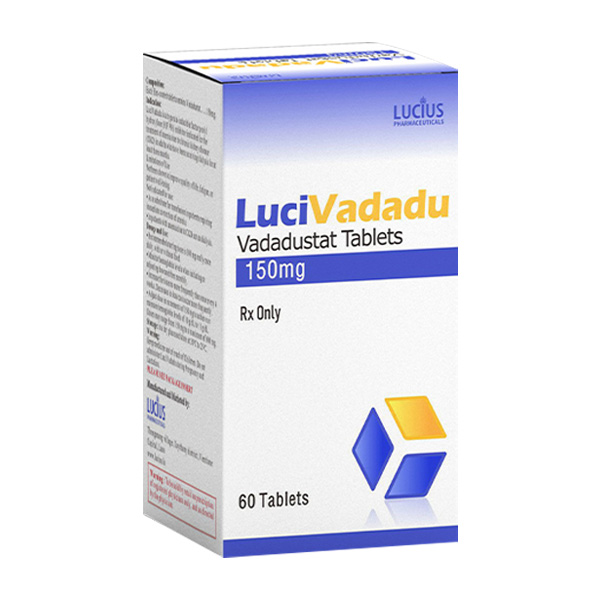
All Names: Vafseo、Vadadustat、伐度司他
Indications:Adult patients with anemia who have chronic kidney disease (CKD) and have undergone dialysis for at least 3 months.
Manufacturer:LUCIUS PHARMACEUTICAL (LAOS) CO., LTD
Customs Clearance Procedure:If the customs requires the package for customs clearance, please pay the customs clearance fee according to the content of EMS SMS and customs regulations.
Valdostat is a hypoxia inducible factor prolyl hydroxylase (HIF-PH) inhibitor used to treat anemia caused by chronic kidney disease (CKD).
1、 Drug name
Common name: Vardesistat.
Product Name: Vafseo.
2、 Indications
Valdostat is a hypoxia inducible factor prolyl hydroxylase (HIFPH) inhibitor, suitable for treating anemia caused by chronic kidney disease (CKD), in adult patients who have been on dialysis for at least three months.
Usage restrictions:
It has not been proven to improve quality of life, fatigue, or patient well-being.
Cannot be used as a blood transfusion substitute for anemia patients who require immediate correction.
Not suitable for non dialysis CKD anemia patients.
3、 Specifications and characteristics
Valdostat is coated with film, 150mg * 60 tablets/box.
4、 Main components
Active ingredient: Vadadustat.
5、 Usage and dosage
Recommended starting dose: 300mg orally once daily, can be taken with or without food.
Medication method: Tablets should be swallowed whole and should not be cut, crushed, or chewed.
Timing of administration: Administration may not take into account the duration or type of dialysis.
Maximum dose: The maximum dose is 600 milligrams per day.
6、 Dose adjustment
Monitoring and adjustment: Hemoglobin levels should be monitored at least every two weeks at the beginning of treatment and after each dose adjustment until they stabilize, followed by at least monthly monitoring. Dose adjustments should not be more frequent than every 4 weeks, and dose reductions can be more frequent.
Goal: Adjust the dosage in increments of 150 milligrams to achieve or maintain hemoglobin levels between 10 grams per deciliter and 11 grams per deciliter.
Rapid increase: If hemoglobin increases by more than 1 g/dL in any two weeks or by more than 2 g/dL in four weeks, the dosage should be interrupted or reduced.
Dose interruption: If the hemoglobin level exceeds 11 grams per deciliter, the administration of vardesistat should be interrupted until the hemoglobin is below or equal to 11 grams per deciliter, and then restarted at a dose reduced by 150 milligrams from the previous dose.
Poor response: If there is no clinically significant increase in hemoglobin after 24 weeks of treatment, vardesistat treatment should be discontinued.
7、 Medication precautions
Dosage: Can be taken with or without food.
Omission treatment: If a dose is missed, it should be taken as soon as possible on the same day as remembered, unless it is close to the next medication time on that day. When approaching the next medication time, the missed dose should be skipped and the next dose should be taken at the regular time. Double doses should not be taken to compensate for missed doses.
Vomiting treatment: In this case, it is recommended to consult a doctor or pharmacist, especially if vomiting occurs shortly after taking medication, which may affect drug absorption.
8、 Medication for special populations
Pregnant women: May cause harm to the fetus and should only be used when the benefits outweigh the potential risks to the fetus.
Breastfeeding women: It is recommended not to breastfeed during the treatment period and within two days after the last dose.
Children: Safety and efficacy have not yet been determined.
Elderly patients (≥ 65 years old): No overall difference in safety or efficacy was observed between patients ≥ 65 years old and younger adult patients.
Patients with liver dysfunction: Not recommended for patients with cirrhosis or active or acute liver disease.
Renal insufficiency patients: suitable for adult patients with chronic kidney disease who have been on dialysis for at least 3 months. Not recommended for non dialysis CKD anemia patients.
9、 Adverse reactions
Common adverse reactions (incidence ≥ 10%): hypertension and diarrhea.
Other adverse reactions (incidence rate ≥ 5%): headache, nausea, fatigue, abdominal pain, vomiting, gastrointestinal erosion, dizziness, dyspnea, arteriovenous fistula thrombosis, dialysis related complications.
Serious adverse reactions:
Increased risk of death, myocardial infarction, stroke, venous thromboembolism, and vascular access thrombosis.
Hepatotoxicity: May cause liver damage. It is recommended to monitor ALT, AST, and bilirubin monthly before treatment and for the first 6 months after treatment begins, followed by monitoring according to clinical instructions. If ALT or AST continues to rise or is accompanied by an increase in bilirubin, the medication should be discontinued.
Hypertension: May exacerbate hypertension, including the occurrence of hypertensive crisis. Blood pressure should be monitored regularly and antihypertensive treatment adjusted as needed.
Seizures: have occurred in CKD patients receiving treatment with vardesivir. New onset epilepsy, prodromal symptoms, or changes in seizure frequency should be monitored.
Gastrointestinal erosion: There have been reports of gastric or esophageal erosion and gastrointestinal bleeding, and individuals with relevant medical history, taking drugs that increase the risk of gastrointestinal erosion, or smoking and drinking may have an increased risk.
Malignant tumors: may have adverse effects on cancer growth and are not recommended for patients with active malignant tumors.
10、 Contraindications
Valdostat is prohibited from being used for:
Patients known to be allergic to vardesivir or any of its components.
Patients with uncontrolled hypertension.
11、 Drug interactions
Iron containing preparations and phosphate binders: Valvalostat should be taken at least 1 hour before taking oral iron supplements, iron containing products, or iron containing phosphate binders.
Iron free phosphate binders: Valvalostat should be taken at least 1 hour before or 2 hours after taking iron free phosphate binders.
Statins: Adverse reactions related to statins should be monitored when used in combination. When used together, the initial dose of simvastatin should be 5 milligrams per day, and the maximum daily dose should not exceed 20 milligrams; The maximum daily dose of rosuvastatin should not exceed 5 milligrams.
Organic anion transporter (OAT) OAT1/OAT3 inhibitors (such as probenecid and gefilzil): may increase exposure to vardesivir and require close monitoring of hemoglobin reactions that are too strong or too fast, as well as adverse reactions.
Breast cancer resistant protein (BCRP) substrate (such as sulfasalazine): Vardurestat may increase its exposure, so it is necessary to monitor substrate related adverse reactions and reduce the substrate dose as required.
OAT3 substrates (such as cefaclor, furosemide, sitagliptin): Valvalostat may increase its exposure, and substrate related adverse reactions need to be monitored and substrate doses adjusted as needed.
12、 Storage method
Store at 20 ° C to 25 ° C (68 ° F to 77 ° F); Allow for brief placement between 15 ° C and 30 ° C (59 ° F and 86 ° F).
Please keep out of reach of children.
Vadadustatinformation