- All Drug Categories
- Home
- Anti-cancer Drugs
- Healthcare Products
- Medical Information
- Statement
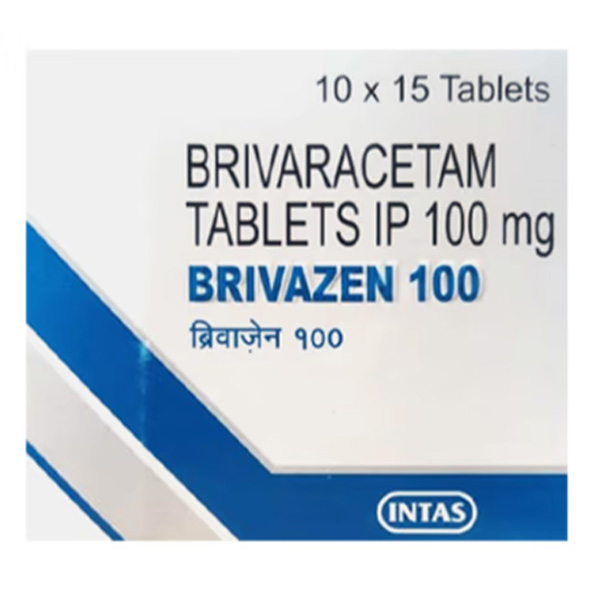
All Names: Brivaracetam、Briviact、布立西坦
Indications:As an adjuvant therapy, it is used to control focal seizures in epilepsy patients aged 16 and above.
Manufacturer:Intas,India
Customs Clearance Procedure:If the customs requires the package for customs clearance, please pay the customs clearance fee according to the content of EMS SMS and customs regulations.
Brivaracetam is a novel synaptic vesicle protein 2A (SV2A) highly selective ligand, belonging to pyrrolidone derivatives, used as an adjuvant therapy to control focal seizures in epilepsy.
1、 Drug name and core ingredients
1. The generic name of the drug is Brivaracetam, and the trade name is Briviact ® .
2. The core active ingredient is Bricitan.
2、 Indications
Bruxetine is suitable for the treatment of patients with partial epileptic seizures aged 1 month and above.
3、 Specifications and characteristics
Tablets: Specification 100mg.
4、 Usage and dosage
1. Adults and adolescents aged 16 and above: The recommended starting dose is 50 milligrams twice daily (total daily dose of 100 milligrams). According to individual tolerance and efficacy, it can be adjusted to 25mg twice daily or increased to 100mg twice daily.
2. Children aged 1 month to under 16 years old: The dosage is calculated based on body weight (see Table 1 for details) and taken orally twice a day.
3. General usage: Tablets and oral solutions can be taken with or without food. Tablets should be swallowed whole in liquid form and should not be chewed or crushed. Oral solutions should be measured using specialized measuring tools.
5、 Dose adjustment
1. Combined use with rifampicin: As rifampicin can reduce the blood concentration of budesonide, it is recommended to increase its dosage by up to 100% (i.e. double).
2. Patients with liver dysfunction: Dosage adjustment is required for all degrees of liver dysfunction. For example, the initial dose for adults should be adjusted to 25 milligrams twice a day, and the maximum maintenance dose should be 75 milligrams twice a day.
6、 Medication precautions
1. Usage and diet: This product can be taken with or without food.
2. Missing dose handling: If a dose is missed, it should be taken as soon as possible. If it is close to the next scheduled medication time, skip the missed dose and take the next dose at the regular time. Do not take double the dosage to make up for missed doses.
3. Vomiting treatment: If vomiting occurs, it is recommended to consult a doctor or pharmacist, but it is usually not recommended to take it immediately.
4. Discontinuation principle: Sudden cessation of medication is prohibited and should be gradually reduced to minimize the risk of increased seizure frequency and status epilepticus.
7、 Medication for special populations
1. Pregnancy: Based on animal data, it may cause harm to the fetus. It is recommended that pregnant women consult a doctor before taking medication and encourage participation in prenatal exposure registration.
2. Breastfeeding period: Bulixitan is secreted into human milk, and there is insufficient information on its effects on infants and lactation. The pros and cons need to be weighed.
3. Children: The safety and efficacy of children aged 1 month and above have been established, while the safety and efficacy of infants under 1 month have not yet been established.
4. Elderly people: usually should start from the lower limit of the dosage range, reflecting their decreased liver, kidney, or heart function and increased likelihood of complications or other drug treatments.
5. Renal insufficiency: No need to adjust dosage. However, there is no data available for patients with end-stage renal disease (ESRD) who require dialysis, so it is not recommended to use it.
8、 Main adverse reactions
1. Common adverse reactions (adult ≥ 5% and incidence at least 2% higher than placebo): drowsiness/sedation, dizziness, fatigue, nausea/vomiting. Adverse reactions in children are similar to those in adults.
2. Serious adverse reactions (requiring vigilance):
Suicide ideation and behavior.
Neurological adverse reactions: drowsiness, fatigue, dizziness, gait and coordination disorders.
Psychological adverse reactions: including irritability, anxiety, aggressive behavior, depression, and psychotic symptoms.
Hypersensitivity reactions: bronchospasm and angioedema.
Severe skin reactions, such as Stevens Johnson syndrome and toxic epidermal necrolysis.
Hematological abnormalities: leukopenia, neutropenia.
9、 Contraindications
Patients with a history of hypersensitivity reactions to budesonide or any non active ingredients of this product are contraindicated.
10、 Important drug interactions
1. Rifampicin: It can reduce the plasma concentration of bupivacaine. It is recommended to double the dose of bupivacaine when used in combination.
2. Carbamazepine: Burixitan may increase exposure to the active metabolite of carbamazepine (carbamazepine epoxide), and if tolerance issues arise, reducing the dose of carbamazepine should be considered.
3. Phenytoin: Burixitan may increase the plasma concentration of phenytoin, and phenytoin levels should be monitored when used in combination.
4. Levetiracetam: When used in combination, budesonide did not show any additional therapeutic benefits.
11、 Storage method
1. All dosage forms should be stored at room temperature between 15 ° C and 30 ° C.
2. Do not freeze oral solutions and injections.
Briviactinformation