- All Drug Categories
- Home
- Anti-cancer Drugs
- Healthcare Products
- Medical Information
- Statement
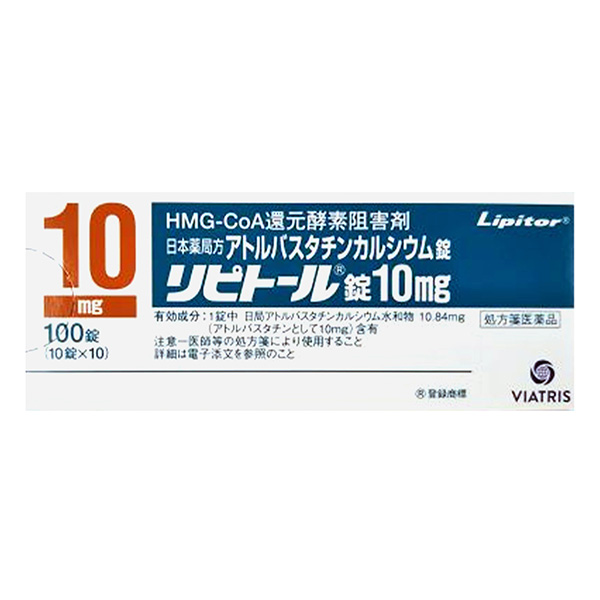
All Names: Atorvastatin Calcium Hydrate、Lipitor Tablets、 阿托伐他汀钙水合物、阿托伐他汀钙片、立普妥片、リビトール錠
Indications:Suitable for adult hypercholesterolemia (including primary) and familial hypercholesterolemia (heterozygous, homozygous), homozygous patients should use it on the basis of non pharmacological treatment (such as LDL apheresis) or when it cannot be implemented.
Manufacturer:日本Viatris
Customs Clearance Procedure:If the customs requires the package for customs clearance, please pay the customs clearance fee according to the content of EMS SMS and customs regulations.
Atorvastatin calcium tablets (Lipitor) are HMG CoA reductase inhibitors (statins) that regulate lipid metabolism by selectively inhibiting cholesterol synthesis rate limiting enzymes in the liver.
1、 Drug name
1. Common name: Atorvastatin Calcium
2. Product Name: Lipitor
2、 Indications
1. Hypercholesterolemia.
2. Familial hypercholesterolemia.
3、 Specifications and characteristics
1. Specifications:
10mg tablets: Each tablet contains 10.84mg of atorvastatin calcium hydrate (equivalent to 10mg of atorvastatin).
2. Characteristic:
10mg tablets: white film coated tablets.
4、 Main components
Active ingredient: Atorvastatin calcium.
5、 Usage and dosage
1. Hypercholesterolemia: The usual starting dose for adults is 10mg orally once daily. It can be adjusted according to age and symptoms, and in severe cases, it can be increased to 20mg per day.
2. Familial hypercholesterolemia: The starting dose for adults is usually 10mg orally once daily. It can be adjusted according to age and symptoms, and in severe cases, it can be increased to 40mg per day.
6、 Dose adjustment
1. Liver dysfunction: It is prohibited to use it for patients with potentially low liver function (such as acute hepatitis, cirrhosis, etc.). Caution should be exercised for patients with a history of liver disease.
2. Renal dysfunction: Patients with renal dysfunction have a higher risk of developing rhabdomyolysis and should be used with caution, especially when combined with other medications.
3. Elderly people: With decreased physiological function, there is a higher risk of rhabdomyolysis, and caution should be exercised when using it.
7、 Medication precautions
1. Omission handling: If you forget to take your medication, please take it as soon as you remember. But if it is close to the next medication time, the missed dose should be skipped and the next medication should be taken at the regular time. Do not take double the dose at once.
2. Medication time: once a day, can be taken at any time in the morning or evening, but it is best to take it at a fixed time. It can be taken on an empty stomach or after a meal.
3. Vomiting: If vomiting occurs immediately after taking medication, the degree of vomiting can be used to determine whether additional medication is needed; If it has been a long time, there is no need to retake it.
4. Preparation before treatment: Before starting treatment, sufficient dietary therapy should be carried out, and exercise therapy should be considered to reduce the risk factors of ischemic heart disease such as hypertension and smoking.
5. Regular check: Blood lipid levels should be checked regularly during medication; Check liver function at least once within 12 weeks after starting or increasing the dosage, and then regularly (e.g. every six months) thereafter.
8、 Medication for special populations
1. Liver function impairment: It is contraindicated for patients with acute hepatitis, acute exacerbation of chronic hepatitis, cirrhosis, liver cancer, and jaundice. Patients with a history of liver disease should use medication with caution.
2. Renal dysfunction: Patients with renal dysfunction or a history of the disease have a high risk of developing rhabdomyolysis and should be cautious. When combined with beta drugs, if necessary, regular renal function checks should be performed.
3. Elderly people: physiological function declines, adverse reactions are prone to occur, and medication should be taken with caution and closely monitored.
4. Pregnant and lactating women: prohibited.
5. Children: Safety and efficacy data have not been established yet.
6. Others: patients with diabetes may worsen their condition; Patients with hypothyroidism, genetic muscle disease, history of drug-induced muscle injury, and alcohol poisoning have an increased risk of developing rhabdomyolysis and should use medication with caution.
9、 Adverse reactions
1. Major side effects:
(1) Rhabdomyolysis: manifested as muscle pain, fatigue, elevated CK (creatine kinase), elevated myoglobin in blood and urine, accompanied by rapid deterioration of renal function.
(2) Immune mediated necrotizing myopathy: manifested as proximal muscle weakness, elevated CK, muscle fiber necrosis, etc.
(3) Liver dysfunction: severe hepatitis, hepatitis, liver dysfunction, jaundice.
(4) Allergic reactions: angioneurotic edema, allergic reactions, urticaria, etc.
(5) Hematological system: granulocyte deficiency, pancytopenia, thrombocytopenia.
(6) Skin: Toxic epidermal necrolysis, Stevens Johnson syndrome, erythema multiforme.
(7) Metabolism: hyperglycemia, diabetes.
(8) Respiratory system: Interstitial pneumonia (manifested as fever, cough, difficulty breathing, etc.).
(9) Neurological system: Myasthenia gravis (which can worsen or recur).
2. Other common side effects:
(1) Gastrointestinal symptoms (discomfort in the stomach, diarrhea, constipation, nausea, etc.).
(2) Musculoskeletal symptoms (joint pain, limb pain, back pain).
(3) Skin rash and itching.
10、 Contraindications
1. Patients with a history of allergies to the ingredients of this medication.
2. Patients with potentially impaired liver function (such as acute hepatitis, acute exacerbation of chronic hepatitis, cirrhosis, liver cancer, jaundice).
3. Pregnant or potentially pregnant women, as well as breastfeeding women.
4. Patients currently taking Glecaprevir/Probentasvir.
11、 Drug interactions
1. Combination use with Gekaivir/Pirunavir: contraindicated. It will significantly increase the blood concentration of atorvastatin.
2. Caution should be exercised when combining with the following drugs (which may increase the risk of rhabdomyolysis or alter the efficacy):
(1) Betrate drugs (such as benzalkonium chloride) and niacin preparations: increase the risk of rhabdomyolysis.
(2) Immunosuppressants (such as cyclosporine, etc.): increase the risk of rhabdomyolysis and significantly increase the blood concentration of atorvastatin.
(3) Azole antifungal drugs (such as itraconazole) and macrolide antibiotics (such as erythromycin and clarithromycin): increase the risk of rhabdomyolysis and elevate the blood concentration of atorvastatin.
(4) HIV protease inhibitors (such as lopinavir/ritonavir, etc.): significantly increase the blood concentration of atorvastatin.
(5) Other CYP3A4 inhibitors/inducers, such as entecavir, ritemovir, and voxetine (CYP3A4 inhibitors), can increase blood drug concentrations; Efavirenz, rifampicin, and besarotene (CYP3A4 inducer) can reduce blood drug concentrations.
(6) Glucose juice: Drinking in large quantities (such as 1.2L/day) can increase the blood concentration of atorvastatin by about 2.5 times.
(7) Ion exchange resin (such as colexamide): When used in combination, it can reduce the blood concentration of atorvastatin, but the effect of reducing LDL-C is enhanced.
12、 Storage method
1. PTP packaging: Use aluminum foil bags to maintain quality, and avoid moisture after opening.
2. Bottled: Use desiccants to maintain quality, and the lid should be tightly closed after opening to avoid moisture.
Lipitorinformation