- All Drug Categories
- Home
- Anti-cancer Drugs
- Healthcare Products
- Medical Information
- Statement
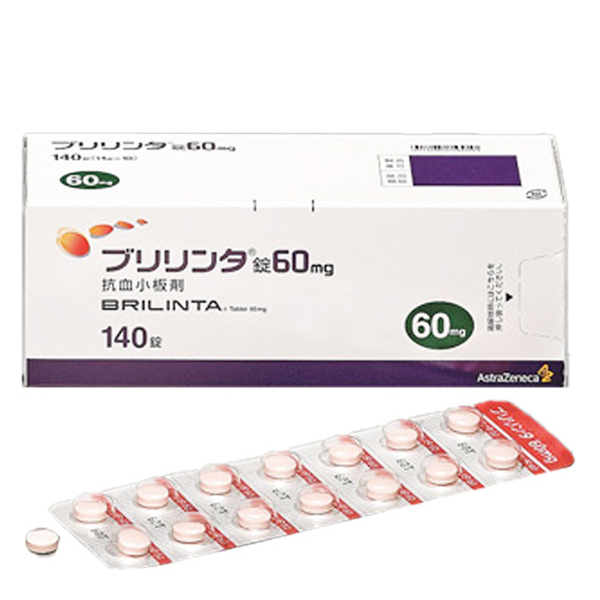
All Names: Brilinta、Ticagrelor、替格瑞洛、倍林达
Indications:Suitable for patients with specific high-risk acute coronary syndrome (requiring PCI and other P2Y12 antagonists not available) or old myocardial infarction (with high-risk factors and ischemia risk greater than bleeding risk), aspirin should be used in combination.
Manufacturer:AstraZeneca
Customs Clearance Procedure:If the customs requires the package for customs clearance, please pay the customs clearance fee according to the content of EMS SMS and customs regulations.
Brilinta is an oral, reversible, and directly acting P2Y12 receptor antagonist, belonging to antiplatelet drugs.
1、 Drug name
1. Common name: Ticagrelor
2. Product Name: Brilinta Ingot
2、 Indications
1. Acute coronary syndrome (using 90mg specification): suitable for patients with acute coronary syndrome undergoing percutaneous coronary intervention (PCI), including unstable angina, non ST segment elevation myocardial infarction, and ST segment elevation myocardial infarction. Limited to situations where aspirin combined with another antiplatelet drug is required for dual antiplatelet therapy and it is difficult to use other antiplatelet drugs.
2. Old myocardial infarction (60mg): It is applicable to old myocardial infarction patients with one or more of the following risk factors and a particularly high risk of atherothrombotic events: diabetes patients over 65 years old who need drug treatment, patients with more than two myocardial infarction histories, coronary heart disease with multiple lesions confirmed by angiography, or non end-stage chronic renal dysfunction.
3、 Specifications and characteristics
1. Specifications:
60mg tablets: Each tablet contains 60mg of ticagrelor.
90mg tablets: Each tablet contains 90mg of ticagrelor.
2. Characteristic:
60mg ingot: a very light yellow red circular film coated piece.
90mg ingot: light yellow circular film coated piece.
4、 Main components
Active ingredient: ticagrelor.
5、 Usage and dosage
1. Acute coronary syndrome: The initial dose for adults is usually 180mg, followed by a maintenance dose of 90mg each time, taken orally twice a day.
2. Old myocardial infarction: Adults usually take 60mg orally twice a day.
3. Combination therapy: Must be used in combination with aspirin (maintenance dose 81-100mg/day).
6、 Dose adjustment
1. For patients with liver and kidney dysfunction, there is no need to adjust the dosage due to mild impairment, but moderate or severe liver dysfunction patients are prohibited from using it.
2. For elderly patients, low weight patients, and patients with renal dysfunction, caution should be exercised when using medication due to the high risk of bleeding.
7、 Medication precautions
1. Omission treatment: If you forget to take your medication, you should take the regular dose at the next scheduled time and not double the dose at once.
2. Before surgery: To avoid the risk of bleeding, it is recommended to discontinue medication for at least 5 days before surgery. If medication cannot be fully discontinued, close observation of bleeding is necessary.
3. Drug delivery: Guide patients to take medication out of PTP packaging to prevent accidental ingestion of packaging materials and esophageal damage.
4. Vomiting: If vomiting occurs after taking medication, there is no need to take the next dose at the normal time.
8、 Medication for special populations
1. Liver function impairment: It is contraindicated for patients with moderate or severe liver dysfunction.
2. Renal dysfunction: high risk of bleeding, medication should be taken with caution. Patients with severe renal insufficiency (creatinine clearance rate<30mL/min) and dialysis patients can use it, but close monitoring is required.
3. Elderly people: There is a high risk of bleeding, and the incidence of bleeding is increasing in people over 75 years old. Therefore, medication should be taken with caution.
4. Pregnant women: Use only when the benefits of treatment outweigh the risks.
5. Breastfeeding women: breastfeeding is not recommended.
6. Children: Safety and efficacy data have not been established yet.
7. Other: Patients with a history of cerebral infarction or transient ischemic attack, and a high risk of bradycardia (such as sick sinus syndrome and high atrioventricular block) are advised to avoid using it. Patients with respiratory diseases such as COPD and asthma are advised to avoid using it.
9、 Adverse reactions
1. Major side effects:
Bleeding: intracranial bleeding, gastrointestinal bleeding, gingival bleeding, rectal bleeding, hematuria, etc.
Allergic reactions: anaphylactic shock, angioedema.
Arrhythmia: Mild and chronic arrhythmias such as high atrioventricular block and sinus arrest.
2. Other common side effects:
Bleeding tendency (nosebleeds, subcutaneous bleeding, contusions, hematomas, etc.).
dyspnea.
Nausea and diarrhea.
Hyperuricemia.
Dizziness, vertigo.
10、 Contraindications
1. Patients who are bleeding (such as intracranial hemorrhage, gastrointestinal bleeding, urinary tract bleeding, hemoptysis, etc.) or hemophilia patients.
2. Patients with a history of intracranial hemorrhage.
3. Patients with moderate or severe liver dysfunction.
4. Patients with a history of allergies to the ingredients of this medication.
5. Patients taking potent CYP3A inhibitors such as itraconazole, clarithromycin, ritonavir, etc.
6. Patients taking potent CYP3A inducers such as rifampicin, carbamazepine, phenytoin sodium, St. John's wort, etc.
11、 Drug interactions
1. Combination with strong CYP3A inhibitors/inducers: contraindicated. The former will increase the blood concentration of ticagrelor and enhance the risk of bleeding; The latter will lower the blood drug concentration and weaken the efficacy.
2. Co administration with anticoagulants/thrombolytic drugs/nonsteroidal anti-inflammatory drugs: increases the risk of bleeding and requires caution.
3. Co administration with other CYP3A substrates: Co administration with simvastatin increases the blood concentration of statins; Combining with morphine can reduce the blood concentration of ticagrelor.
4. Co administration with P-glycoprotein substrates/inhibitors: Co administration with digoxin will increase digoxin concentration; Co administration with cyclosporine can increase the concentration of ticagrelor.
5. Combination with rosuvastatin: may increase the risk of rhabdomyolysis.
12、 Storage method
Normally, drugs should be stored out of reach of children, avoiding high temperatures, high humidity, and direct sunlight.
Brilintainformation