- All Drug Categories
- Home
- Anti-cancer Drugs
- Healthcare Products
- Medical Information
- Statement
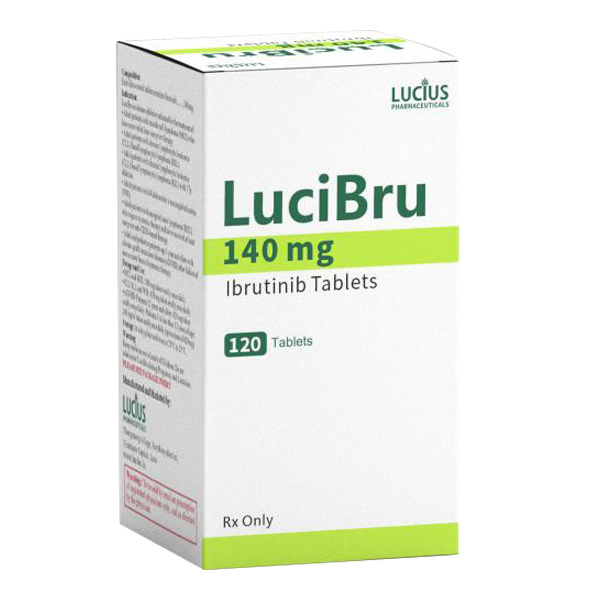
All Names: Ibrutix、lbrucent、Imbruvica、Ibrutinib、伊布替尼、亿珂、依鲁替尼
Indications:Suitable for adult patients with CLL/SLL, CLL/SLL with 17p deletion, WM, and cGVHD who have failed at least one systemic treatment in children and adults aged 1 year and above.
Manufacturer:LUCIUS PHARMACEUTICAL (LAOS) CO., LTD
Customs Clearance Procedure:If the customs requires the package for customs clearance, please pay the customs clearance fee according to the content of EMS SMS and customs regulations.
Ibrutinib is a small molecule kinase inhibitor that inhibits the proliferation and survival of malignant B lymphocytes by blocking the B cell receptor (BCR) signaling pathway, while regulating the tumor microenvironment. It is used to treat various B cell malignancies and chronic graft-versus-host disease (cGVHD).
1、 Drug name
1. Common name: Irutinib
2. Product Name: IMBRUVICA
3. English name: Ibrutinib
2、 Indications
Irutinib is a kinase inhibitor used to treat the following patients:
1. Mantle cell lymphoma (MCL) that has received at least one treatment in the past.
2. Chronic lymphocytic leukemia (CLL) that has received at least one treatment in the past.
3、 Specifications and characteristics
1. Specification: 140 milligrams per capsule.
2. Appearance: Capsule.
4、 Main components
1. Active ingredient: Erlotinib.
2. Non active ingredients: The capsule contents include cross-linked carboxymethyl cellulose sodium, magnesium stearate, microcrystalline cellulose, and sodium dodecyl sulfate. The capsule shell contains gelatin, titanium dioxide, and black ink.
5、 Usage and dosage
1. Recommended dose for mantle cell lymphoma (MCL): 560 milligrams orally once daily (i.e. four 140 milligrams capsules).
2. The recommended dosage for chronic lymphocytic leukemia (CLL) is 420mg orally once daily (i.e. three 140mg capsules).
3. Usage: Take the whole pill with water at approximately the same time every day. Do not open, break or chew the capsule.
4. Omission treatment: If missed at the scheduled time, it can be replenished as soon as possible on the same day, and the normal medication time will be restored the next day. Double doses should not be taken on the same day to make up for missed doses.
6、 Dose adjustment
1. Adjustment for adverse reactions: For any grade 3 or above neutropenia with non hematological toxicity, infection or fever, or grade 4 hematological toxicity, treatment with ibrutinib should be discontinued.
2. Adjustments caused by drug interactions: Avoid using potent or moderate CYP3A inhibitors simultaneously. For potent CYP3A inhibitors that require short-term use (≤ 7 days), consider discontinuing erlotinib during inhibitor use. For intermediate acting CYP3A inhibitors that must be used, the dose of ibrutinib should be reduced to 140 milligrams once daily.
7、 Medication precautions
1. Medication time: once a day, taken at a fixed time.
2. Dietary impact: Taking it with food can increase the exposure of erlotinib by about 2 times. Grapefruits, grapefruit juice, and Seville oranges (commonly used in jams) should be avoided as they contain intermediate acting CYP3A inhibitors.
3. Omission treatment: Take the medication as soon as possible when remembered on the same day, take the medication according to the original plan the next day, and do not take double the dose.
4. Monitoring requirements: Complete blood cell count should be monitored monthly during the treatment period; Monitor renal function (creatinine levels) and maintain adequate hydration; Closely monitor bleeding signs and infection symptoms.
8、 Medication for special populations
1. Pregnant women: Based on animal data, it may pose a risk to the fetus. It is recommended that women avoid pregnancy during treatment.
2. Breastfeeding women: It is not yet clear whether ibrutinib is secreted with human milk. Due to potential serious adverse reactions, a balanced decision should be made to stop breastfeeding or discontinue medication.
3. Child patients: Safety and efficacy have not yet been established.
4. Elderly patients: In MCL and CLL studies, no overall difference in effectiveness was observed compared to younger patients, but certain adverse events (such as cardiac events, infections, gastrointestinal events) had a higher incidence in elderly patients.
5. Kidney injury patients: Mild to moderate kidney injury patients do not require dose adjustment. There is insufficient data on patients with severe kidney injury.
6. Liver injury patients: Ibrutinib is metabolized in the liver, and liver injury patients are expected to have significantly increased exposure levels. Patients with baseline liver injury should avoid using it.
9、 Adverse reactions
1. The most common adverse reactions (≥ 20%) in patients with mantle cell lymphoma include: thrombocytopenia, diarrhea, neutropenia, anemia, fatigue, musculoskeletal pain, peripheral edema, upper respiratory tract infection, nausea, bruising, difficulty breathing, constipation, rash, abdominal pain, vomiting, and decreased appetite.
2. The most common adverse reactions (≥ 20%) in patients with chronic lymphocytic leukemia include thrombocytopenia, diarrhea, bruising, neutropenia, anemia, upper respiratory tract infections, fatigue, musculoskeletal pain, rash, fever, constipation, peripheral edema, joint pain, nausea, stomatitis, sinusitis, and dizziness.
3. Serious adverse reactions include bleeding, infection, bone marrow suppression, nephrotoxicity, and secondary primary malignant tumors.
10、 Contraindications
There are no clear contraindications, but it is contraindicated for those who are allergic to this product or excipients.
11、 Drug interactions
1. CYP3A inhibitors: Avoid combination with potent or moderate CYP3A inhibitors. If intermediate acting CYP3A inhibitors must be used, the dose of ibrutinib should be reduced. When used simultaneously, toxic signs should be monitored more closely.
2. CYP3A inducer: Avoid co administration with potent CYP3A inducers as they significantly reduce the blood concentration of erlotinib.
12、 Storage method
Store at room temperature of 20 ° C to 25 ° C (68 ° F to 77 ° F); Allow short distance transportation within the range of 15 ° C to 30 ° C (59 ° F to 86 ° F). Keep in the original packaging.
Ibrutinibinformation