- All Drug Categories
- Home
- Anti-cancer Drugs
- Healthcare Products
- Medical Information
- Statement
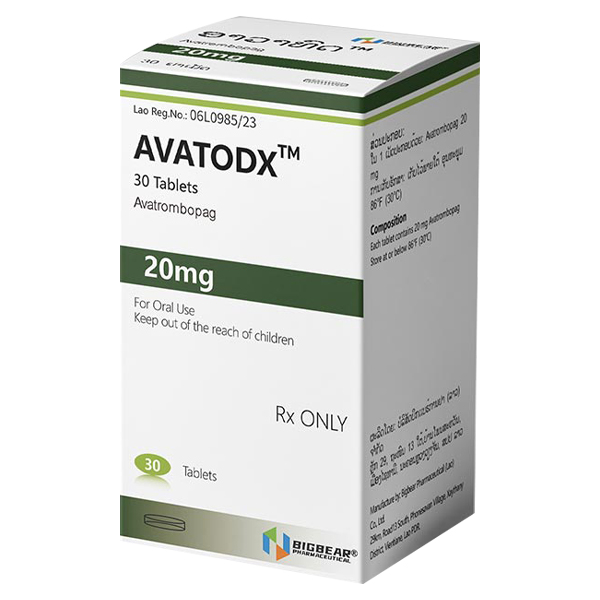
All Names: Avatrombopag、Doptelet、马来酸阿伐曲泊帕片、阿伐曲泊帕、苏可欣
Indications:Chronic liver disease (CLD) patients with thrombocytopenia and chronic immune thrombocytopenia (ITP) patients.
Manufacturer:Daxiong
Customs Clearance Procedure:If the customs requires the package for customs clearance, please pay the customs clearance fee according to the content of EMS SMS and customs regulations.
Afaripopa is an oral small molecule thrombopoietin receptor agonist (TPO-RA) that selectively binds to and activates human TPO receptors, stimulating proliferation and differentiation of bone marrow megakaryocytes and promoting platelet production.
1、 Drug name
1. Common name: Avatranipa
2. Product Name: DOPTELT ®/ DOPTELET ® SPRINKLE
3. English name: Avatrombopag
2、 Indications
1. Used to treat thrombocytopenia in adult patients with chronic liver disease who plan to undergo surgery.
2. Used to treat thrombocytopenia in adult patients with chronic immune thrombocytopenia who have insufficient response to previous treatments.
3. Used to treat thrombocytopenia in pediatric patients aged 1 year and older with persistent or chronic immune thrombocytopenia who have insufficient response to previous treatments.
3、 Specifications and characteristics
Tablets: 20mg.
4、 Main components
1. Active ingredient: Avastin maleate.
2. Accessories: Colloidal silica, cross-linked pyrrolidone, lactose monohydrate, magnesium stearate, microcrystalline cellulose, etc. The coating contains iron oxide yellow, etc.
5、 Usage and dosage
1. Should be taken with food.
2. Tablets and oral granules cannot be interchanged in milligrams.
3. Chronic liver disease patients (adults): The dosage is determined based on preoperative platelet count. Platelet count below 40 × 10 ⁹/L, take 60mg (3 tablets) orally once a day for 5 consecutive days; Platelet count between 40 and below 50 × 10 ⁹/L, take 40mg (2 tablets) orally once daily for 5 consecutive days. Medication should be taken 10 to 13 days before surgery.
4. Patients with immune thrombocytopenia:
Adult and pediatric patients aged 6 years and above (tablets): starting dose of 20 milligrams (1 tablet) once daily. Adjust the dosage or administration frequency based on platelet count to maintain a platelet count of ≥ 50 × 10 ⁹/L. The daily dose should not exceed 40 milligrams (2 tablets).
6、 Dose adjustment
1. The dosage adjustment for patients with immune thrombocytopenia is based on platelet count response.
2. If the platelet count is below 50 × 10 ⁹/L for at least 2 weeks, an increase in dosage level is required.
3. If the platelet count is between 200-400 × 10 ⁹/L, a dose level reduction is required.
4. If the platelet count is higher than 400 × 10 ⁹/L, medication should be suspended. After the platelet count drops below 150 × 10 ⁹/L, the dosage level should be reduced by one dose and treatment should be resumed.
5. When combined with intermediate or potent CYP2C9 and CYP3A4 dual inhibitors or inducers, the initial dose needs to be adjusted.
7、 Medication precautions
1. Must be taken with food.
2. Omission treatment: If used for immune thrombocytopenia, it should be taken as soon as possible and taken according to the original plan the next day. Do not take double the dose at once. If used for preoperative preparation of chronic liver disease, if missed, immediately contact a doctor.
3. The goal of medication is not to restore platelet count to normal.
4. Regular monitoring of platelet count is required.
8、 Medication for special populations
1. Pregnant women: May cause fetal harm, prohibited.
2. Breastfeeding period: It is not recommended to breastfeed during the medication period and at least 2 weeks after the last dose.
3. The safety and efficacy of immune thrombocytopenia in children aged 1 year and above have been established.
4. Elderly patients: Clinical studies have not found any overall differences compared to younger patients.
5. Liver/kidney dysfunction: Patients with chronic liver disease do not need to adjust the dosage. Mild to moderate kidney injury does not require adjustment, and the impact of severe kidney injury is unknown.
9、 Adverse reactions
1. The most common adverse reactions (≥ 3%) in adults with chronic liver disease are fever, abdominal pain, nausea, headache, fatigue, and peripheral edema.
2. The most common adverse reactions in adults with chronic immune thrombocytopenia (≥ 10%) are headache, fatigue, contusion, nosebleeds, upper respiratory tract infections, joint pain, gum bleeding, bruising, and nasopharyngitis.
3. The most common adverse reactions (≥ 10%) of pediatric immune thrombocytopenia are viral infection, nasopharyngitis, cough, fever, and oropharyngeal pain.
4. Serious risk: thrombosis/thromboembolic complications.
10、 Contraindications
There are no clear contraindications.
11、 Drug interactions
1. Co administration with intermediate or potent CYP2C9 and CYP3A4 dual inhibitors (such as fluconazole) increases exposure to atorvastatin and requires a reduction in the initial dose.
2. Co administration with intermediate or potent CYP2C9 and CYP3A4 dual inducers (such as rifampicin) can reduce exposure to atorvastatin, and the initial dose needs to be increased.
3. Patients with chronic liver disease do not need to adjust their dosage due to drug interactions.
12、 Storage method
1. Store at 20 ° C to 25 ° C, allowing for short distance storage between 15 ° C and 30 ° C.
2. Tablets need to be stored in their original packaging.
Dopteletinformation