- All Drug Categories
- Home
- Anti-cancer Drugs
- Healthcare Products
- Medical Information
- Statement
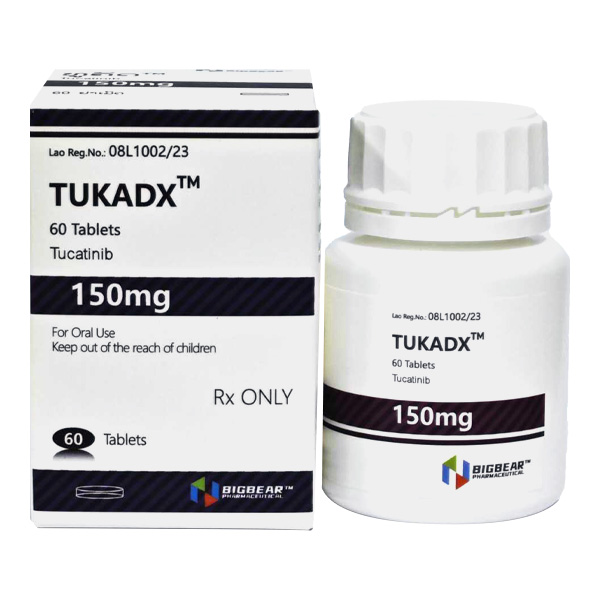
All Names: Tucatinib、Tukysa、妥卡替尼、图卡替尼
Indications:Adult breast cancer patients with human epidermal growth factor receptor 2 (HER2) positive and with metastasis (such as brain metastasis) or who cannot undergo mastectomy.
Manufacturer:Daxiong
Customs Clearance Procedure:If the customs requires the package for customs clearance, please pay the customs clearance fee according to the content of EMS SMS and customs regulations.
Tucatinib, when used in combination with other drugs such as trastuzumab, significantly enhances anti-tumor efficacy and provides a new treatment option for HER2 positive cancer patients.
1、 Drug name
1. Common name: Tukatinib
2. Product Name: TUKYSA ™
3. English name: Tucatinib
2、 Indications
Tukatinib, combined with trastuzumab and capecitabine, is applicable to the treatment of adult advanced unresectable or metastatic HER2 positive breast cancer, including patients with brain metastasis, who have received at least one anti HER2 treatment scheme in the metastasis stage.
3、 Specifications and characteristics
150mg tablets.
4、 Main components
1. Active ingredient: Tukatinib.
2. Auxiliary materials: copolymer ketone, cross-linked ketone, sodium chloride, potassium chloride, sodium bicarbonate, colloidal silica, magnesium stearate, microcrystalline cellulose, etc. The coating ingredients include polyvinyl alcohol, titanium dioxide, polyethylene glycol, talcum powder, iron oxide yellow, etc.
5、 Usage and dosage
1. Recommended dosage: 300mg orally, twice daily, can be taken with food or on an empty stomach.
2. Medication interval: approximately once every 12 hours, taking medication at a fixed time every day.
3. Usage: Swallow the whole tablet, do not chew, crush or break it open. If the pill is damaged, cracked, or incomplete, do not take it.
4. Combination therapy: It should be used in combination with trastuzumab and capecitabine, and the specific dosage should follow the prescription information of these two drugs.
6、 Dose adjustment
1. Adverse reaction dose adjustment: first dose reduction to 250 milligrams twice daily; Reduce the dosage to 200 milligrams twice a day for the second time; Reduce the dosage to 150 milligrams twice a day for the third time. If it is still intolerable, the medication will be permanently discontinued.
2. Severe liver injury patients: The dosage should be adjusted to 200 milligrams orally, twice daily.
3. In combination with potent CYP2C8 inhibitors: if unavoidable, the dose should be reduced to 100 milligrams twice daily; After stopping the inhibitor for 3 half lives, restore the original dose.
7、 Medication precautions
1. Before and after meals: can be taken with food or on an empty stomach, no specific requirements.
2. Missed dose: If one dose is missed, the regular dose should be taken at the next scheduled time and cannot be supplemented or doubled.
3. Vomiting: If vomiting occurs after taking medication, there is no need to take the next dose as originally planned.
4. Other: If severe diarrhea or liver toxicity symptoms occur during medication, seek medical attention immediately.
8、 Medication for special populations
1. Pregnant women: May cause fetal damage, effective contraceptive measures should be taken during medication and at least one week after the last dose.
2. Breastfeeding women: It is not recommended to breastfeed during medication and for at least one week after the last dose.
3. Elderly individuals: Patients aged 65 and above may have a higher incidence of adverse reactions and require close monitoring.
4. Liver injury patients: Mild to moderate liver injury does not require dose adjustment; Severe liver injury should be reduced to 200 milligrams twice a day.
5. Kidney injury patients: Mild to moderate kidney injury does not require dose adjustment; Not recommended for severe kidney injury as capecitabine is contraindicated.
9、 Adverse reactions
1. Common adverse reactions include diarrhea, redness, swelling, and pain in the palms and soles, nausea, fatigue, hepatotoxicity, vomiting, stomatitis, decreased appetite, abdominal pain, headache, anemia, and rash.
2. Serious adverse reactions include severe diarrhea, liver damage, etc.
10、 Contraindications
There are no clear contraindications.
11、 Drug interactions
1. Avoid co administration with potent CYP3A inducers or moderate CYP2C8 inducers.
2. Avoid co administration with potent CYP2C8 inhibitors, and reduce dosage if unavoidable.
3. Avoid co administration with CYP3A substrate drugs to prevent increased toxicity.
4. When used in combination with P-glycoprotein substrates, reduction should be considered.
12、 Storage method
1. Store at room temperature between 20 ° C and 25 ° C, with short-term storage allowed between 15 ° C and 30 ° C.
2. Keep the original packaging with desiccant inside the bottle. Do not discard.
3. Use up within 3 months after opening the bottle, and discard any unused pills.
Tucatinibinformation