- All Drug Categories
- Home
- Anti-cancer Drugs
- Healthcare Products
- Medical Information
- Statement
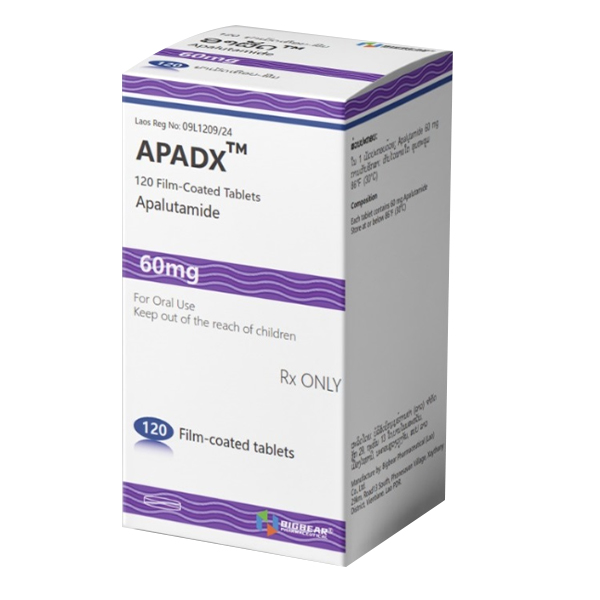
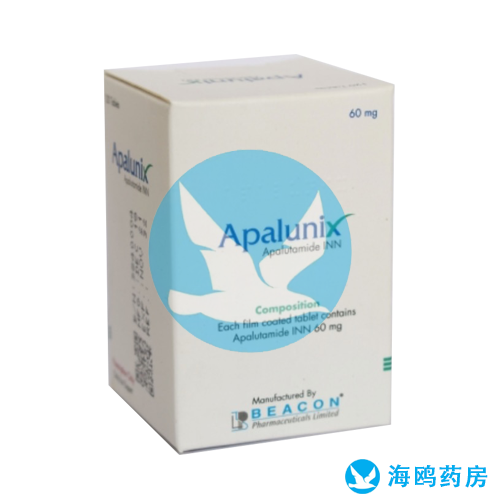
All Names: Apalutamide、Erleada、阿帕鲁他胺薄膜片、安森珂、阿帕他胺、阿帕鲁胺
Indications:Adult male patients with non metastatic castration resistant prostate cancer (nmCRPC), metastatic hormone sensitive prostate cancer (mHSCP), and combined with androgen deprivation therapy (ADT) at high risk of metastatic disease.
Manufacturer:Daxiong
Customs Clearance Procedure:If the customs requires the package for customs clearance, please pay the customs clearance fee according to the content of EMS SMS and customs regulations.
Apalutamide is suitable for specific types of prostate cancer patients and should be used in combination with GnRH analogs or for patients who have undergone bilateral orchidectomy.
1. Drug name
Common name: Apalutamide
Product Name: ERLEADA.
2. Indications
Used for the treatment of non metastatic castration resistant prostate cancer (NM-CRPC) patients.
3. Specifications and characteristics
Specification: 60mg/tablet.
Appearance: Tablets.
4. Main components
The active ingredient is Apalutamide, with the chemical name 4- [7- (6-cyano-5-trifluoromethylpyridin-3-yl) -8-oxo-6-thio-5,7-diazaspiro [3.4] oct-5-yl] -2-fluoro-N-methylbenzamide.
5. Usage and dosage
Recommended dosage: Take 240mg orally once daily (4 60mg tablets), whole tablet, before or after meals.
Combination therapy: Simultaneously receiving gonadotropin-releasing hormone (GnRH) analogs or bilateral orchidectomy.
Dose adjustment: If there is ≥ grade 3 toxicity or intolerable side effects, the medication should be suspended until the symptoms improve to ≤ grade 1 or the original grade, and the original dose can be restored or reduced (180mg or 120mg).
6. Medication precautions
Omission: If missed, please make up for it as soon as possible on the same day, and continue according to the original plan the next day. No additional make-up is allowed.
Vomiting: If vomiting occurs after taking the medication, there is no need to take it again. Follow the original plan for the next dose..
Before and after meals: There are no dietary restrictions, but high-fat meals may delay absorption by about 2 hours.
7. Medication for special populations
Pregnancy: Prohibited, may cause harm to the fetus.
Breastfeeding period: No data available, not recommended for use.
Elderly: Patients over 65 years old need to be monitored for adverse reactions (such as fracture and fall risk).
Liver and kidney function: Mild to moderate injury does not require dose adjustment, severe data is insufficient.
8. Adverse reactions
Common reactions (≥ 10%): fatigue (39%), hypertension (25%), rash (24%), diarrhea (20%), joint pain (16%), fractures (12%), etc.
Serious risks: falls (16% vs 9%), epilepsy (0.2%), cardiovascular events (such as myocardial infarction).
9. Contraindications
Pregnancy (can cause harm to the fetus).
Prohibited for individuals allergic to ingredients.
10. Drug interactions
CYP3A4/2C19 inducers, such as rifampicin, may reduce exposure to apatamide.
CYP3A4 inhibitors, such as ketoconazole, may increase the concentration of apatamide.
P-gp/BCRP substrates, such as rosuvastatin, may reduce their efficacy.
11. Storage method
The original packaging should be protected from light and moisture, with a temperature range of 20-25 ℃ (allowing fluctuations of 15-30 ℃).
Do not discard desiccants and avoid contact with children.
Apalutamideinformation