- All Drug Categories
- Home
- Anti-cancer Drugs
- Healthcare Products
- Medical Information
- Statement
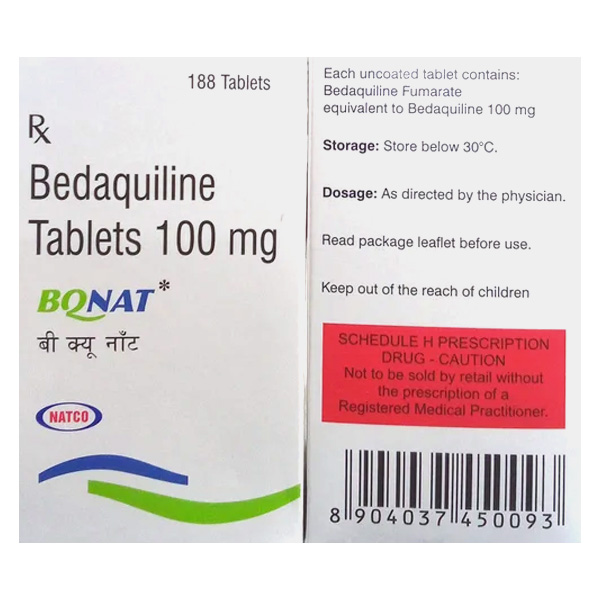
All Names: Sirturo、Bedaquiline、贝达喹啉、斯耐瑞
Indications:It is applicable to adults and children aged 2 years and over with a weight of at least 8kg, and patients suffering from pulmonary tuberculosis caused by Mycobacterium tuberculosis resistant to at least rifampicin and isoniazid need to be treated as part of the combined treatment scheme.
Manufacturer:Natco,India
Customs Clearance Procedure:If the customs requires the package for customs clearance, please pay the customs clearance fee according to the content of EMS SMS and customs regulations.
Bedaquiline is a new antibacterial drug used to treat multidrug resistant tuberculosis (MDR-TB), which belongs to diarylquinoline compounds.
1、 Drug name
1. Common name: Bedaquiline
2. Product Name: SIRTURO ®
2、 Indications
1. As part of a combination therapy regimen, it is used to treat tuberculosis caused by Mycobacterium tuberculosis resistant to at least rifampicin and isoniazid in adult and pediatric patients aged 2 years and above, weighing at least 8 kilograms.
2. Usage restrictions: Not applicable for the treatment of latent tuberculosis infection, drug sensitive pulmonary tuberculosis, extrapulmonary tuberculosis, or infections caused by non tuberculosis bacilli.
3、 Specifications
100mg * 188 tablets/box.
4、 Main components
Active ingredient: Bedaquiline fumarate.
5、 Usage and dosage
1. Recommended dose for adults:
1-2 weeks: Take 400mg orally (4 100mg tablets or 20 20mg tablets) once a day.
Week 3-24: Take 200mg (2 100mg tablets or 10 20mg tablets) orally, three times a week (with a minimum 48 hour interval between two doses).
2. Recommended dosage for pediatric patients (2 years and older, weighing ≥ 8 kilograms): based on weight.
Weight range of 8 kg to<10 kg: 1-2 weeks: 80 mg (4 20mg tablets) once daily; Week 3-24: 40mg (2 20mg tablets) three times a week.
Weight range of 10 kg to<15 kg: 1-2 weeks: 120 mg (6 20mg tablets) once daily; Week 3-24: 60mg (3 20mg tablets) three times a week.
Weight range of 15 kg to<30 kg: 1-2 weeks: 200 mg (2 tablets of 100 mg or 10 tablets of 20 mg) once daily; Week 3-24: 100mg (1 100mg tablet or 5 20mg tablets) three times a week.
Weight ≥ 30 kilograms: The dosage is the same as that of an adult.
3. Total treatment duration: 24 weeks. If adults or pediatric patients aged ≥ 16 years and weighing ≥ 30 kilograms require extended treatment, they can continue to receive 200 milligrams three times a week.
4. Administration method:
100mg tablets: Swallow the entire tablet with water.
20mg tablets:
It can be taken whole or divided into two halves (10 milligrams each) along the functional rating line and swallowed with water.
For those with dysphagia, you can choose: 1) Take it immediately after dispersing it in water, or take it immediately after further mixing it with drinks (such as water, dairy products, apple juice, orange juice, cranberry juice or carbonated drinks) or soft foods (such as yogurt, apple jam, banana puree or Congee); 2) Crush and mix with soft food for immediate consumption; 3) Administer through a feeding tube (8French or larger).
6、 Dose adjustment
1. Missed dose:
During the first 1-2 weeks of treatment: Do not take missed doses (skip this dose and continue with the daily dosing regimen).
Starting from the third week: If missed, it should be replenished as soon as possible, and then the dosing regimen of three times a week should be restored. The total dose within 7 days should not exceed the recommended weekly dose (with a minimum interval of 24 hours between each intake).
Liver injury patients: Mild or moderate liver injury does not require dose adjustment. Patients with severe liver injury should use with caution, only when the benefits outweigh the risks, and monitor for adverse reactions.
Kidney injury patients: Mild or moderate kidney injury does not require dose adjustment. Patients with severe kidney injury or end-stage renal disease should use caution and monitor for adverse reactions.
7、 Medication precautions
1. Before and after meals: must be taken with food to increase oral bioavailability.
2. Vomiting: If vomiting occurs, the principle of handling missed doses should be followed, and adverse reactions should be monitored.
3. Compliance: Emphasize the necessity of completing the entire treatment process. Non compliance may reduce efficacy and increase the risk of drug resistance.
4. Other: During treatment, alcohol consumption and the use of other hepatotoxic drugs should be avoided.
8、 Medication for special populations
1. Pregnancy period: Existing data is insufficient to assess drug-related risks. Active tuberculosis itself carries risks to pregnancy. Animal experiments did not show teratogenicity.
2. Breastfeeding period: It is not recommended to breastfeed unless infant formula cannot be obtained. The drug will enter breast milk at a concentration higher than that of maternal plasma. If a baby is exposed to breast milk, adverse reactions such as liver toxicity should be monitored. Breastfeeding is not recommended during the treatment period and within 27.5 months (5 times half-life) after the last dose, unless formula milk cannot be obtained.
3. Pediatrics: The safety and efficacy of pediatric patients aged 2 years and above with a weight of ≥ 8 kilograms have been established. The safety and efficacy of children under 2 years old or weighing less than 8 kilograms have not been established.
4. Elderly: Insufficient clinical research data.
9、 Adverse reactions
1. Serious adverse reactions: QTc interval prolongation, increased risk of death, liver toxicity.
2. Common adverse reactions in adults (incidence ≥ 10%):
3. Study 1: Nausea, joint pain, headache, hemoptysis, chest pain.
4. Study 4 (40 week group): QTc prolongation, nausea, vomiting, joint pain, elevated transaminase levels, abdominal pain, itching, dizziness, headache, chest pain, rash, insomnia, dry skin, palpitations.
5. Common adverse reactions in pediatric patients:
From 12 years old to<18 years old: joint pain, nausea, abdominal pain.
From 5 years old to<12 years old: Elevated liver enzymes.
From 2 years old to<5 years old: vomiting.
10、 Contraindications
None.
11、 Drug interactions
1. CYP3A4 inducers (strong or moderate): such as efavirenz, rifampicin (rifampicin, rifampicin, rifampicin). Avoid co administration as it may reduce the blood concentration of bedaquiline and potentially decrease its therapeutic effect.
2. CYP3A4 inhibitors: such as ketoconazole, lopinavir/ritonavir. When used in combination, increasing the blood concentration of bedaquiline may increase the risk of adverse reactions. Close monitoring of patient safety (such as liver function) is required.
3. Other drugs for prolonging QTc interval, such as clofazimine and levofloxacin. Co use may result in additional QTc prolongation. An electrocardiogram needs to be monitored.
4. Other antibacterial drugs: When used in combination with isoniazid, pyrazinamide, ethambutol, kanamycin, ofloxacin, or cycloserine, no clinically significant pharmacokinetic effects were observed.
12、 Storage method
1. Pack in the original container.
2. If the tablets are stored outside the original container, they should be placed in a sealed and dark container with a shelf life of no more than 3 months.
3. Avoid light and tightly seal the container.
4. Store at 25 ° C (77 ° F); Allowable deviation between 15 ° C and 30 ° C (59 ° F and 86 ° F).
Bedaquilineinformation