- All Drug Categories
- Home
- Anti-cancer Drugs
- Healthcare Products
- Medical Information
- Statement
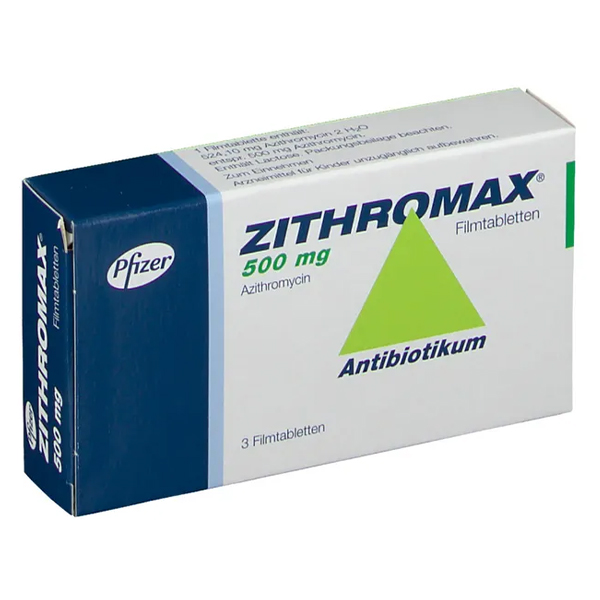
All Names: Azithromycin,Zithromax、阿奇霉素片,阿奇霉素水合物,利普奇
Indications:Suitable for adults aged 18 and above diagnosed with mild to moderate infections caused by sensitive bacteria without contraindications or contraindications for oral treatment (such as moderate to severe illness, hospitalization, etc.), as well as children aged 6 months and above (acute otitis media, community-acquired pneumonia, acute bacterial sinusitis) or 2 years and above (pharyngitis/tonsillitis) diagnosed with infections caused by sensitive bacteria without contraindications.
Manufacturer:Pfizer,USA
Customs Clearance Procedure:If the customs requires the package for customs clearance, please pay the customs clearance fee according to the content of EMS SMS and customs regulations.
Azithromycin, as a broad-spectrum antibiotic, belongs to the class of macrolide antibiotics. It mainly achieves antibacterial purposes by inhibiting the synthesis of bacterial proteins.
1、 Drug name
1. Common name: Azithromycin.
2. Product Name: ZITHOMAX.
2、 Indications
Suitable for mild to moderate infections caused by sensitive bacteria:
1. Adults: Acute exacerbation of chronic bronchitis, acute bacterial sinusitis, community-acquired pneumonia (only applicable to oral treatment), pharyngitis/tonsillitis (as second-line treatment), simple skin and skin structure infections, non gonococcal urethritis and cervicitis, gonococcal urethritis and cervicitis, male genital ulcer disease (chancre).
2. Children (≥ 6 months): Acute otitis media, community-acquired pneumonia.
3. Children (≥ 2 years old): pharyngitis/tonsillitis.
3、 Specifications and characteristics
Tablets: 500mg, pink film coated tablets.
4、 Main components
Active ingredient: Azithromycin dihydrate.
5、 Usage and dosage
1. Adults:
Community acquired pneumonia, pharyngitis/tonsillitis, and skin infections: 500 milligrams per dose on the first day and 250 milligrams per day from the second to the fifth day.
Acute exacerbation of chronic bronchitis: 500mg once daily for 3 consecutive days; Or 500 milligrams on the first day and 250 milligrams per day from the second to the fifth day.
Acute bacterial sinusitis: 500mg once daily for 3 consecutive days.
Genital ulcer disease: 1 gram single dose.
Non gonococcal urethritis/cervicitis: 1 gram single dose.
Gonococcal urethritis/cervicitis: 2 grams per dose.
2. Children (by weight):
Acute otitis media: 30mg/kg per dose; Or 10mg/kg once daily for 3 consecutive days; Or 10 milligrams per kilogram on the first day and 5 milligrams per kilogram per day from the second to the fifth day.
Acute bacterial sinusitis: 10mg/kg once daily for 3 consecutive days.
Community acquired pneumonia: 10 mg/kg on the first day and 5 mg/kg per day from the second to the fifth day.
Pharyngitis/tonsillitis: 12mg/kg once daily for 5 consecutive days.
6、 Dose adjustment
1. Renal insufficiency: mild to moderate without adjustment; Severe renal insufficiency should be used with caution and monitored.
2. Liver dysfunction: Insufficient data, use with caution.
3. Elderly individuals may be more prone to QT interval prolongation and require monitoring.
7、 Medication precautions
1. Before and after meals: Tablets and suspensions can be taken with food or on an empty stomach.
2. Missed dose: It should be taken as soon as possible. If it is close to the next dose, skip it and do not double the dosage.
3. Vomiting: If vomiting occurs within 30 minutes after taking medication, it is recommended to consult a doctor to see if additional medication is needed; The safety of re administration of 30mg/kg to children with vomiting after a single dose has not been determined.
4. Other: Avoid taking antacids containing aluminum and magnesium together; Complete the entire treatment process, and even if the symptoms improve, do not stop taking medication at will.
8、 Medication for special populations
1. Pregnant women: The existing data does not show significant risks, but the pros and cons should be weighed.
2. Breastfeeding period: Medications may enter breast milk, which may cause diarrhea, vomiting, and rash in infants. It is recommended to monitor or consult a doctor.
3. Children: Safety and efficacy have not been established for children under 6 months old; Insufficient data on pharyngitis/tonsillitis under 2 years old.
4. Elderly people are more prone to arrhythmia and should be cautious.
9、 Adverse reactions
1. Common: diarrhea, nausea, abdominal pain, vomiting.
2. Serious but rare: allergic reactions (including angioedema, Stevens Johnson syndrome), hepatotoxicity, QT interval prolongation and arrhythmia, increased risk of cardiovascular death, Clostridium difficile associated diarrhea, and worsening of myasthenia gravis.
10、 Contraindications
1. Individuals known to be allergic to azithromycin, erythromycin, any macrolide or ketolactone drugs.
2. Individuals with a history of azithromycin related cholestatic jaundice/liver dysfunction.
11、 Drug interactions
1. Nifinavir: When used in combination, the blood concentration of azithromycin increases, and liver function and hearing need to be monitored.
2. Warfarin: may enhance anticoagulant effect, prothrombin time needs to be monitored.
3. Digoxin, colchicine, and phenytoin: Although there is no specific research, it is recommended to monitor their combined use.
4. Other QT prolonging drugs (such as certain antiarrhythmic drugs): Co administration may increase the risk of arrhythmia.
12、 Storage method
Tablets: stored at 15 ° C-30 ° C.
13、 Manufacturer
Pfizer Inc.
Azithromycininformation