- All Drug Categories
- Home
- Anti-cancer Drugs
- Healthcare Products
- Medical Information
- Statement
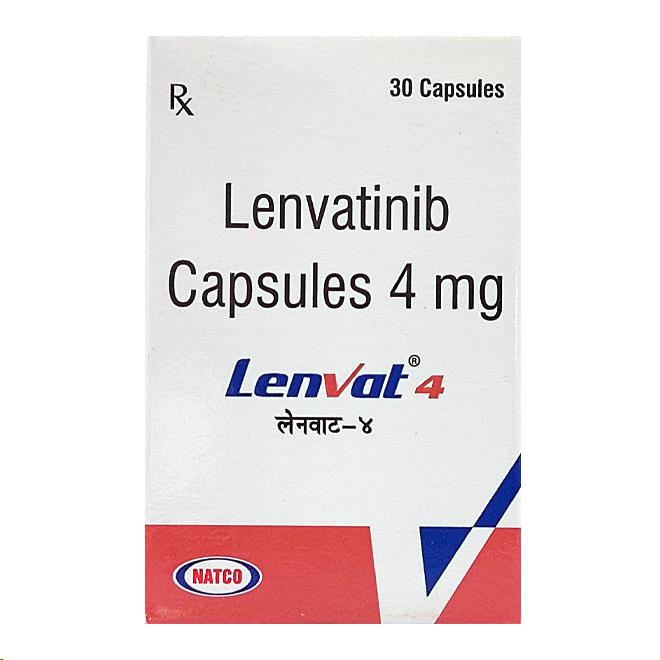
All Names:
Indications:
Manufacturer:Natco,India
Customs Clearance Procedure:If the customs requires the package for customs clearance, please pay the customs clearance fee according to the content of EMS SMS and customs regulations.
Lenvatinib is an oral targeted anticancer drug that belongs to the multi kinase inhibitor class. It works by inhibiting various kinases that promote tumor growth and angiogenesis.
indication
Lenvatinib is mainly used to treat the following types of cancer:
1. Differentiated thyroid cancer (DTC): Used to treat patients with locally recurrent or metastatic, progressive, and radiation iodine refractory differentiated thyroid cancer.
2. Renal cell carcinoma (RCC): Used in combination with Pembrolizumab as first-line treatment for adult patients with advanced renal cell carcinoma. Alternatively, it can be used in combination with Everolimus to treat adult patients with advanced renal cell carcinoma who have previously received anti angiogenic therapy.
3. Hepatocellular carcinoma (HCC): Used to treat patients with unresectable hepatocellular carcinoma.
Mechanism of Action
Lenvatinib is a tyrosine kinase inhibitor that primarily targets vascular endothelial growth factor receptor (VEGFR1-3), fibroblast growth factor receptor (FGFR1-4), platelet-derived growth factor receptor alpha (PDGFR alpha), RET, and KIT. By inhibiting the activity of these kinases, lenvatinib can block the signaling pathways required for tumor cell growth and inhibit tumor angiogenesis (anti angiogenesis), thereby suppressing tumor growth and spread.
Usage and dosage
Lenvatinib is a capsule form that needs to be swallowed whole. It is usually taken once a day at a fixed time and can be taken with or without food.
Differentiated thyroid cancer (DTC): The recommended dosage is once daily, 24 milligrams per dose.
Renal cell carcinoma (RCC):
Combination with pembrolizumab: The recommended dose is lenvatinib once daily, 20mg each time, and intravenous infusion with pembrolizumab every 3 weeks.
Combination with everolimus: The recommended dosage is lenvatinib once daily, 18 milligrams each time, and combination with everolimus once daily, 5 milligrams each time.
Hepatocellular carcinoma (HCC): Recommended dosage based on patient weight. For patients weighing 60 kilograms or more, the recommended dosage is 12 milligrams once daily; For patients weighing less than 60 kilograms, the recommended dosage is 8 milligrams once daily.
Dose adjustment: Doctors will guide patients to temporarily suspend, reduce, or permanently discontinue medication based on the severity of side effects such as hypertension, proteinuria, liver dysfunction, kidney dysfunction, heart failure, gastrointestinal perforation, etc. Patients must strictly follow the doctor's advice to adjust the dosage and cannot change it on their own. Lenvatinib is available in two sizes of capsules, 4 milligrams and 10 milligrams, for dosage adjustment.
common side-effects
Lenvatinib treatment may cause multiple side effects, and their frequency and severity vary depending on the individual, indication, and combination therapy regimen. Common side effects include:
Hypertension: It is very common and requires close monitoring of blood pressure, usually requiring the use of antihypertensive drugs for control.
Fatigue: feeling abnormally tired or weak.
Diarrhea: Increased frequency of bowel movements or loose stools.
Decreased appetite and weight loss: Loss of appetite leads to weight loss.
Nausea and vomiting: discomfort or vomiting in the stomach.
Oral inflammation/mucosal inflammation: pain, inflammation, or ulceration in the mouth.
Proteinuria: The protein content in urine increases and requires regular urine testing and monitoring.
Hand and foot skin reactions: redness, swelling, pain, peeling, blisters, or numbness on the palms or soles of the feet.
Pronunciation difficulty: hoarse or altered voice.
Abdominal pain: Pain or discomfort in the abdomen.
Headache: Head pain.
Bleeding: may include nosebleeds, gum bleeding, etc., and in severe cases, visceral bleeding may occur.
Thyroid dysfunction: may lead to hypothyroidism or hyperthyroidism, requiring monitoring of thyroid function.
Abnormal liver function indicators, such as elevated levels of alanine aminotransferase (ALT) and aspartate aminotransferase (AST).
Important Note
Hypertension: Strict control of blood pressure is necessary before and during treatment. Blood pressure should be monitored during the first week of treatment, and at least once a month thereafter, with more frequent monitoring and adjustment of antihypertensive therapy as needed. When severe hypertension occurs, lenvatinib should be temporarily suspended.
Heart failure: Decreased cardiac pumping function (decreased ejection fraction) may occur. Clinical symptoms and signs related to heart function need to be monitored, and lenvatinib should be suspended or discontinued when symptoms or signs of heart failure occur.
Arterial thromboembolic events: may increase the risk of myocardial infarction, stroke, and other complications. Lenvatinib should be discontinued in the event of arterial thromboembolism.
Hepatotoxicity: May cause serious liver damage. Regular monitoring of liver function indicators is required. When liver failure or hepatic encephalopathy occurs, lenvatinib should be permanently discontinued.
Proteinuria: Regularly conduct urine tests to monitor proteinuria. Lenvatinib should be discontinued when nephrotic syndrome occurs.
Renal failure and renal dysfunction: Acute renal failure or deterioration of renal function may occur. Renal function needs to be monitored, and lenvatinib should be discontinued in the event of life-threatening renal failure.
Gastrointestinal perforation and fistula formation: There is a risk of gastrointestinal perforation or the formation of abnormal channels (fistulas). Lenvatinib should be discontinued when gastrointestinal perforation or life-threatening fistula occurs.
QT interval prolongation: may cause QT interval prolongation on electrocardiogram, increasing the risk of ventricular arrhythmia. Electrocardiogram and electrolytes (potassium, calcium, magnesium) need to be monitored. When QT interval prolongation of grade 3 or above occurs, lenvatinib should be paused.
Hypocalcemia: May cause a decrease in blood calcium levels. Regularly monitor blood calcium levels and supplement calcium supplements if necessary.
Reversible posterior encephalopathy syndrome (PRES): a rare neurological disorder characterized by symptoms such as headache, epilepsy, confusion, and vision problems. When PRES occurs, lenvatinib should be discontinued.
Bleeding: Serious or even fatal bleeding events may occur. Lenvatinib should be discontinued when severe or life-threatening bleeding occurs.
Damaged wound healing: may affect wound healing. Stop using lenvatinib for at least one week before scheduled major surgery, and do not administer it for at least two weeks after major surgery until the wound has fully healed. The safety of resuming medication after the resolution of wound healing complications has not been determined.
Embryo fetal toxicity: It poses a serious threat to the fetus and can lead to death or congenital abnormalities. Women of childbearing age must take effective contraceptive measures during treatment and for at least 30 days after the last dose. Prohibited during pregnancy.
Medication for special populations
Pregnant women: prohibited. There is a risk of fetal malformation.
Breastfeeding women: It is recommended to stop breastfeeding during the treatment period and at least one week after the last dose.
Men and women of childbearing age: Women of childbearing age must use effective contraception during treatment and for at least 30 days after the last dose. If male patients have female partners of childbearing age, effective contraception should also be taken during treatment and within one week after the last dose.
Pediatric medication: Safety and efficacy have not yet been established.
Elderly medication: No significant difference in overall safety was observed in patients aged 65 and above, but the incidence of certain side effects (such as diarrhea, decreased appetite, vomiting) may be higher.
Patients with liver function impairment: Mild liver function impairment patients do not require dose adjustment. Moderate liver function impairment patients (Child Pugh B grade) need to reduce dosage: the initial dose for treating thyroid cancer and kidney cancer should be reduced to 14 milligrams per day (monotherapy) or 10 milligrams per day (in combination with pembrolizumab); Not recommended for the treatment of liver cancer. Patients with severe liver function impairment (Child Pugh C grade) are contraindicated.
Patients with renal impairment: Mild or moderate renal impairment patients do not require dose adjustment. Patients with severe renal impairment or end-stage renal disease should use it with caution and closely monitor for adverse reactions.
Lenvatinibinformation