- All Drug Categories
- Home
- Anti-cancer Drugs
- Healthcare Products
- Medical Information
- Statement
All Names:
Indications:
Manufacturer:LUCIUS PHARMACEUTICAL (LAOS) CO., LTD
Customs Clearance Procedure:If the customs requires the package for customs clearance, please pay the customs clearance fee according to the content of EMS SMS and customs regulations.
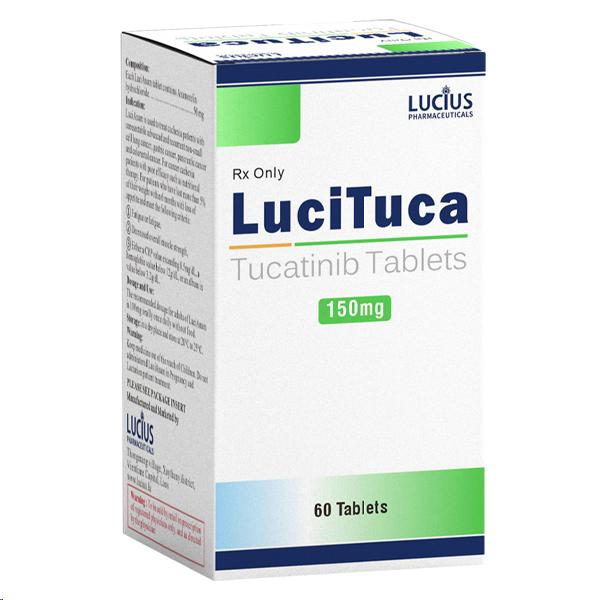
Tucatinib, when used in combination with other drugs such as trastuzumab, significantly enhances anti-tumor efficacy and provides a new treatment option for HER2 positive cancer patients.
1、 Indications
Tucatinib is a kinase inhibitor, which is used in combination with trastuzumab and capecitabine to treat adult HER2 positive breast cancer patients:
Advanced unresectable or metastatic breast cancer (including patients with brain metastasis)
Patients with metastatic diseases who have received at least one anti-HER2 regimen in the past
2、 Mechanism of action
Tukatinib is a HER2 tyrosine kinase inhibitor that works by:
Inhibition of HER2 and HER3 phosphorylation
Blocking downstream MAPK and AKT signaling pathways
Inhibit tumor cell proliferation
Combination therapy with trastuzumab monotherapy can enhance anti-tumor activity
3、 Usage and dosage
Standard dosing regimen
Recommended dose: 300mg orally, twice daily (with an interval of about 12 hours), in combination with trastuzumab and capecitabine
Can be taken with food or on an empty stomach
Swallow the whole piece, do not chew, crush, or pry open
If the missed dose is ≤ 12 hours, it can be supplemented, and if it is>12 hours, the current dose will be skipped
After vomiting, there is no need to take additional medication. Follow the original plan to take the next dose
Dose adjustment
Liver dysfunction:
Child Pugh Grade C: Reduce to 200mg twice a day
Adverse reaction management:
First reduction: 250mg twice a day
Secondary reduction: 200mg twice a day
Three dose reduction: 150mg twice a day
When unable to tolerate 150mg, the medication should be permanently discontinued
4、 Common side effects
≥ 20% incidence rate:
Diarrhea (81%, grade 3 12%)、Hand foot syndrome (63%)、Disgusting (58%)、tired、Hepatotoxicity (42%)、vomiting、stomatitis、Loss of appetite、abdominal pain、headache、anaemia、rash
Important Note
Severe diarrhea: incidence rate of 25%, may lead to dehydration, acute kidney injury, and even death
Hepatotoxicity: 8% of patients have ALT>5 × ULN, and 6% have AST>5 × ULN
5、 Medication precautions
Important monitoring
Before treatment and every 3 weeks: liver function (ALT/AST/bilirubin), complete blood cell count
Regular monitoring: electrocardiogram (QT interval), electrolytes, renal function
Drug interactions
Avoid combination use: Strong CYP3A inducer/Medium acting CYP2C8 inducer
Caution: CYP3A/P-gp substrate drugs (may need to be reduced)
Strong CYP2C8 inhibitor: Reduce to 100mg twice daily
patient education
Avoid grapefruit, starfruit, and pomegranate
Diarrhea ≥ 4 times/day, seek medical attention immediately
Pay attention to liver toxicity symptoms (jaundice, darkened urine color, etc.)
Wash the capsule powder immediately after contact with the skin
6、 Medication for special populations
Pregnancy/lactation
Pregnancy: There is a risk of teratogenicity, and effective contraception is required during treatment and one week after discontinuation of medication
Breastfeeding: Breastfeeding is prohibited during treatment and for one week after discontinuation of medication
Liver and kidney dysfunction
Child Pugh C: Reduce to 200mg twice a day
Severe kidney damage: Not recommended for use (due to contraindications of capecitabine)
Elderly patients
Patients aged 65 and above have a higher incidence of serious adverse reactions (34% vs 24%)
Pediatric drugs
The safety and effectiveness have not yet been established.
Tucatinibinformation