- All Drug Categories
- Home
- Anti-cancer Drugs
- Healthcare Products
- Medical Information
- Statement
All Names:
Indications:
Manufacturer:LUCIUS PHARMACEUTICAL (LAOS) CO., LTD
Customs Clearance Procedure:If the customs requires the package for customs clearance, please pay the customs clearance fee according to the content of EMS SMS and customs regulations.
Capivasortib is an oral small molecule kinase inhibitor that works by targeting the activity of serine/threonine kinase AKT (including AKT1, AKT2, AKT3 subtypes).
1、 Drug name and main ingredients
1. Common name: Capivasortib
2. Product Name: TRUQAP ™
3. Dosage form: Oral film coated tablets
4. Main ingredients: Each tablet contains 160mg or 200mg of capecitabine (active ingredient).
2、 Indications
HR positive/HER2 negative advanced breast cancer: treat adult patients with local advanced or metastatic HR positive/HER2 negative breast cancer with PIK3CA/AKT1/PTEN gene change in combination with Fluvastatin, and the patients need to have received at least one endocrine treatment progress in the stage of metastatic disease, or relapse within 12 months after adjuvant treatment.
3、 Specifications and characteristics
1. Specification: 160mg (round beige tablet, engraved with "CAV160"); 200mg (capsule shaped beige tablet, engraved with "CAV200").
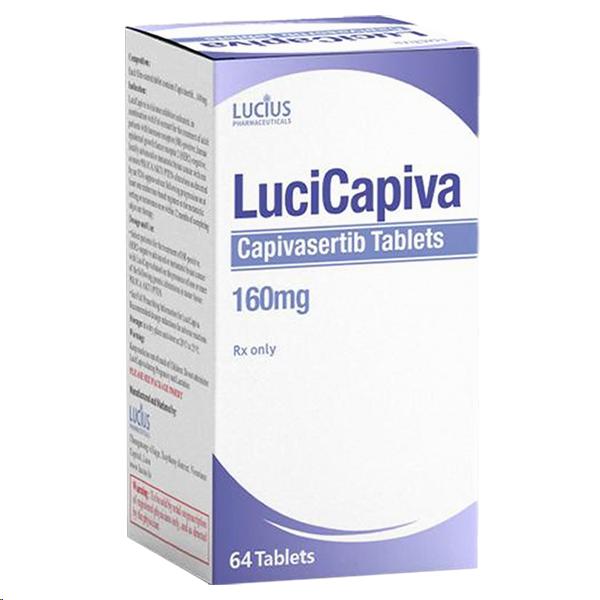
2. Packaging: 64 tablets per bottle, equipped with a child safety bottle cap.
4、 Usage and dosage
1. Recommended dosage: 400mg (2 tablets 200mg) orally, twice a day (with an interval of about 12 hours), taken continuously for 4 days and stopped for 3 days, in a loop. Can be taken with food or on an empty stomach.
2. Missing service handling: If the missed service is ≤ 4 hours, it can be supplemented, and if it exceeds 4 hours, it will be skipped; No need to take additional medication after vomiting.
3. Special medication: When used in combination with strong CYP3A inhibitors, the dosage should be reduced to 320mg twice daily.
5、 Dose adjustment
1. First dose reduction: 320mg (2 tablets of 160mg) twice a day;
2. Secondary reduction: 200mg twice a day;
3. Permanent discontinuation of medication: unable to tolerate a second dose reduction.
4. Adjustment basis:
(1) High blood sugar: Pause when fasting blood sugar>250mg/dL, reduce after recovery;
(2) Diarrhea: pause until it returns to level 1 when it reaches or exceeds level 3;
(3) Skin reaction: If the rash is ≥ grade 3, the medication should be temporarily or permanently discontinued.
6、 Medication precautions
1. Hyperglycemia monitoring: fasting blood glucose and HbA1c should be measured regularly before and during treatment, and diabetes patients need to strengthen monitoring.
2. Diarrhea management: 72% of patients experience diarrhea, it is recommended to prepare antidiarrheal medication and increase fluid replacement.
3. Skin reaction: 58% of patients develop rash, and in severe cases, medication should be discontinued and dermatologists consulted.
4. Dietary taboos: Avoid grapefruit juice (which interferes with metabolism).
7、 Medication for special populations
1. Pregnant women: prohibited (animal experiments show embryotoxicity).
2. Breastfeeding period: Breastfeeding is prohibited during the treatment period and within one week of discontinuation of medication.
3. Liver injury: Moderate to severe (Child Pugh B/C) should be reduced or discontinued.
4. Children: Safety has not been established.
8、 Adverse reactions
1. Common (≥ 20%): Diarrhea (72%), skin reactions (58%), hyperglycemia (57%), lymphopenia (47%), nausea (35%), fatigue (35%).
2. Serious reactions: Grade 3-4 hyperglycemia (2.8%), diarrhea (9%), and skin toxicity (17%).
9、 Contraindications
1. Individuals with severe allergies to capecitabine or excipients;
2. Combined use of strong CYP3A inducers (such as rifampicin).
10、 Drug interactions
1. Strong CYP3A inhibitors (such as itraconazole): need to be reduced to 320mg twice daily;
2. CYP3A substrates (such as midazolam): may increase the exposure of the latter.
11、 Storage method
Store at room temperature (20-25 ° C) and keep the original bottle away from light and moisture.
Capivasertibinformation