- All Drug Categories
- Home
- Anti-cancer Drugs
- Healthcare Products
- Medical Information
- Statement
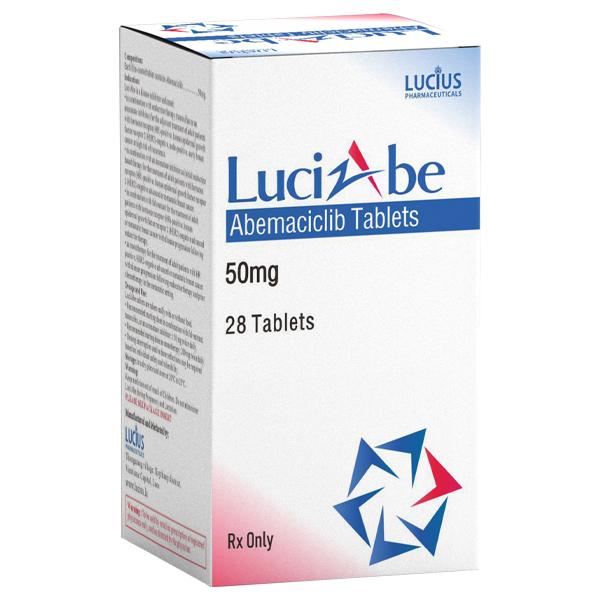
All Names: Abemaciclib、Verzenio、阿贝西利、玻玛西林、唯择、玻玛西尼
Indications:Combined endocrine therapy is suitable for patients with early breast cancer; Combination of Fluvastatin or Aromatase Inhibitor is suitable for patients with advanced or metastatic breast cancer
Manufacturer:LUCIUS PHARMACEUTICAL (LAOS) CO., LTD
Customs Clearance Procedure:If the customs requires the package for customs clearance, please pay the customs clearance fee according to the content of EMS SMS and customs regulations.
Abemaciclib is mainly used for breast cancer patients with hormone receptor (HR) positive and human epidermal growth factor receptor 2 (HER2) negative. It can be combined with endocrine therapy or treated as a single drug to significantly reduce the risk of disease recurrence or delay disease progression.
1、 Drug name
1. Common name: Abemaciclib
2. Product Name: VERZENIO ™
2、 Indications
1. The combination of fluvastatin is used to treat female patients with advanced or metastatic breast cancer with hormone receptor (HR) positive and human epidermal growth factor receptor 2 (HER2) negative, and the disease progresses after previous endocrine therapy.
2. As a single drug treatment, it is used for adult patients with HR positive, HER2 negative advanced or metastatic breast cancer who have received endocrine therapy in the past and received chemotherapy in the metastatic background.
3、 Specifications and characteristics
Abexili tablet specification: 50mg
4、 Main components
1. Each tablet contains 50mg of Abexili.
2. The auxiliary materials include: microcrystalline cellulose 102, microcrystalline cellulose 101, lactose monohydrate, cross-linked carboxymethyl cellulose sodium, sodium stearate fumarate, and silica.
3. The coating ingredients include polyvinyl alcohol, titanium dioxide, polyethylene glycol, talc powder, iron oxide yellow, and iron oxide red.
5、 Usage and dosage
1. Combination therapy with Fluvistran: The recommended starting dose is 150mg, taken orally twice daily.
2. Single drug therapy: The recommended starting dose is 200mg, taken orally twice a day.
3. The medication time is not affected by food, and it is recommended to take medication at a fixed time every day.
4. If missed or vomited, the next dose should not be taken as scheduled.
5. It should be swallowed whole and should not be chewed, crushed, or broken open.
6、 Dose adjustment
Dose adjustment or medication suspension is required based on the severity of adverse reactions:
1. Hematological toxicity (such as neutropenia): Pause or reduce according to CTCAE grading.
2. Diarrhea: Anti diarrhea treatment should be started immediately upon the first appearance of loose stools, and drinking water should be increased. In severe cases, it should be paused or reduced.
3. Hepatotoxicity: Monitor liver function and adjust dosage if sustained or severe elevation of transaminase occurs.
4. Other toxicities (such as fatigue, nausea, etc.): Adjust the dosage according to the severity.
5. When used in combination with potent CYP3A inhibitors, the dosage should be reduced to avoid use with potent CYP3A inducers.
6. Patients with severe liver dysfunction (Child Pugh C grade) should reduce their medication frequency to once daily.
7、 Medication precautions
1. Medication time: taken at a fixed time every day, can be taken with food or on an empty stomach.
2. Omission treatment: Do not supplement, take the next dose according to the original plan.
3. Vomiting treatment: If vomiting occurs after taking medication, do not take it again and continue taking the medication according to the original plan.
4. Swallowing requirements: Swallow the entire tablet without damaging its structure.
5. Avoid co administration with potent CYP3A inhibitors such as ketoconazole and avoid consuming grapefruit products.
6. During the treatment period, regular monitoring of blood routine, liver function, and thrombotic symptoms is required.
8、 Medication for special populations
1. Pregnant women: have embryonic fetal toxicity and need to take effective contraceptive measures.
2. Breastfeeding women: Breastfeeding is prohibited during treatment and for at least 3 weeks after the last dose.
3. Elderly: No need to adjust dosage.
4. Liver dysfunction: Mild to moderate without adjustment, severe requiring reduced frequency medication.
5. Renal insufficiency: Mild to moderate without adjustment, severe with insufficient data.
6. Children: Safety and efficacy have not yet been established.
9、 Adverse reactions
1. Common adverse reactions (incidence ≥ 20%) include: diarrhea, neutropenia, nausea, abdominal pain, infection, fatigue, anemia, leukopenia, decreased appetite, vomiting, headache, and thrombocytopenia;
2. Serious adverse reactions include: severe diarrhea may lead to dehydration or infection, neutropenia may cause infection or even death, hepatotoxicity, venous thromboembolism, and embryo fetal toxicity.
10、 Contraindications
There are no clear contraindications.
11、 Drug interactions
1. Avoid co administration with potent CYP3A inhibitors (such as ketoconazole) and reduce dosage if necessary.
2. Avoid co administration with potent CYP3A inducers such as rifampicin.
3. When used in combination with drugs such as loperamide and metformin, attention should be paid to possible interactions.
4. Avoid using grapefruit products simultaneously.
12、 Storage method
1. Store in an environment of 20 ° C to 25 ° C (68 ° F to 77 ° F), with short-term storage allowed at 15 ° C to 30 ° C (59 ° F to 86 ° F).
2. Keep the medicine intact and avoid moisture, high temperature, and light exposure.
Abemaciclibinformation