- All Drug Categories
- Home
- Anti-cancer Drugs
- Healthcare Products
- Medical Information
- Statement
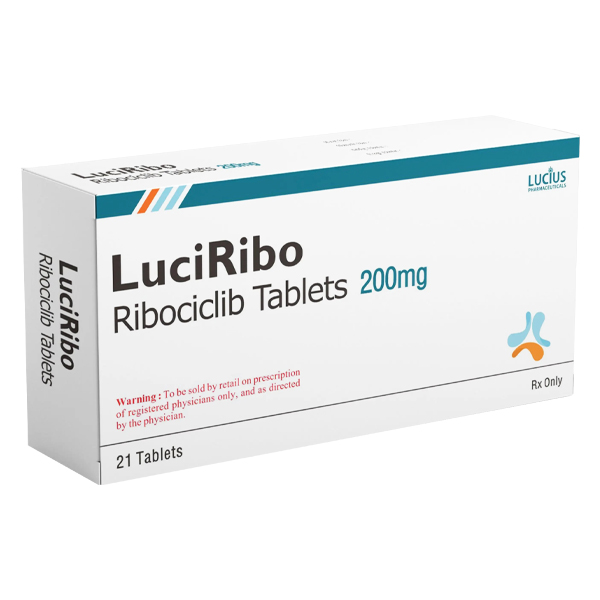
All Names: Kisqali、ribociclib、凯丽隆、琥珀酸瑞波西利片、瑞博西林、瑞博西尼、瑞博西利
Indications:It is applicable to adult patients with HR positive and HER2 negative breast cancer, including early breast cancer patients in stage II and III, patients with advanced or metastatic breast cancer, and men with advanced or metastatic breast cancer who have a high risk of recurrence.
Manufacturer:LUCIUS PHARMACEUTICAL (LAOS) CO., LTD
Customs Clearance Procedure:If the customs requires the package for customs clearance, please pay the customs clearance fee according to the content of EMS SMS and customs regulations.
Ribociclib is an oral tablet that belongs to cyclin dependent kinase (CDK) 4/6 inhibitors. By selectively inhibiting CDK4/6 activity, it blocks the transition of the cell cycle from G1 phase to S phase, thereby inhibiting the proliferation of tumor cells.
1、 Drug name
1. Common name: Ribociclib
2. Product Name: Kisqali ®
2、 Indications
Combined with aromatase inhibitors (such as letrozole) as initial endocrine therapy, it is used to treat postmenopausal women with advanced or metastatic breast cancer with hormone receptor (HR) positive and human epidermal growth factor receptor 2 (HER2) negative.
3、 Specifications and characteristics
1. Specification: 200mg/tablet
2. Characteristic: Thin film coated sheet
4、 Main components
1. Active ingredient: Rabosidine succinate.
2. Accessories: Colloidal silica, cross-linked polyvinylpyrrolidone, hydroxypropyl cellulose, magnesium stearate, microcrystalline cellulose, etc.
5、 Usage and dosage
1. Recommended dosage: 600mg (3 tablets 200mg) orally, once daily, taken continuously for 21 days, followed by a 7-day discontinuation period (28 days per cycle).
2. Usage: It can be taken with food or on an empty stomach, and the whole tablet should be swallowed (not chewed, crushed, or split).
3. Combination therapy: It should be used in combination with letrozole 2.5mg once daily.
6、 Dose adjustment
1. Neutropenia: Suspend or reduce according to grading (if ≥ grade 3, discontinue treatment and downgrade dosage after recovery).
2. Hepatotoxicity: permanent discontinuation of ALT/AST>3 × ULN with elevated bilirubin levels; Reduce as needed in other situations.
3. QT interval prolongation: pause and downgrade dosage when QTcF>500ms; If accompanied by symptoms of arrhythmia, the medication will be permanently discontinued.
7、 Medication precautions
1. Missed/Vomiting: If missed or vomited after taking the medication, there is no need to take it again. The next time, take the medication according to the original plan.
2. Dietary impact: Not affected by food, but avoid grapefruit, pomegranate, and their products (which may inhibit CYP3A4).
3. Other: Regular monitoring of electrocardiogram, liver function, and blood routine is required during medication.
8、 Medication for special populations
1. Liver injury patients: Mild to moderate (Child Pugh A/B) should be reduced to 400mg/day, and severe (Child Pugh C) should be used with caution.
2. Pregnancy/lactation: embryotoxic, prohibited during pregnancy; Discontinue medication during lactation for at least 3 weeks.
3. Elderly: No need to adjust dosage.
9、 Adverse reactions
1. Common (≥ 20%): Neutropenia (75%), nausea (52%), fatigue (37%), diarrhea (35%), hair loss (33%).
2. Severe (>2%): Grade 3/4 neutropenia (60%), elevated liver enzymes (8%), and prolonged QT interval (3%).
10、 Contraindications
There are no absolute contraindications, but the combination of potent CYP3A4 inhibitors/inducers and QT prolonging drugs should be avoided.
11、 Drug interactions
1. CYP3A4 inhibitors (such as ketoconazole): Avoid combination therapy and reduce the dosage of Rabosidine to 400mg/day when necessary.
2. CYP3A4 substrates (such as midazolam): may increase their blood drug concentration and require dosage adjustment.
3. QT prolonging drugs (such as amiodarone): Avoid combination therapy.
12、 Storage method
Not explicitly stated, it is recommended to refer to conventional drug storage conditions (avoid light, dry, below 25 ℃).
Kisqaliinformation