- All Drug Categories
- Home
- Anti-cancer Drugs
- Healthcare Products
- Medical Information
- Statement
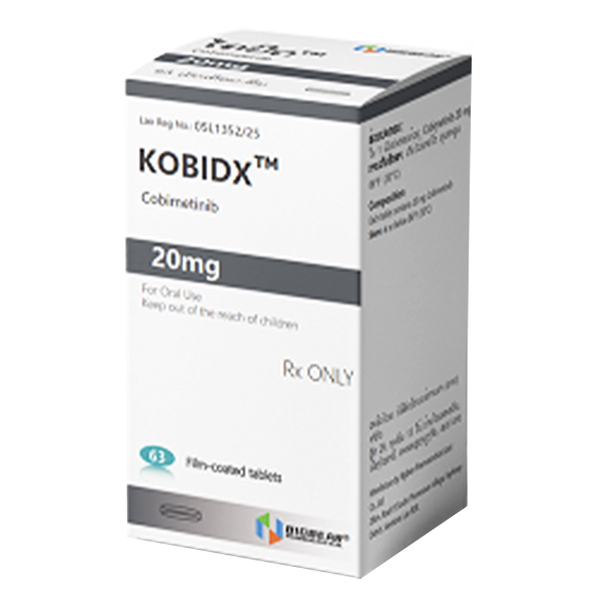
All Names: Cotellic、Cobimetinib、考比替尼、卡比替尼
Indications:Adult patients with advanced melanoma who cannot be surgically removed.
Manufacturer:Daxiong
Customs Clearance Procedure:If the customs requires the package for customs clearance, please pay the customs clearance fee according to the content of EMS SMS and customs regulations.
When Cobimetinib is combined with vemurafenib, it can enhance the anti-tumor effect on BRAFV600 mutation positive melanoma or be used as a monotherapy for the treatment of histiocytoma.
1、 Drug name
1. Common name: Kobitinib
2. Product Name: COTELLIC
3. English name: Cobimetinib
2、 Indications
1. Kobitinib is a kinase inhibitor used in combination with Vimafenib to treat patients with unresectable or metastatic melanoma confirmed by FDA approved testing methods to have BRAFV600E or V600K mutations.
2. Restricted use: Kobitinib is not suitable for the treatment of wild-type BRAF melanoma patients.
3、 Specifications and characteristics
1. Specification: 20mg/tablet.
2. Appearance: White circular film coated sheet.
4、 Main components
1. Active ingredient: Cobitinib fumarate salt. Each 20mg tablet contains 22mg of cabozantinib fumarate, equivalent to 20mg of cabozantinib free base.
2. Non active ingredients: The core contains microcrystalline cellulose, lactose monohydrate, cross-linked carboxymethyl cellulose sodium, and magnesium stearate. The coating contains polyvinyl alcohol, titanium dioxide, polyethylene glycol 3350, and talc powder.
5、 Usage and dosage
1. Recommended dosage: For the first 21 days of each 28 day treatment cycle, take 60 milligrams orally once a day (i.e. 3 20mg tablets) until disease progression or unacceptable toxicity occurs.
2. Usage: Can be taken with food or on an empty stomach.
3. Omission or vomiting: If one dose is missed or vomiting occurs after taking the medication, the medication should be resumed at the next scheduled time without the need for supplementation.
6、 Dose adjustment
1. Dose reduction steps: Reduce the initial dose to 40 milligrams once daily; Reduce the second dose to 20 milligrams once a day; If unable to tolerate 20 milligrams once a day, discontinue use permanently.
2. Adjustment for adverse reactions: Dose should be temporarily suspended, reduced, or permanently discontinued based on the severity of the adverse reactions. The specific adjustment plan has detailed regulations for adverse reactions of different systems, such as bleeding, cardiomyopathy, severe skin reactions, serous retinopathy, hepatotoxicity, rhabdomyolysis, photosensitivity, etc.
3. Adjustments caused by drug interactions: Avoid using potent or moderate CYP3A inhibitors simultaneously. If patients taking 60 milligrams of cabozantinib inevitably require short-term (≤ 14 days) use of intermediate acting CYP3A inhibitors, the dose of cabozantinib should be reduced to 20 milligrams. Restore the original dose after discontinuing the inhibitor. For patients who have reduced their dosage, alternative drugs with potent or moderate CYP3A inhibitors should be used.
7、 Medication precautions
1. Medication time: once a day, preferably at a fixed time, before and after meals.
2. Omission treatment: Skip the missed dose and take the next dose at the next regular time. Do not take double doses to make up for missed doses.
3. Vomiting treatment: If vomiting occurs after taking the medication, there is no need to take the next dose as planned.
4. Monitoring requirements: During the treatment period, regular skin examinations, evaluation of cardiac function (LVEF), ophthalmic examinations, liver function, serum creatine kinase (CPK), and creatinine monitoring should be conducted.
8、 Medication for special populations
1. Pregnant women: Based on the mechanism of action and animal studies, it may pose a risk to the fetus. Pregnant women should be informed of potential risks to the fetus.
2. Breastfeeding women: It is recommended not to breastfeed during the treatment period and within 2 weeks after the last dose.
3. Women and men with fertility potential: Women should take effective contraceptive measures during treatment and at least 2 weeks after the last dose. Based on animal data, cabozantinib may reduce fertility in both females and males.
4. Child patients: Safety and efficacy have not yet been established.
5. Elderly patients: Clinical studies did not include a sufficient number of patients aged 65 and above to determine whether their responses were different.
6. Liver injury patients: Mild liver injury patients do not require dose adjustment. The pharmacokinetics of patients with moderate to severe liver injury have not been studied and caution should be exercised.
Kidney injury patients: Mild to moderate kidney injury patients do not require dose adjustment. The recommended dosage for patients with severe kidney injury has not yet been established.
9、 Adverse reactions
1. The most common adverse reactions (≥ 20%) include diarrhea, photosensitivity, nausea, fever, and vomiting.
2. Common (≥ 5%) laboratory abnormalities at levels 3-4 include: elevated GGT, elevated CPK, hypophosphatemia, elevated ALT, lymphopenia, elevated AST, elevated alkaline phosphatase, and hyponatremia.
3. Serious adverse reactions include: new primary malignant tumors (skin and non skin), bleeding, cardiomyopathy, severe skin reactions, serous retinopathy and retinal vein occlusion, hepatotoxicity, rhabdomyolysis, severe photosensitivity, etc.
10、 Contraindications
There are currently no obvious contraindications.
11、 Drug interactions
1. Co administration with potent or moderate CYP3A inhibitors (such as itraconazole) should be avoided as it significantly increases the blood concentration of cabozantinib.
2. It should be avoided to use strong or medium acting CYP3A inducers (such as carbamazepine, rifampicin, St. John's wort) in combination, as they can significantly reduce the blood concentration of cabozantinib and affect the efficacy.
12、 Storage method
Store at room temperature, below 30 ° C (86 ° F).
Cobimetinibinformation