- All Drug Categories
- Home
- Anti-cancer Drugs
- Healthcare Products
- Medical Information
- Statement
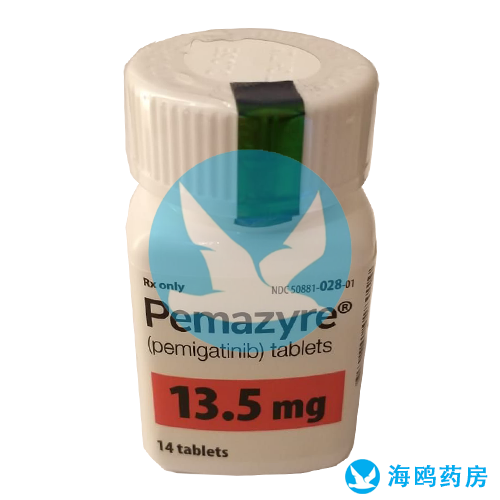
Pemigatinib is a selective FGFR inhibitor mainly used to treat advanced cholangiocarcinoma patients carrying FGFR2 fusion or rearrangement. Its efficacy is mainly reflected in the improvement of objective remission rate and the prolongation of progression free survival, and it has significant effects on patients with specific gene abnormalities.
1. Core treatment mechanism
(1) Targeted inhibition: By selectively inhibiting FGFR1-3 tyrosine kinase activity and blocking abnormal activation of the FGFR signaling pathway, tumor cell proliferation and survival are inhibited.
(2) Anti angiogenesis: Downregulate the expression of vascular endothelial growth factor (VEGF) mediated by FGFR, reduce tumor angiogenesis, and improve the tumor microenvironment.
2 Key clinical data
(1) Treatment of cholangiocarcinoma: The FIGHT-202 study showed that the objective response rate of FGFR2 fusion/rearrangement patients was 35.5%, with a median progression free survival of 6.9 months and a median overall survival of 21.1 months.
(2) Relief depth: 7% of patients achieved complete remission, 58% had tumor shrinkage ≥ 30%, and the median duration of remission was 7.5 months.
(3) Cross line efficacy: Second line and above treatments still maintain significant activity, with a disease control rate of 82%, which is superior to traditional chemotherapy regimens.
3 factors affecting therapeutic efficacy
(1) Gene type: The response rate of FGFR2 fusion patients is significantly higher than other FGFR variant types (such as mutations or amplifications), with a difference of more than three times.
(2) Fusion partners: Different FGFR2 fusion partners (such as BICC1 or TACC3) may affect drug sensitivity and need to be confirmed through NGS testing.
(3) Previous treatment: Patients who have not received systemic treatment have a higher remission rate (40.6% vs 30.4%), but all treatment lines have shown clinical benefits.
4 Special Population Effects
(1) Liver metastasis patients: Excellent control rate of intrahepatic lesions, 67% of patients achieve target lesion reduction, and liver function damage does not affect the efficacy.
(2) Elderly patients: The safety and efficacy of patients aged 65 and above are comparable to those of young patients, and there is no need to adjust the dosage.
(3) Comorbidity patients: Mild to moderate renal impairment patients do not require dose reduction, but severe impairment patients have limited data and should be used with caution.
Disclaimer:《How effective is pemigatinib》Edited and sorted by Seagull Pharmacy's editors. Please contact us in time if there is any infringement. In addition, the suggestions for drug usage, dosage and disease mentioned in the article are only for medical staff's reference, and can not be used as any basis for medication!
Full Name:pemigatinib、pemazyre、佩米替尼、培美替尼、培米替尼、达伯坦
Reference Price:$431.00
Prescribing Information: 培米替尼(Pemigatinib)是首个在中国获批的选择性FGFR受体酪氨酸激酶抑制剂 一、药品名称 1、通用名: 培米替尼(Pemigatinib) 2、商品名: PEMAZYRE™ 二、适应症 适用于治疗既往接受过治疗的、不可切除的局部晚期或转...