- All Drug Categories
- Home
- Anti-cancer Drugs
- Healthcare Products
- Medical Information
- Statement
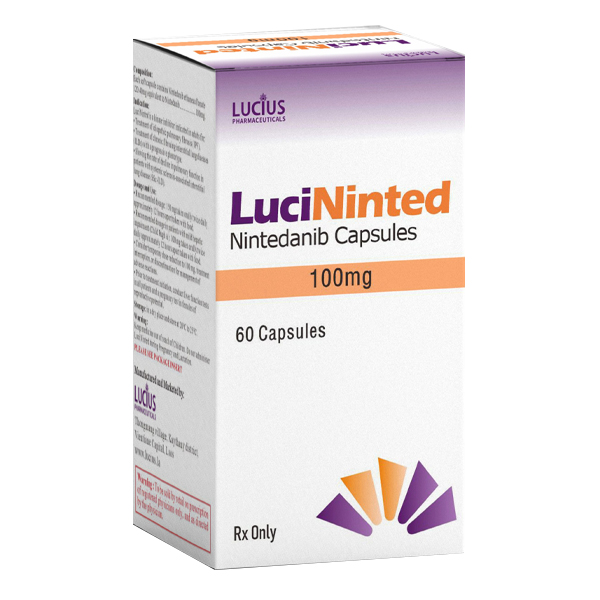
All Names: OFEV、Nintedanib、乙磺酸尼达尼布软胶囊、尼达尼布、维加特
Indications:Suitable for treating adult patients with idiopathic pulmonary fibrosis (IPF), progressive phenotype chronic fibrotic interstitial lung disease (ILD), and can also slow down the rate of lung function decline in adult patients with systemic sclerosis related interstitial lung disease (SSc ILD).
Manufacturer:LUCIUS PHARMACEUTICAL (LAOS) CO., LTD
Customs Clearance Procedure:If the customs requires the package for customs clearance, please pay the customs clearance fee according to the content of EMS SMS and customs regulations.
In September 2017, Nidanib was approved for marketing in China, bringing new treatment options to domestic patients. At present, it has been included in the reimbursement scope of Class B medical insurance in China.
1、 Drug name
1. Common name: Nidanibu
2. Product Name: OFEV ®
3. English name: Nintedanib
2、 Indications
Used for the treatment of idiopathic pulmonary fibrosis (IPF).
3、 Specifications and characteristics
1. This product is a capsule.
2. There are two specifications: 150mg capsule 1; 100mg capsules.
4、 Main components
1. Active ingredient: Nidanib, present in the form of ethanesulfonate salt.
2. Accessories: Filling materials include triglycerides, stearic acid, and lecithin; The capsule shell includes gelatin, glycerin, titanium dioxide, iron oxide red, iron oxide yellow, and black ink.
5、 Usage and dosage
1. Recommended dosage: 150mg each time, twice a day, with an interval of approximately 12 hours.
2. Usage: It should be taken together with food, swallowed in whole with liquid, and should not be chewed or crushed.
6、 Dose adjustment
1. To manage adverse reactions, temporary dose reduction to 100 milligrams twice daily, treatment interruption, or discontinuation of treatment may be considered.
2. Specific adjustment basis:
For patients with liver enzyme (ALT/AST) elevation greater than 3 times but less than 5 times the upper limit of normal and without severe liver damage symptoms, treatment should be interrupted or the dose reduced to 100 milligrams twice daily. After the liver enzymes return to baseline levels, treatment can be resumed with 100 milligrams twice daily, and subsequently increased to 150 milligrams twice daily. If ALT/AST elevation is greater than 5 times the upper limit of normal, or greater than 3 times the upper limit of normal and accompanied by severe liver damage symptoms, treatment should be stopped.
For gastrointestinal adverse reactions such as diarrhea, nausea, vomiting, etc., symptomatic treatment should be carried out first (such as fluid replacement, use of antidiarrheal drugs Loperamide or antiemetic drugs). If the symptoms persist, consider interrupting treatment. After symptom relief, the original dose (150mg twice daily) can be restored or a lower dose (100mg twice daily) can be started.
7、 Medication precautions
1. Medication time: It should be taken together with food.
2. Omission treatment: If one dose is missed, the regular dose should be taken at the next scheduled time, and the missed dose should not be taken again. The total daily dose should not exceed 300 milligrams.
3. Vomiting treatment: If vomiting occurs, the dose should not be replenished, and the next dose should be taken according to the original plan.
4. Other: Regular monitoring of liver function (ALT, AST, bilirubin) is required before and during treatment.
8、 Medication for special populations
1. Pregnant women: This product can cause fetal damage. Women of childbearing age should take effective contraceptive measures during treatment and at least 3 months after the last dose.
2. Breastfeeding women should stop breastfeeding or medication, and the importance of medication to the mother should be balanced.
3. Elderly patients: No overall differences were observed in efficacy and safety between elderly and young patients, but individual sensitivity may exist.
4. Patients with liver dysfunction: Patients with mild liver dysfunction (ChildPughA) need to be closely monitored for adverse reactions and consider dose adjustments; It is not recommended for patients with moderate (ChildPughB) or severe (ChildPughC) liver dysfunction.
5. Patients with renal insufficiency: Mild to moderate renal insufficiency patients do not need to adjust the starting dose; The safety and efficacy in patients with severe renal insufficiency or end-stage renal disease have not been studied.
6. Smoker: Smoking can reduce the exposure of Nidanib, which may affect the efficacy. It is recommended that patients quit smoking before treatment and avoid smoking during medication.
9、 Adverse reactions
1. The most common adverse reactions (with an incidence rate of ≥ 5%) include diarrhea, nausea, abdominal pain, vomiting, elevated liver enzymes, decreased appetite, headache, weight loss, and hypertension.
2. Serious adverse reactions include elevated liver enzymes and bilirubin, gastrointestinal diseases, embryo fetal toxicity, arterial thromboembolic events, bleeding risk, and gastrointestinal perforation.
10、 Contraindications
No clear contraindications have been listed yet.
11、 Drug interactions
1. P-gp and CYP3A4 strong inhibitors (such as ketoconazole and erythromycin) may increase the exposure to nintedanib, and patient tolerance should be closely monitored when used in combination.
2. It should be avoided to use P-gp and CYP3A4 strong inducers (such as rifampicin, carbamazepine, phenytoin, St. John's wort) in combination, as they may significantly reduce the exposure to nintedanib and affect the efficacy.
3. Co administration with anticoagulant drugs may increase the risk of bleeding and requires close monitoring.
12、 Storage method
1. Store at room temperature of 25 ° C (77 ° F) and allow for short distance transportation between 15 ° C and 30 ° C (59 ° F and 86 ° F).
2. Moisture proof and high temperature avoidance are required.
3. Please keep out of reach of children.
Nintedanibinformation