- All Drug Categories
- Home
- Anti-cancer Drugs
- Healthcare Products
- Medical Information
- Statement
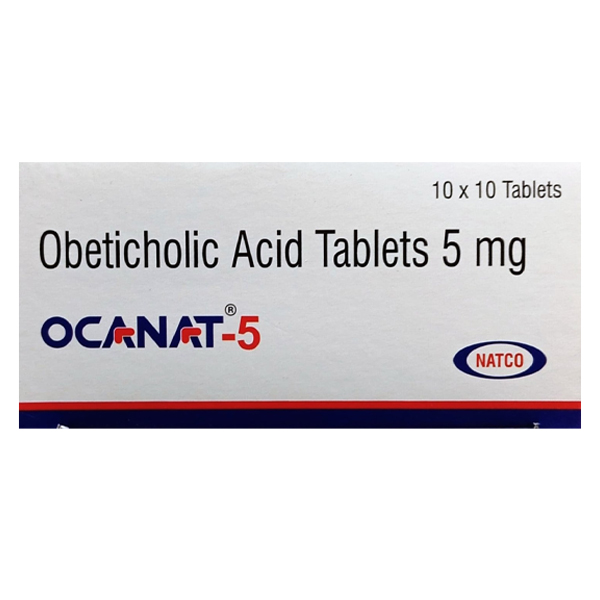
All Names: Obeticholic acid、Obetix、Ocaliva、奥贝胆酸
Indications:Suitable for adult patients with primary biliary cholangitis (PBC), and must meet one of the following conditions: first, no cirrhosis; Secondly, there is compensatory cirrhosis but no evidence of portal hypertension. At the same time, patients need to meet the criteria of insufficient response to ursodeoxycholic acid (UDCA) (receiving appropriate doses of UDCA treatment for at least 1 year without achieving sufficient biochemical response) or inability to tolerate UDCA.
Manufacturer:Natco,India
Customs Clearance Procedure:If the customs requires the package for customs clearance, please pay the customs clearance fee according to the content of EMS SMS and customs regulations.
1、 Drug name
1. Common name: Obeticolic acid
2. Product Name: Ocaliva
2、 Indications
Used for the treatment of primary biliary cholangitis (PBC):
1. Used in combination with ursodeoxycholic acid (UDCA) for adult patients with insufficient response to UDCA.
2. As monotherapy for adult patients who cannot tolerate UDCA.
3、 Specifications and characteristics
5 milligrams: tablets.
4、 Main components
1. Active ingredient: obeticolic acid.
2. Non active ingredients: microcrystalline cellulose, starch sodium hydroxide, magnesium stearate. The film coating contains auxiliary materials such as polyethylene glycol.
5、 Usage and dosage
1. Initial dose: The recommended initial dose is 5 milligrams, taken orally once daily.
2. Dose titration: If alkaline phosphatase and/or total bilirubin are not sufficiently reduced after 3 months of treatment and the patient tolerates well, the dose can be increased to 10 milligrams once daily.
3. Maximum dose: 10 milligrams, once daily.
6、 Dose adjustment
1. Inability to itching: Consider adding antihistamines or bile acid binding resins, reducing the dose of obeticolic acid (such as changing to 5 milligrams once every other day or once a day), or temporarily interrupting the administration for up to 2 weeks and restarting at the reduced dose.
2. Liver injury patients:
For patients with moderate (Child Pugh B) or severe (Child Pugh C) liver injury, the recommended starting dose is 5 milligrams once a week.
After 3 months of treatment, if there is insufficient response and good tolerance, gradually increase to 5 milligrams twice a week (at least 3 days apart), and then increase to 10 milligrams twice a week (at least 3 days apart).
7、 Medication precautions
1. Medication time: can be taken with food or on an empty stomach.
2. Co administration with bile acid binding resin: Obeticolic acid should be taken at least 4 hours before or after taking bile acid binding resin, or the medication interval should be extended as much as possible.
3. Missed dose: If not explicitly stated, it is usually recommended to take it immediately upon recall. If it is close to the next dose, skip and do not double the dosage.
4. Vomiting: Not specified, it is recommended to consult a doctor.
8、 Medication for special populations
1. Pregnancy period: The existing data is insufficient to assess drug-related risks, and the pros and cons need to be weighed.
2. Breastfeeding period: It is unknown whether obeticolic acid enters human milk, and the benefits of breastfeeding should be considered in conjunction with the mother's clinical needs and potential risks to the infant.
3. Children: Safety and effectiveness have not yet been established.
4. Elderly patients: No overall differences were observed compared to younger patients, but individual sensitivity may exist.
5. Liver injury patients: need to adjust the dosage and closely monitor.
9、 Adverse reactions
The most common adverse reactions (incidence ≥ 5%) include itching, fatigue, abdominal pain and discomfort, rash, oropharyngeal pain, dizziness, constipation, joint pain, thyroid dysfunction, and eczema.
10、 Contraindications
Patients with complete biliary obstruction are prohibited from using it.
11、 Drug interactions
1. Bile acid binding resin: may reduce the absorption of obeticolic acid, should be taken at least 4 hours apart.
2. Warfarin: may reduce the international standardized ratio, and the dose of warfarin needs to be monitored and adjusted.
3. CYP1A2 substrates with narrow treatment window: may increase exposure to these drugs, treatment monitoring is recommended.
12、 Storage method
Stored at 20 ° C-25 ° C, allowing for short distance transportation between 15 ° C-30 ° C.
Ocalivainformation