- All Drug Categories
- Home
- Anti-cancer Drugs
- Healthcare Products
- Medical Information
- Statement
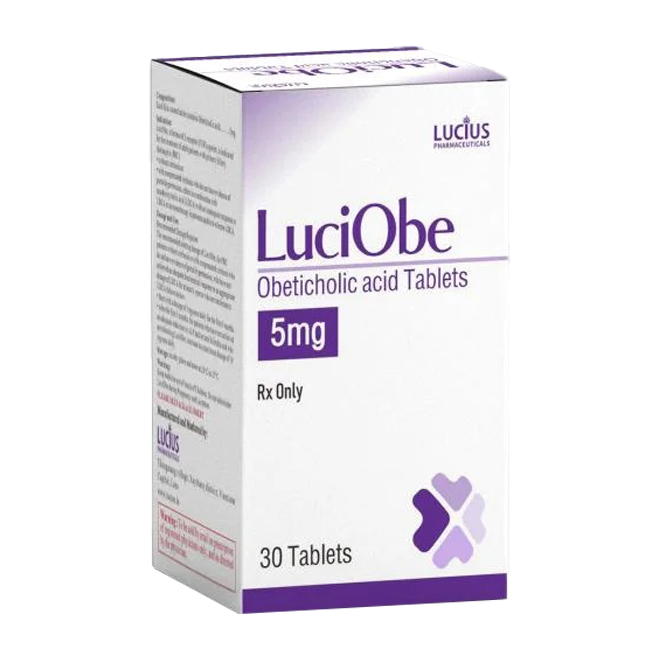
All Names: Obeticholic acid、Obetix、Ocaliva、奥贝胆酸
Indications:Suitable for adult patients with primary biliary cholangitis (PBC).
Manufacturer:LUCIUS PHARMACEUTICAL (LAOS) CO., LTD
Customs Clearance Procedure:If the customs requires the package for customs clearance, please pay the customs clearance fee according to the content of EMS SMS and customs regulations.
Ocaliva regulates bile acid metabolism, inflammatory response, and fibrosis pathways by activating FXR receptors in the liver and intestine.
1、 Drug name
1. Common name: Obeticolic Acid
2. Product Name: OCALIVA ®
2、 Indications
1. Used for treating primary biliary cholangitis (PBC) in adults:
No patients with cirrhosis;
Patients with compensatory cirrhosis but no evidence of portal hypertension.
2. It can be used in combination with ursodeoxycholic acid (UDCA) when UDCA response is insufficient, or as monotherapy for UDCA intolerant patients.
3、 Specifications and characteristics
5mg、 Tablets.
4、 Main components
1. Active ingredient: obeticolic acid.
2. Accessories: Microcrystalline cellulose, starch sodium hydroxide, magnesium stearate, etc.
5、 Usage and dosage
1. Initial dose: 5mg once daily, orally for 3 months.
2. Dose adjustment: If the therapeutic effect is insufficient and well tolerated after 3 months, it can be increased to 10mg once daily (maximum dose).
3. Missed/Vomiting: No need to supplement, take the next dose according to the original plan.
4. Medication time: It can be taken before or after meals, but it needs to be separated from bile acid binding resin for at least 4 hours.
6、 Dose adjustment
1. Unable to tolerate itching: can reduce to 5mg once every other day or pause for 2 weeks before reducing and restarting.
2. Deterioration of liver function: permanent discontinuation of medication is required when portal hypertension or liver decompensation occurs.
7、 Medication precautions
1. Taboo combination: Not recommended for patients with complete biliary obstruction, decompensated cirrhosis (Child Pugh B/C grade), or portal hypertension.
2. Monitoring requirements: Regular check of liver function, blood lipids (HDL-C may decrease), and INR (when combined with warfarin).
3. Special storage: No specific requirements, it is recommended to store at room temperature and away from light.
8、 Medication for special populations
1. Pregnant women: There is no risk in animal experiments, but there is insufficient human data.
2. Breastfeeding period: Safety is unknown, and the pros and cons need to be weighed.
3. Children/Elderly: No safety data established.
4. Liver injury: Patients with moderate to severe liver injury need to be closely monitored.
9、 Adverse reactions
1. Common (≥ 5%): itching (70%), fatigue, abdominal pain, rash, joint pain, dizziness, constipation, etc.
2. Serious risks: liver failure, portal hypertension, and decreased HDL-C.
10、 Contraindications
1. Decompensated cirrhosis or previous decompensated events.
2. Compensatory cirrhosis with portal hypertension.
Complete biliary obstruction.
11、 Drug interactions
1. Bile acid binding resin: It should be taken every 4 hours.
2. Warfarin: may reduce INR, dosage adjustment needs to be monitored.
3. CYP1A2 substrates (such as theophylline): may increase exposure and need to be monitored.
4. BSEP inhibitors (such as cyclosporine): Avoid combination therapy.
Ocalivainformation