- All Drug Categories
- Home
- Anti-cancer Drugs
- Healthcare Products
- Medical Information
- Statement
All Names: Emend、Aprepitant、阿瑞匹坦、意美、阿瑞吡坦
Indications:Capsules are suitable for patients aged 12 and above who can swallow capsules and need to prevent chemotherapy-induced nausea and vomiting; Oral suspension is suitable for patients aged 6 months and above who need to prevent acute and delayed nausea and vomiting related to chemotherapy for high emetic cancer (including high-dose cisplatin) or moderate emetic cancer chemotherapy, as well as adult and pediatric patients who cannot swallow capsules.
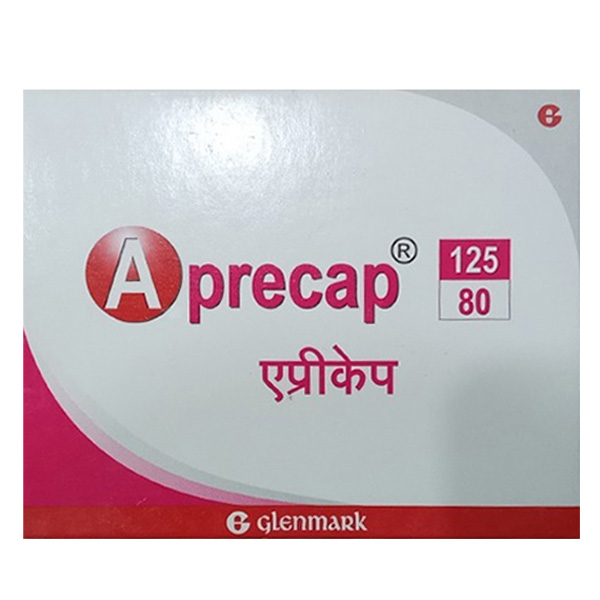
Manufacturer:Glenmark,India
Customs Clearance Procedure:If the customs requires the package for customs clearance, please pay the customs clearance fee according to the content of EMS SMS and customs regulations.
Aprepitant is a highly selective neurokinin-1 (NK-1) receptor antagonist primarily used to prevent acute and delayed nausea and vomiting caused by chemotherapy.
1、 Drug name
Common name: Aprepitant
Product Name: EMEND ®
2、 Indications
This product is a substance P/neurokinin 1 (NK1) receptor antagonist that needs to be used in combination with other antiemetic drugs for the prevention of:
EMEND Capsules: Suitable for patients aged 12 years and above, to prevent acute and delayed nausea and vomiting associated with initial and repeated courses of highly emetic cancer chemotherapy (HEC) (including high-dose cisplatin), as well as nausea and vomiting associated with moderate emetic cancer chemotherapy (MEC).
3、 Specifications and characteristics
EMEND Capsules:
125mg * 1 pill+80mg * 2 pills/box.
4、 Main components
Active ingredient: Aripipitan.
5、 Usage and dosage
Recommended dosage:
Adult and pediatric patients aged 12 and above (those who can swallow capsules):
Day 1: Take 125mg orally one hour before chemotherapy.
Day 2 and 3: Take 80mg orally every morning. If there is no chemotherapy on Day 2 and 3, take the medication in the morning.
Patients weighing less than 6kg are not recommended to use it.
Combination therapy with dexamethasone and 5-HT3 antagonists: When used in combination with dexamethasone, it is recommended to reduce the dose of dexamethasone by about 50% due to the drug interaction between dexamethasone and aspirin.
6、 Dose adjustment
For patients with severe liver dysfunction (Child Pugh score>9), there is a lack of clinical data, and adverse reaction monitoring should be strengthened during use.
Elderly patients usually do not need to adjust their dosage, but their liver, kidney, and heart function may decline and the situation of concomitant medication should be considered.
7、 Medication precautions
Before and after meals: Capsules can be taken with food or on an empty stomach.
Missed medication: It is recommended to take the medication according to the scheduled time. If missed, it should be taken as soon as possible, but if it is close to the next dose, skip the missed dose and take the next dose at the regular time. Do not double the dosage.
Vomiting: If vomiting occurs after taking medication, the instructions do not provide specific guidance. It is recommended to consult a doctor or pharmacist to assess whether supplementation is necessary.
Capsule administration: It should be swallowed whole and not chewed or crushed.
8、 Medication for special populations
Pregnant women: Due to limited data on medication during pregnancy, it is important to weigh the pros and cons.
Breastfeeding women: It is not yet clear whether aripipitan is secreted with breast milk and should be carefully considered.
Women of childbearing age: Aripipitan may reduce the effectiveness of hormonal contraceptives. During the period of taking this product and within one month after the last administration, effective non hormonal alternative or backup contraceptive methods (such as condoms, spermicides) should be used.
Children: Oral suspension is suitable for children aged 6 months and above, while capsules are suitable for children aged 12 years and above. The safety is similar to that of adults.
Elderly people: No need to adjust the dosage regularly, but caution should be exercised.
Patients with liver and kidney dysfunction: Mild to moderate liver dysfunction or any degree of renal dysfunction (including hemodialysis) do not require dose adjustment. Patients with severe liver dysfunction should be cautious.
9、 Adverse reactions
The most common adverse reactions in adults (≥ 3%) are fatigue, diarrhea, fatigue, indigestion, abdominal pain, hiccup, decreased white blood cell count, dehydration, and elevated alanine aminotransferase.
The most common adverse reactions (≥ 3%) in pediatric patients (6 months to 17 years old) are neutropenia, headache, diarrhea, decreased appetite, cough, fatigue, decreased hemoglobin, dizziness, and hiccup.
Serious adverse reactions: Post marketing reports include hypersensitivity reactions (including allergic reactions), Stevens Johnson syndrome/toxic epidermal necrolysis. Co administration with ifosfamide may increase the risk of neurotoxicity.
10、 Contraindications
Individuals known to be allergic to any ingredient of this product.
A patient currently taking Pimozide.
11、 Drug interactions
Aripipitan is a substrate, weak to moderate inhibitor, and inducer of CYP3A4, as well as an inducer of CYP2C9.
Prohibited combination: Pimozide (increases the risk of QT interval prolongation).
Caution should be exercised when combining and dosage may need to be adjusted:
CYP3A4 substrates: benzodiazepines (such as midazolam), corticosteroids (dexamethasone, methylprednisolone), and certain chemotherapy drugs (vinblastine, ifosfamide, etc.). Related adverse reactions need to be monitored during combination use.
Warfarin: may lead to a decrease in the international standardized ratio. INR should be monitored within 2 weeks after taking a 3-day dose of aripipitan at the beginning of each chemotherapy cycle, especially on days 7 to 10.
Strong or moderate CYP3A4 inhibitors: Ketoconazole, Diltiazem, etc. May increase the blood concentration of aripipitan and should be avoided in combination.
Strong CYP3A4 inducers: rifampicin, carbamazepine, etc. May reduce the blood concentration and efficacy of aripipitan, and should be avoided in combination.
12、 Storage method
EMEND capsules: stored at room temperature of 20-25 ° C (68-77 ° F).
Aprepitantinformation