- All Drug Categories
- Home
- Anti-cancer Drugs
- Healthcare Products
- Medical Information
- Statement
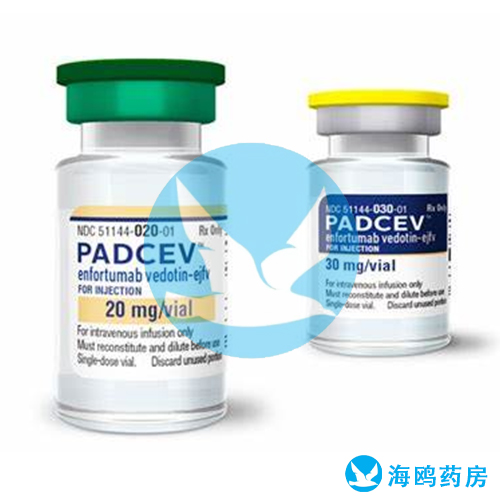
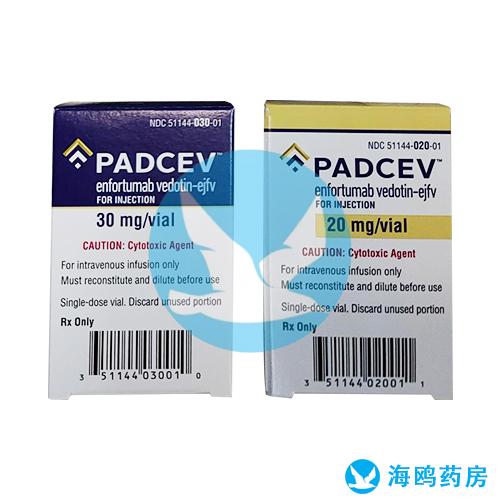
All Names: Enfortumab vedotin-ejfv
Indications:Locally advanced metastatic uroepithelial cancer
Manufacturer:Astellas,Japan
Customs Clearance Procedure:If the customs requires the package for customs clearance, please pay the customs clearance fee according to the content of EMS SMS and customs regulations.
Indications
PADCEV is a nectin-4-directed antibody and microtubule inhibitor conjugate indicated for the treatment of adult patients with locally advanced metastatic urothelial carcinoma who have previously received programmed death receptor-1 (PD-1) or Adjuvant therapy with PD-L1 inhibitors or platinum-based chemotherapy.
Dosage
For intravenous infusion only. Do not give PADCEV as an intravenous push or bolus dose. Do not mix with other medicines or take as an infusion.
The recommended dose of PADCEV is 1.25 mg/kg (maximum dose 125 mg) as a 30-minute intravenous infusion on days 1, 8, and 15 of a 28-day cycle until disease progression or unacceptable toxicity.
Avoid use in patients with moderate or severe hepatic impairment.
Recommended dosage schedule
Starting dose: 1.25 mg/kg to 125 mg
First dose: 1.0 mg/kg to 100 mg
Second dose: 0.75 mg/kg to 75 mg
Third dose: 0.5 mg/kg to 50 mg
PADCEV is a dangerous drug. Follow applicable special handling and disposal procedures.
Prior to administration, reconstitute PADCEV vials with sterile water for injection (SWFI). Subsequently dilute the reconstituted solution in an IV bag containing 5% Dextrose Injection, USP, 0.9% Sodium Chloride Injection, or Lactated Ringer's Injection.
Proper aseptic technique is required to reconstitute and prepare dosing solutions.
Calculate recommended dosage based on patient weight to determine number and strength of vials required (20 mg or 30 mg).
Reassemble each vial as follows, directing the SWFI flow along the vial wall rather than directly onto the lyophilized powder if possible:
a.20 mg vial: add 2.3 mL SWFI, 10 mg/mL PADCEV. b. 30 mg vial: add 3.3 mL SWFI, 10 mg/mL PADCEV.
Swirl each vial until the contents are completely dissolved. Let the reconstituted vial sit for at least 1 minute until bubbles disappear. Do not shake the bottle. Don't put it in direct sunlight.
Prior to administration, parenteral drug products should be visually inspected for particulate matter and discoloration, whenever the solution and container permit. The reconstituted solution should be clear to slightly milky white, colorless to light yellow, with no visible particles. Discard any vial with visible particles or discoloration.
Based on the calculated dose, the reconstitution solution in the vial should be added to the infusion bag immediately. This product does not contain preservatives. If not used immediately, reconstituted bottles can be stored refrigerated at 2°C to 8°C (36°F to 46°F) for 24 hours. Don't freeze. After recommended storage time, discard unused vials with reconstituted solution.
Remove the calculated dose of reconstitution solution from the vial and transfer to the infusion bag.
Dilute PADCEV with 5% dextrose injection, 0.9% sodium chloride injection, or lactated Ringer's injection. Infusion bag dimensions should allow sufficient dilution to achieve a final concentration of 0.3 mg/mL to 4 mg/mL PADCEV.
Mix the diluted solution by gently inverting it. Do not shake the bag. Don't put it in direct sunlight.
Before use, visually inspect the infusion bag for any particulate matter or discoloration. The reconstituted solution should be clear to slightly milky white, colorless to light yellow, with no visible particles. Do not use the infusion bag if particulate matter or discoloration is observed.
Discard any unused portion remaining in the single-dose vial.
Administer immediately via IV line within 30 minutes.
If not being administered immediately, a good infusion bag should not be stored for more than 8 hours at a temperature of 2°C to 8°C (36°F to 46°F). Don't freeze. Do not give PADCEV as an intravenous push or bolus dose. PADCEV should not be mixed with other medications or taken as an infusion.
Adverse reactions
The most common adverse reactions (≥20%) include rash, increased aspartate aminotransferase, increased glucose, increased creatinine, fatigue, peripheral neuropathy, lymphocytes, alopecia, decreased appetite, hemoglobin, diarrhea, sodium, nausea , itching, phosphate, halitosis, alanine aminotransferase, anemia, albumin, neutrophils, uric acid, lipase, platelets, body weight, dry skin.
The most common serious adverse reactions (≥2%) were acute kidney injury (7% each) and pneumonitis (5%).
Fatal adverse reactions included acute respiratory failure, aspiration pneumonia, cardiac arrest, sepsis, and pneumonia (0.8% each).
Taboo
Based on its mechanism of action and research results in animals, PADCEV can cause fetal harm when administered to pregnant women.
Because of the potential for serious adverse reactions in breastfed children, advise nursing women not to breastfeed during treatment with PADCEV and for at least 3 weeks after the last dose.
The female contraceptive pill PADCEV can cause harm to the fetus when taken by pregnant women. Advise females of reproductive potential to use effective contraception during treatment with PADCEV and for 2 months after the last dose. Men Advise male patients who are females of reproductive potential to use effective contraception during treatment with PADCEV and for 4 months after the last dose.
Based on animal studies, PADCEV may harm male fertility.
Pediatric Use The safety and effectiveness of PADCEV in pediatric patients have not been established.
Hepatic Impairment Avoid use in patients with moderate or severe hepatic impairment.
storage
Storage Keep PADCEV vials refrigerated in the original carton at 2ºC to 8ºC (36ºF to 46ºF). Don't freeze. Don't shake
For people
Indicated for the treatment of adult patients with locally advanced or metastatic urothelial carcinoma
Drug interaction
Double P-gp and strong CYP3A4 inhibitors used in combination with double P-gp and strong CYP3A4 inhibitors may not bind to MMAE, which may affect the incidence or severity of PADCEV toxicity. When PADCEV is administered together with double P-gp and strong CYP3A4 inhibitors, patients are closely monitored for signs of toxicity.
Validity period
24 months
Dosage form
Freeze-dried powder
Manufacturer
Anstailai, Japan
Composition
PADCEV is a Nectin-4-directed antibody and microtubule inhibitor conjugate
Traits
White or gray-white freeze-dried powder
Matters needing attention
1. Closely monitor the skin reaction of patients throughout the treatment. As shown clinically, consider topical use of corticosteroids and antihistamines. For patients with suspected SJS, TEN or severe (grade 3) skin reactions, please do not use PADCEV and take special care.
2. If there are patients with diabetes or high insulin risk, please closely monitor the blood sugar level of patients with diabetes or hyperglycemia. If the blood sugar rises (> 250 mg/dL), stop using PADCEV.
3. If the patient is monitored for signs and symptoms of pneumonia during radiological examination, such as hypoxia, cough, dyspnea or interstitial. Evaluate and exclude infectious, neoplastic and other causes of these signs and symptoms through appropriate investigation. For patients with sexual or recurrent grade 2 pneumonia, PADCEV should be retained and the dose should be considered. Permanently discontinue PADCEV in all patients with grade 3 or 4 pneumonia
4. In patients treated with PADCEV, peripheral neuropathy will occur regardless of whether peripheral neuropathy exists or not. Patients are monitored for new or worsening symptoms of peripheral neuropathy, and dose interruptions or doses of PADCEV are considered when peripheral neuropathy occurs. For patients with grade 3 peripheral neuropathy, PADCEV should be permanently discontinued.
5. Monitor the eye diseases of patients. If eye symptoms appear or cannot be solved, consider using artificial tears to prevent dry eye and conduct ophthalmic evaluation. If there are instructions after ophthalmic examination, consider using topical steroids in ophthalmology. For symptomatic eye diseases, consider interruption or the dose of PADCEV.
Ensure adequate intravenous access before initiating PADCEV and monitor for possible extravasation during administration. If extravasation occurs, stop infusion and monitor adverse reactions.
6. Inform the patient of the potential risks of fetus. Effective contraception is recommended for women with reproductive potential during treatment with PADCEV and within 2 months after the last dose. Effective contraception is recommended for women with reproductive potential during treatment with PADCEV and within 2 months after the last dose. Female and male patients with reproductive potential are advised to use effective contraception during treatment with PADCEV and within 4 months after the last dose.
Padcevinformation
No information yet!!!