- All Drug Categories
- Home
- Anti-cancer Drugs
- Healthcare Products
- Medical Information
- Statement
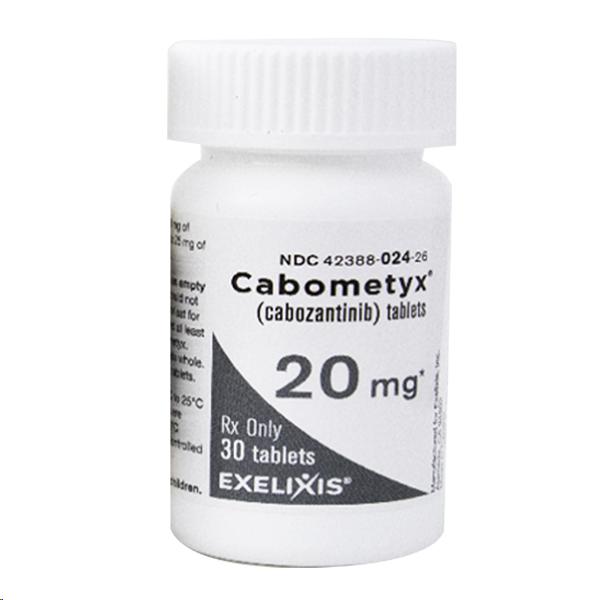
All Names: Cabozantinib、Cabometyx、卡博替尼
Indications:Patients with advanced renal cell carcinoma (RCC); patients with hepatocellular carcinoma (HCC) who have previously received sorafenib treatment; patients with hepatocellular carcinoma (HCC) who have previously received sorafenib treatment; suitable for the treatment of adult and pediatric patients aged 12 and above with locally advanced or metastatic differentiated thyroid cancer (DTC)
Manufacturer:Exelixis, USA
Customs Clearance Procedure:If the customs requires the package for customs clearance, please pay the customs clearance fee according to the content of EMS SMS and customs regulations.
Cabozantinib is a multi-target tyrosine kinase inhibitor (TKI) that selectively inhibits the activity of receptor tyrosine kinases such as MET, VEGFR-1/2/3, AXL, RET, ROS1, etc., blocking tumor angiogenesis, inhibiting tumor cell proliferation and metastasis.
1、 Indications
Cabozantinib is a multi-target tyrosine kinase inhibitor suitable for the following situations:
Renal cell carcinoma (RCC):
Single drug therapy for advanced renal cell carcinoma patients
Combination therapy with nivolumab as first-line treatment for advanced RCC
Hepatocellular carcinoma (HCC): treatment for hepatocellular carcinoma patients who have received sorafenib
Differentiated thyroid cancer (DTC): Treatment for locally advanced or metastatic DTC patients aged 12 years and older who are refractory or unsuitable for radioactive iodine therapy, and who have previously undergone VEGFR targeted therapy and have progressed
Neuroendocrine tumors (NETs): Treatment of locally advanced or metastatic unresectable pancreatic (pNET) or extrapancreatic (epNET) highly differentiated neuroendocrine tumors aged 12 years and older who have previously received treatment
2、 Usage and dosage specifications
Standard dose:
Adults and adolescents weighing ≥ 40kg: 60mg orally once daily (monotherapy)
Combined with nivolumab: 40mg once daily
Teenagers weighing less than 40kg: 40mg once daily
Medication requirements: Take on an empty stomach (1 hour before or 2 hours after meals), swallow the whole tablet and do not crush/chew it
Dose adjustment: gradually reduce to 40mg or 20mg once daily according to the severity of adverse reactions
Surgical management: Stop medication 3 weeks before surgery, and resume medication at least 2 weeks after surgery and wound healing
Omission treatment: If the missed dose exceeds 12 hours, skip the dose
3、 Side effects and precautions
Common adverse reactions (≥ 20%):
Single drug treatment: diarrhea, fatigue, skin reactions on hands and feet, decreased appetite, hypertension, nausea, vomiting, weight loss
Combination therapy: diarrhea, fatigue, hepatotoxicity, stomatitis, rash, hypertension, hypothyroidism, musculoskeletal pain
Serious risk warning:
Bleeding risk: May cause fatal bleeding, patients with recent bleeding history should not use it
Perforation/fistula: Monitor gastrointestinal symptoms, seek medical attention immediately if abdominal pain occurs
Thrombotic event: Immediate discontinuation of medication is required for myocardial infarction
Hypertension crisis: Regular monitoring of blood pressure during treatment
Hepatotoxicity: More common when combined with nivolumab
Wound healing disorders: medication should be temporarily suspended before and after elective surgery
Jaw necrosis: oral examination is required before treatment
4、 Medication for special populations
Pregnant women: May cause fetal damage, contraception is required during medication and within 4 months of discontinuation
Breastfeeding period: Breastfeeding is prohibited during the treatment period and within 4 weeks of discontinuation of medication
Children over 12 years old need to be monitored for bone growth
Liver injury: Moderate liver injury should be reduced, and severe liver injury should be avoided
5、 Drug interactions
Avoid using strong CYP3A4 inhibitors (such as ketoconazole) or inducers (such as rifampicin) in combination. The combination with proton pump inhibitors requires a 4-hour interval.
6、 Clinical data
Renal cell carcinoma: median progression free survival of 8.6 months with monotherapy and 16.6 months with combination therapy of nivolumab
Hepatocellular carcinoma: median overall survival 10.2 months (vs placebo 8.0 months)
Thyroid cancer: median PFS of 1.0 months (vs placebo of 1.9 months)
Cabozantinibinformation