- All Drug Categories
- Home
- Anti-cancer Drugs
- Healthcare Products
- Medical Information
- Statement
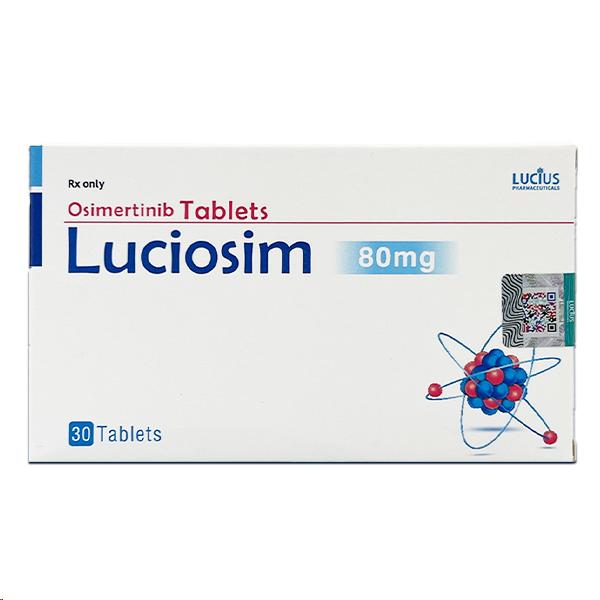
All Names: Osimertinib、Tagrisso、AZD-9291甲磺酸奥希替尼片、奥希替尼、泰瑞沙
Indications:It is applicable to adult non-small cell lung cancer patients with specific EGFR mutations (exon 19 deletion, exon 21 L858R mutation, or T790M mutation) confirmed by FDA-approved tests.
Manufacturer:LUCIUS PHARMACEUTICAL (LAOS) CO., LTD
Customs Clearance Procedure:If the customs requires the package for customs clearance, please pay the customs clearance fee according to the content of EMS SMS and customs regulations.
Osimertinib is an oral third-generation epidermal growth factor receptor tyrosine kinase inhibitor (EGFR-TKI).
1、 Indications
Axitinib is an epidermal growth factor receptor (EGFR) tyrosine kinase inhibitor, suitable for the following situations:
1. Adjuvant therapy for early EGFR mutation positive NSCLC: Used for adult patients after complete tumor resection, FDA approved testing is required to confirm the presence of EGFR exon 19 deletion or exon 21L858R mutation.
2. Locally advanced unresectable (stage III) EGFR mutation positive NSCLC: suitable for adult patients who have completed platinum based chemotherapy and radiotherapy without disease progression.
3. First line treatment for EGFR mutation positive metastatic NSCLC: monotherapy or combination therapy with pemetrexed and platinum based chemotherapy for locally advanced or metastatic patients.
4. EGFRT790M mutation positive metastatic NSCLC: Used for patients who have failed previous EGFRTKI treatment and require FDA approved testing to confirm the T790M mutation.
2、 Usage and dosage specifications
Standard dose: 80mg orally once daily, taken on an empty stomach or after meals.
Combination chemotherapy regimen: When used in combination with pemetrexed and platinum, 80mg once daily until disease progression or intolerable toxicity occurs.
Dose adjustment: Depending on the severity of adverse reactions, the dosage can be reduced to 40mg once daily. Serious adverse reactions require permanent discontinuation of medication.
Special administration method:
Dysphagia patients: Disperse the tablets in 60mL of non carbonated water and stir before drinking immediately, then rinse the container with 120-240mL of water.
Nasogastric tube administration: Disperse in 15mL of water, administer through an NG tube, and rinse the tube.
Surgical management: Stop medication for at least 5 days before scheduled surgery, and resume medication at least 2 weeks after major surgery and wound healing.
3、 Side effects and precautions
Common adverse reactions (≥ 20%):
1. Single drug therapy: leukopenia (65%), lymphopenia (64%), thrombocytopenia (53%), anemia (52%), diarrhea (47%), rash (46%), musculoskeletal pain (38%), nail toxicity (34%), stomatitis (24%), fatigue (21%).
2. Combination chemotherapy: leukopenia (88%), thrombocytopenia (85%), neutropenia (85%), rash (49%), diarrhea (43%).
Serious risk warning:
1. Interstitial lung disease/pneumonia: incidence rate of 4% (monotherapy) to 56% (use after radiotherapy and chemotherapy), mortality rate of 0.4-0.7%. If breathing difficulties occur, stop taking medication immediately for evaluation.
2. QT interval prolongation: 1.1% of patients have QTc>500ms. Avoid using other QT prolonging drugs in combination and regularly monitor electrocardiogram and electrolytes.
3. Cardiomyopathy: The incidence rate ranges from 3.8% (monotherapy) to 9% (combination chemotherapy), manifested as a decrease in LVEF. Regular monitoring of cardiac function is required during the treatment period.
4. Keratitis: incidence rate of 0.6%. Eye inflammation and changes in vision require ophthalmic evaluation.
5. Skin toxicity: including erythema multiforme, Stevens Johnson syndrome (SJS), and toxic epidermal necrolysis (TEN), requiring permanent discontinuation of medication.
6. Aplastic anemia: incidence 0.06%, may be fatal. Complete blood cell count should be monitored before and after treatment.
7. Embryotoxicity: Pregnant women should not use it, and patients of childbearing age should take effective contraceptive measures (during and 6 weeks after stopping medication for women, and 4 months after stopping medication for men).
4、 Medication for special populations
1. Children: Safety and efficacy have not been established.
2. Liver injury: No dose adjustment is required for mild to moderate cases, and there is no recommended dose for severe cases.
3. Renal injury: creatinine clearance rate ≥ 15mL/min does not require adjustment, and there is no recommended dose for end-stage renal disease.
4. Breastfeeding period: Breastfeeding is prohibited during the treatment period and within 2 weeks of discontinuation of medication.
5、 Drug interactions
1. Strong CYP3A inducers (such as rifampicin): Avoid combination use. When necessary, the dose of osimertinib should be increased to 160mg/day, and the original dose should be restored after stopping the inducer for 3 weeks.
2. BCRP/P-gp substrates (such as rosuvastatin): Axitinib may increase its exposure and adverse reactions need to be monitored.
Osimertinibinformation