- All Drug Categories
- Home
- Anti-cancer Drugs
- Healthcare Products
- Medical Information
- Statement
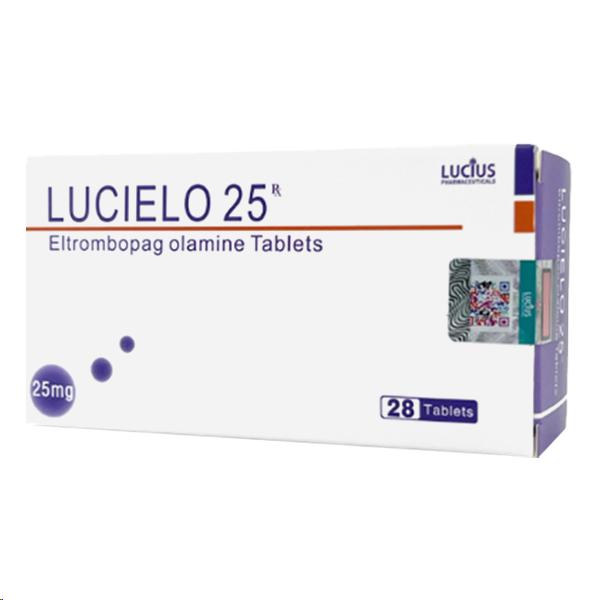
All Names: Revolade、Eltrombopag、艾曲波帕、瑞弗兰
Indications:Used for the treatment of chronic immune thrombocytopenia (ITP)
Manufacturer:LUCIUS PHARMACEUTICAL (LAOS) CO., LTD
Customs Clearance Procedure:If the customs requires the package for customs clearance, please pay the customs clearance fee according to the content of EMS SMS and customs regulations.
Summary of the package insert for Eltrombopag
1. Indications
1. Immune thrombocytopenia (ITP):
- Applicable to patients aged ≥1 year who have insufficient response to corticosteroids/immunoglobulin/splenectomy, and whose degree of thrombocytopenia and clinical condition significantly increase the risk of bleeding.
2. Chronic hepatitis C-related thrombocytopenia**:
- Used to initiate and maintain interferon therapy, only for those who cannot initiate or maintain interferon therapy due to thrombocytopenia.
3. Severe aplastic anemia (SAA):
First-line treatment: For patients aged ≥2 years, combine standard immunosuppressants (mycophenolate mofetil + cyclosporine).
Refractory SA: Patients with insufficient response to immunosuppressant treatment.
Usage restrictions:
It is contraindicated for patients with myelodysplastic syndrome (MDS) ** (which may progress to acute myeloid leukemia and increase the risk of death).
Establish the safety of combination therapy with direct antiviral drugs without interferon.
II. Usage and Dosage
General medication rules:
Take on an empty stomach or with a low-calcium diet (≤50mg calcium), and avoid taking it with medications/foods containing multivalent cations (calcium, iron, magnesium, etc.). Interval required:
Acidifiers/calcium supplements/mineral supplements: Take 2 hours before or 4 hours after taking other medications.
High calcium foods (dairy products, calcium-fortified juice, etc.): 2 hours before or 4 hours after taking medication.
Dosage according to indications:
1.ITP*
Adults and children aged ≥6 years: initial dosage of 50mg/day (25mg/day for individuals of East Asian/Southeast Asian descent or those with liver impairment).
Children aged 1-5: starting at 25mg/day.
Adjustment basis: Maintain platelet count ≥50×10⁹/L, with a maximum dose ≤75mg/day.
2. Chronic hepatitis C-related thrombocytopenia:
All patients start with 25mg/day and gradually adjust to the target platelet count (≤100mg/day).
3. First-line treatment with SAA:
≥12 years old: 150mg/day for 6 months (75mg/day for individuals of East Asian/Southeast Asian descent or those with liver damage).
Ages 6-11: 75mg/day (37.5mg/day for individuals of East Asian/Southeast Asian descent).
2-5*: 2.5mg/kg/day (1.25mg/kg/day for individuals of East Asian/Southeast Asian descent).
4. Refractory SAA:
- Start with 50mg/day (25mg/day for individuals of East Asian/Southeast Asian descent or those with liver damage), gradually adjust to ≤150mg/day, and maintain a platelet count >50×10⁹/L.
Dosage form and specification:
Tablets: 12.5mg (white), 25mg (orange), 50mg (blue), 75mg (pink).
Oral suspension**: 12.5mg/packet, 25mg/packet (needs to be prepared with water and consumed within 30 minutes).
III. Important adverse reactions
1. Hepatotoxicity (most common):
It is manifested as elevated ALT/AST levels and hyperbilirubinemia, with an incidence rate >5%.
2. Thrombosis/embolism events:
Portal vein thrombosis (with a higher risk for patients with chronic liver disease), deep vein thrombosis, pulmonary embolism, etc.
3. Cataract:
-May be new or worsen, requiring ophthalmological monitoring before and during treatment.
4. Laboratory test interference:
Drug pigments affect the detection of bilirubin (false elevation/decrease) and creatinine (false elevation). The laboratory should be informed that the patient is taking medication.
5. Other common reactions **(≥20%):
Anemia, nausea, fever, cough, fatigue, headache, diarrhea, and elevated ALT.
IV. Medication for special populations
1. Pregnant women:
Animal experiments have shown embryotoxicity, thus it is prohibited. Effective contraception is required for women of childbearing age during treatment and for at least 7 days after drug withdrawal.
2. Lactation period:
The drug can be secreted through breast milk, so breastfeeding is prohibited.
3. Children:
- TP is applicable for children aged ≥1 year, and SAA is applicable for first-line treatment in children aged ≥2 years; the safety of TP in children with refractory SAA and hepatitis C-related thrombocytopenia has not been established.
4. Patients with liver damage:
ITP/refractory SAA requires a reduced starting dose (25mg/day for Child-Pugh A/B/C); no adjustment is necessary for patients with hepatitis C.
5. East Asian/Southeast Asian descent:
-Patients with ITP and SAA need to start with a reduced dosage (e.g., for adults with ITP, 50mg → 25mg/day).
V. Precautions
1. Drug withdrawal principles:
ITP: Maximum dose of 75mg/day for 4 weeks with no effect, or platelets >400×10⁹/L for 2 weeks.
SAA: No hematological response after 16 weeks of treatment, or the emergence of new cytogenetic abnormalities.
2. Drug interactions:
Polyvalent cation preparations (antacids, calcium preparations): significantly reduce absorption, requiring interval administration.
Statins (such as rosuvastatin): May increase their plasma concentration, and it is recommended to reduce the dosage by 50%.
3. Over-treatment:- Take oral calcium/aluminum/magnesium chelating agents, monitor platelets, and contact the poison control center if necessary.
Eltrombopaginformation