- All Drug Categories
- Home
- Anti-cancer Drugs
- Healthcare Products
- Medical Information
- Statement
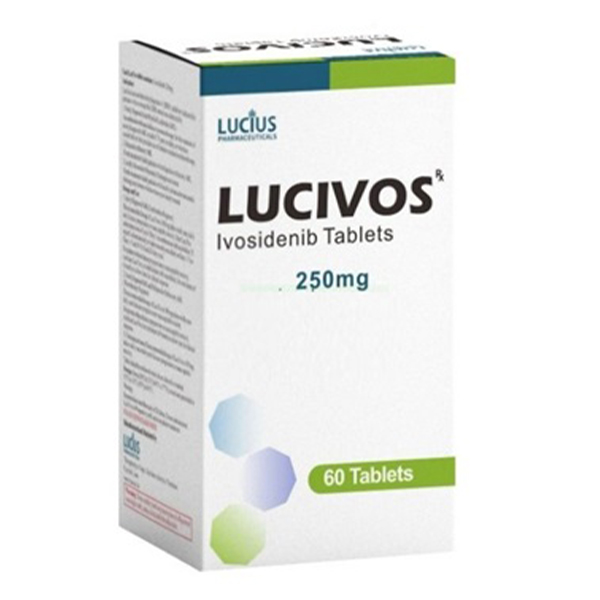
All Names: ivosidenib、Tibsovo、艾伏尼布、依维替尼
Indications:Suitable for adult patients with confirmed susceptibility to IDH1 mutations through FDA approved testing
Manufacturer:LUCIUS PHARMACEUTICAL (LAOS) CO., LTD
Customs Clearance Procedure:If the customs requires the package for customs clearance, please pay the customs clearance fee according to the content of EMS SMS and customs regulations.
Aifenib is an oral inhibitor of isocitrate dehydrogenase-1 (IDH1) that targets the activity of mutant IDH1 enzyme, reducing the production of carcinogenic metabolite 2-hydroxyglutarate (2-HG), thereby inducing malignant cell differentiation and inhibiting tumor growth.
1、 Drug name
1. Product Name: TIBSOVO
2. Common name: Ivosidenib
2、 Indications
Aifenib is suitable for treating adult patients with relapsed or refractory acute myeloid leukemia (AML) who have susceptible isocitrate dehydrogenase-1 (IDH1) mutations.
3、 Specifications and characteristics
1. Specification: 250mg.
2. Characteristic: Oral film coated tablet formulation.
4、 Main components
1. Active ingredient: Ivosidenib
2. Accessories: colloidal silica, cross-linked carboxymethyl cellulose sodium, hydroxypropyl methylcellulose acetate succinate, magnesium stearate, microcrystalline cellulose, and sodium dodecyl sulfate.
5、 Usage and dosage
1. Recommended dosage: once daily, 500mg each time, orally, can be taken with food or separately.
2. Administration method: Swallow the whole tablet, do not divide, crush or chew.
6、 Dose adjustment
1. Adjust the dosage according to the severity of adverse reactions, such as prolonged QTc interval. Suspend medication, reduce dosage to 250mg once daily, or permanently discontinue medication.
2. If co administration with potent CYP3A4 inhibitors is unavoidable, the dose of ezetimibe should be reduced to 250mg once daily and restored to 500mg once daily after stopping the inhibitor for at least 5 half lives.
7、 Medication precautions
1. Before and after meals: Ai Fu Ni Bu can be taken with or without food, but a high-fat diet should be avoided as it can significantly increase the plasma concentration of Ai Fu Ni Bu.
2. Missed dose: If missed or not taken at the regular time, it should be taken as soon as possible, unless the next dose is taken within 12 hours. In this case, the missed dose should be skipped and the next dose should be taken at the original planned time the next day.
3. Vomiting: If vomiting occurs after taking medication, there is no need for additional supplementation. The next dose should be taken according to the original plan the next day.
8、 Medication for special populations
1. Pregnant and lactating women: Avatinib may be harmful to the fetus and is contraindicated for pregnant women. Breastfeeding women should not breastfeed during treatment and for at least one month after discontinuing medication.
2. Reproductive potential women and men: It is recommended that women with reproductive potential use effective non hormonal contraceptive measures during treatment and for at least one month after discontinuation of medication; It is recommended that female partners of male patients use effective contraceptive measures during treatment and for at least one week after discontinuing medication.
3. Children: The safety and efficacy of Avanib in children have not yet been established.
4. Elderly patients: The overall safety of patients aged 65 and above is similar to that of younger patients, but the dosage needs to be adjusted according to specific circumstances.
5. Liver and kidney dysfunction: Patients with mild to moderate liver and kidney dysfunction do not need to adjust the dosage, and the recommended dosage for patients with severe liver and kidney dysfunction has not yet been determined.
9、 Adverse reactions
1. Common adverse reactions (≥ 20%): fatigue, leukocytosis, joint pain, diarrhea, dyspnea, edema, nausea, stomatitis, QTc interval prolongation, rash, fever, cough, and constipation.
2. Serious adverse reactions: including differentiation syndrome, QTc interval prolongation with apical torsion ventricular tachycardia, Guillain Barr é syndrome, etc.
10、 Contraindications
There are no absolute contraindications for ibuprofen.
11、 Drug interactions
1. CYP3A4 inhibitors: Strong or moderate CYP3A4 inhibitors can increase the plasma concentration of ezetimibe and increase the risk of QTc interval prolongation. Co administration or reduced use should be avoided.
2. CYP3A4 inducer: Strong CYP3A4 inducers can reduce the plasma concentration of ezetimibe, affecting efficacy, and should be avoided in combination.
3. Medications that prolong QTc: Avoid co administration with other drugs known to prolong QTc intervals to increase the risk of cardiac events.
12、 Storage method
Stored at 20 ° C to 25 ° C (68 ° F to 77 ° F), with a permissible temperature fluctuation range of 15 ° C to 30 ° C (59 ° F to 86 ° F).
ivosidenibinformation