- All Drug Categories
- Home
- Anti-cancer Drugs
- Healthcare Products
- Medical Information
- Statement
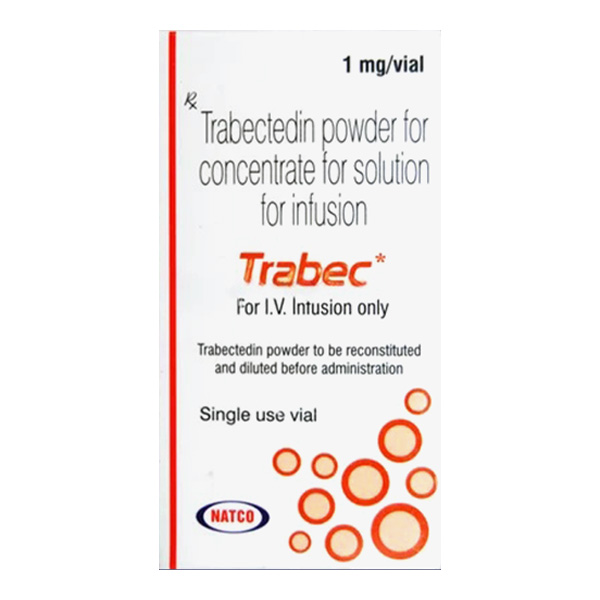
All Names: Trabectedin、Yondelis、曲贝替定、他比特定
Indications:Suitable for the treatment of unresectable or metastatic liposarcoma or leiomyosarcoma, especially in adult patients who have previously received anthracycline drug treatment.
Manufacturer:Natco,India
Customs Clearance Procedure:If the customs requires the package for customs clearance, please pay the customs clearance fee according to the content of EMS SMS and customs regulations.
Trabectedin is an anti-tumor drug with alkylating properties, which mainly binds to guanine residues in the small groove of DNA to form stable adducts, leading to bending and deformation of the DNA helix structure.
1、 Drug name
1. Common name: Qubetidine
2. Product Name: YONDELIS
3. English name: Trabectedin
2、 Indications
Suitable for the treatment of unresectable or metastatic liposarcoma or leiomyosarcoma patients who have received anthracycline containing drug regimens.
3、 Specifications and characteristics
1. Specification: Each bottle contains 1 mg of Qubetidine.
2. Appearance: Aseptic freeze-dried white to off white powder/block.
4、 Main components
1. Active ingredient: Qubetidine.
2. Accessories: Potassium dihydrogen phosphate, sucrose, phosphoric acid, and potassium hydroxide (used to adjust pH).
5、 Usage and dosage
1. Recommended dosage: 1.5 milligrams per square meter of body surface area.
2. Administration method: 24-hour intravenous infusion via central venous catheter, once every 3 weeks.
3. Duration of treatment: until disease progression or unacceptable toxicity occurs.
4. Pre medication: Inject 20mg dexamethasone intravenously 30 minutes before each infusion.
6、 Dose adjustment
1. Permanent discontinuation: Adverse reactions leading to discontinuation of medication for more than 3 weeks; After the dose has been reduced to 1.0 milligrams per square meter, it still needs to be reduced; Severe liver dysfunction occurs.
2. Dose reduction plan: first reduction to 1.2 milligrams per square meter; The second reduction is to 1.0 milligrams per square meter.
3. Indications for drug suspension: Abnormal laboratory test results or specific levels of adverse reactions, such as platelet count below 100000/microliter, neutrophil count below 1500/microliter, total bilirubin above the upper limit of normal, AST or ALT above 2.5 times the upper limit of normal, creatine phosphokinase above 2.5 times the upper limit of normal, left ventricular ejection fraction below the lower limit of normal or clinical evidence of cardiomyopathy, as well as other grade 3 or 4 non hematological adverse reactions.
7、 Medication precautions
1. Route of administration: It must be administered via central venous infusion to reduce the risk of tissue necrosis caused by extravasation.
2. Preparation and infusion: Prepare using aseptic techniques, further dilute and complete 24-hour infusion within 30 hours using an infusion set with a 0.2 micron polyether sulfone online filter.
3. Drug compatibility: Do not mix with other drugs.
4. Diet: Avoid consuming grapefruit or drinking grapefruit juice during treatment.
5. Missed administration: This medication is administered intravenously periodically and there is no concept of "missed administration". If you miss the scheduled infusion time, you should consult a doctor to determine the follow-up arrangements.
6. Vomiting: If the patient vomits after infusion, there is no need to take additional medication and the next treatment should be carried out according to the scheduled cycle. Severe vomiting should be promptly reported to the doctor for symptomatic treatment.
8、 Medication for special populations
1. Pregnant women: Based on the mechanism of action, it may cause harm to the fetus, and the risks should be communicated and effective contraception should be used.
2. Breastfeeding women: It is recommended to stop breastfeeding during the treatment period.
3. Women and men with fertility potential: Women should use effective contraception during treatment and for at least 2 months after the last dose; Men should use effective contraception during treatment and for at least 5 months after the last dose.
4. Child patients: Safety and efficacy have not yet been established.
5. Elderly patients: Insufficient clinical research data.
6. Liver injury patients: There is no recommended dose for patients with serum bilirubin above the upper limit of normal.
7. Kidney injury patients: Mild to moderate kidney injury patients do not require dose adjustment; The medication data for patients with severe kidney injury or end-stage renal disease is unknown.
9、 Adverse reactions
1. Common adverse reactions (≥ 20%): nausea, fatigue, vomiting, constipation, decreased appetite, diarrhea, peripheral edema, difficulty breathing, headache.
2. Common laboratory abnormalities at levels 3-4 (≥ 5%): neutropenia, elevated ALT, thrombocytopenia, anemia, elevated AST, elevated creatine phosphokinase.
3. Serious warning: neutropenic sepsis, rhabdomyolysis, hepatotoxicity, cardiomyopathy, tissue necrosis caused by extravasation, embryo fetal toxicity.
10、 Contraindications
Patients with known severe hypersensitivity reactions (including allergic reactions) to clopidogrel are contraindicated.
11、 Drug interactions
1. Strong CYP3A inhibitors (such as ketoconazole, clarithromycin, etc.): Avoid simultaneous use as it may increase systemic exposure to tramadol. Avoid consuming grapefruit.
2. Strong CYP3A inducers (such as rifampicin and St. John's wort): Avoid simultaneous use as it may reduce systemic exposure to tramadol.
12、 Storage method
Store in a refrigerator at 2 ° C to 8 ° C. This drug is cytotoxic and requires special handling and disposal procedures.
Trabectedininformation