- All Drug Categories
- Home
- Anti-cancer Drugs
- Healthcare Products
- Medical Information
- Statement
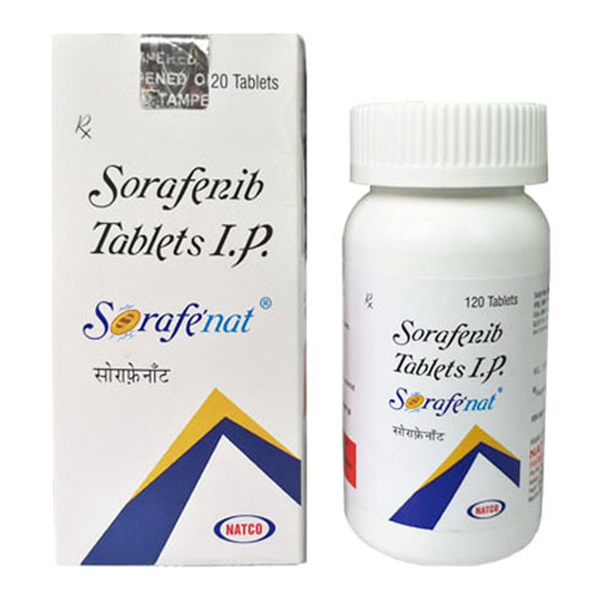
All Names: Sorafenib、Sorafenat、Soranib、Soranix、Nexavar、多吉美、索拉非尼
Indications:Patients with advanced renal cell carcinoma who cannot undergo surgery, patients with hepatocellular carcinoma who cannot undergo surgery or have distant metastasis, and patients with locally recurrent or metastatic progressive radioactive iodine resistant differentiated thyroid cancer.
Manufacturer:Natco,India
Customs Clearance Procedure:If the customs requires the package for customs clearance, please pay the customs clearance fee according to the content of EMS SMS and customs regulations.
Sorafenib is an oral multi-target, multi kinase inhibitor that was first approved by the US FDA in December 2005 for the treatment of advanced renal cell carcinoma.
1、 Drug name
1. Common name: Sorafenib
2. Product Name: NEXAVAR
2、 Indications
Sorafenib is suitable for treating the following patients:
1. Unresectable hepatocellular carcinoma.
2. Advanced renal cell carcinoma.
3. Differentiated thyroid cancer with local recurrence or metastasis, progression, and ineffective response to radioactive iodine therapy.
3、 Specifications and characteristics
1. Specification: Each tablet contains 200 milligrams of sorafenib.
2. Appearance: Tablets.
4、 Main components
1. Active ingredient: sorafenone citrate.
2. Accessories: Cross linked carboxymethyl cellulose sodium, iron oxide red, hydroxypropyl methylcellulose, magnesium stearate, microcrystalline cellulose, polyethylene glycol, sodium dodecyl sulfate, titanium dioxide.
5、 Usage and dosage
1. Recommended dosage: 400mg each time (i.e. 2 200mg tablets), taken orally twice a day.
2. Dosage: It should be taken on an empty stomach, at least 1 hour before or 2 hours after meals.
6、 Dose adjustment
1. According to the severity of adverse reactions, dosage adjustments or treatment interruptions may be necessary.
2. Dose reduction usually follows the following steps: the first dose reduction can be adjusted to 400 milligrams once daily, or the combination of morning and evening doses can be adjusted; The second dose reduction can be adjusted to 200 milligrams once daily or 400 milligrams every other day; The third dose reduction can be adjusted to 200 milligrams once daily.
7、 Medication precautions
1. Dietary impact: It should be taken on an empty stomach, as high-fat meals can reduce drug absorption.
2. Omission treatment: If a dose is missed once, there is no need to supplement it, and the regular dose should be taken at the next scheduled time. Do not take double the dosage.
3. Vomiting treatment: Not explicitly stated, consult a doctor if this condition occurs.
4. Before and after surgery: This product should be discontinued at least 10 days before the scheduled surgery. Medication should not be administered for at least 2 weeks after major surgery, and the wound must be fully healed.
5. Monitoring requirements: Blood pressure should be monitored weekly during the initial stage of treatment; Regularly monitor liver function, electrolytes, electrocardiogram, thyroid function, etc.
8、 Medication for special populations
1. Pregnant women: This product may cause harm to the fetus and is contraindicated. Men and women of childbearing age need to take effective contraceptive measures during treatment and for a certain period of time after discontinuing medication.
2. Breastfeeding period: It is recommended that women do not breastfeed during the treatment period and within 2 weeks after the last dose.
3. Children: Safety and effectiveness have not yet been established.
4. Elderly people: No special dosage adjustment is needed, but some elderly people may have higher sensitivity.
5. Liver/kidney dysfunction: Mild to moderate liver injury or any degree of kidney injury does not require dose adjustment; There is insufficient data on patients with severe liver injury.
9、 Adverse reactions
1. Very common adverse reactions include diarrhea, fatigue, infection, hair loss, hand and foot skin reactions, rash, weight loss, decreased appetite, nausea, gastrointestinal and abdominal pain, hypertension, and bleeding.
2. Serious adverse reactions may include cardiac ischemia/infarction, bleeding, hypertensive crisis, gastrointestinal perforation, severe skin toxicity, liver injury, QT interval prolongation, etc.
10、 Contraindications
1. Patients known to have severe hypersensitivity reactions to sorafenib or any component of this product are contraindicated.
2. Patients with squamous cell lung cancer are prohibited from using this product in combination with carboplatin and paclitaxel.
11、 Drug interactions
1. Avoid co administration with potent CYP3A4 inducers as they can lower sorafenib blood concentrations.
2. Avoid co administration with neomycin.
3. The combination with warfarin may increase the risk of bleeding or lead to an increase in INR, and should be closely monitored.
4. Avoid co administration with drugs known to prolong the QT interval.
5. This product may increase the blood drug concentration of drugs with UGT1A1, UGT1A9, or P-glycoprotein substrates.
12、 Storage method
1. Store at 20 ° C to 25 ° C, allowing fluctuations between 15 ° C and 30 ° C.
2. Please place it in a dry place.
Sorafenibinformation