- All Drug Categories
- Home
- Anti-cancer Drugs
- Healthcare Products
- Medical Information
- Statement
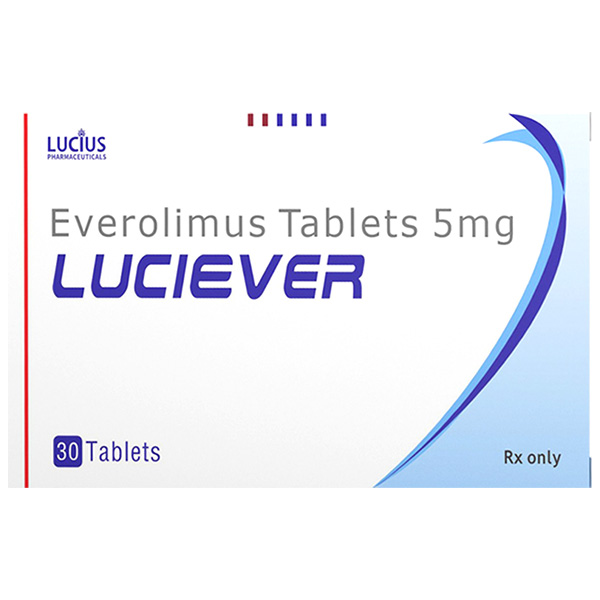
All Names: Everolimus、Afinitor、依维莫司、飞尼妥
Indications:Adult patients with advanced renal cell carcinoma who have previously failed treatment with sunitinib or sorafenib.
Manufacturer:LUCIUS PHARMACEUTICAL (LAOS) CO., LTD
Customs Clearance Procedure:If the customs requires the package for customs clearance, please pay the customs clearance fee according to the content of EMS SMS and customs regulations.
Everolimus is a mammalian inhibitor of the target protein of rapamycin (mTOR) and belongs to the class of kinase inhibitors.
1、 Drug name
Common name: Everolimus
Product Name: AFINITOR
2、 Indications
Everolimus is suitable for the following situations:
Hormone receptor positive and HER2 negative advanced breast cancer: used in combination with exemestane to treat postmenopausal women after letrozole or anastrozole treatment failure.
Neuroendocrine tumors (NET):
Pancreatic neuroendocrine tumor (PNET): Treatment for adult progressive, unresectable locally advanced or metastatic PNET.
Gastrointestinal (GI) or lung derived neuroendocrine tumors: treatment for adult progressive, well differentiated, non functional, unresectable locally advanced or metastatic NETs.
Limitation: Not applicable for the treatment of functional carcinoid tumors.
Advanced renal cell carcinoma (RCC): Adult patients who have failed treatment with sunitinib or sorafenib.
Diseases related to tuberous sclerosis (TSC):
Renal angiomyolipoma: Treatment for adult TSC related renal angiomyolipoma that does not require immediate surgery.
Subependymal giant cell astrocytoma (SEGA): SEGA in TSC patients aged 1 year and above (including adults) who require therapeutic intervention but cannot undergo curative resection.
Partial seizure epilepsy: As an adjuvant therapy, it is used to treat TSC related partial seizure epilepsy patients aged 2 years and above (including adults).
3、 Specifications and characteristics
AFINITOR (tablets): 5mg, 10mg.
4、 Main components
Active ingredient: Everolimus.
5、 Usage and dosage
General principle:
Dosage selection: Choose the recommended dosage form based on the indications, and do not mix two dosage forms to achieve the total daily dose.
Dosage: Take at the same time every day.
Relationship with food: It should always be taken with food or on an empty stomach to maintain consistency.
Recommended dosage:
Renal angiomyolipoma related to breast cancer, NET, RCC and TSC: 10mg, oral once a day.
TSC related SEGA: The initial dose is 4.5mg/m ², taken orally once a day, and the dose needs to be adjusted according to blood drug concentration.
Partial seizure epilepsy related to TSC: The initial dose is 5mg/m ², taken orally once a day, and the dose needs to be adjusted according to blood drug concentration.
Specific administration method:
AFINITOR tablets: Swallow the whole tablet and take it with a glass of water. Do not chew, crush, or pry open the pills.
6、 Dose adjustment
Based on adverse reactions: Depending on the severity (grading) of the adverse reactions, it may be necessary to suspend administration, reduce dosage (e.g. to 50% of the original dose), or permanently discontinue medication. Common adverse reactions that require dose adjustment include non infectious pneumonia, stomatitis, metabolic events such as hyperglycemia and dyslipidemia, and bone marrow suppression such as thrombocytopenia and neutropenia.
Based on liver dysfunction:
Patients with renal angiomyolipoma associated with breast cancer, NET, RCC and TSC:
Mild (Child Pugh A grade): 7.5mg/day; If intolerant, it can be reduced to 5mg/day.
Moderate (Child Pugh B grade): 5mg/day; If intolerant, it can be reduced to 2.5mg/day.
Severe (Child Pugh C grade): 2.5mg/day (weighing benefits and risks).
TSC related SEGA or partial seizure epilepsy patients: In severe liver dysfunction (Child Pugh C grade), the initial dose should be reduced to 2.5mg/m ²/day and adjusted according to blood drug concentration.
Based on drug interactions:
Co administration with P-gp and strong CYP3A4 inhibitors: Co administration should be avoided. Avoid consuming grapefruit or grapefruit juice.
Combination with P-gp and moderate CYP3A4 inhibitors: Need to reduce the dose of everolimus.
Combination with P-gp and strong CYP3A4 inducers: an increase in the dose of everolimus is required. Avoid using St. John's wort in combination.
7、 Medication precautions
Before and after meals: The daily medication should be taken consistently, either with food or on an empty stomach.
Omission: If missed, it can be taken within 6 hours after the regular medication time. If it exceeds 6 hours, skip the dose and take it at the regular time the next day. Do not take double doses to make up for missed doses.
Vomiting: The drug instructions do not explicitly mention the treatment after vomiting. If vomiting occurs shortly after taking the medication, it is recommended to consult a doctor or pharmacist to determine whether additional medication is needed based on the specific situation.
Surgery: Medication should be discontinued for at least one week before scheduled surgery. Medication should not be administered for at least 2 weeks after major surgery and until the wound has fully healed.
Vaccination: During treatment, live vaccines should be avoided and close contact with individuals who have recently received live vaccines should be avoided. It is recommended to complete the recommended childhood vaccination series before starting treatment.
8、 Medication for special populations
Pregnant women: Based on animal data and mechanism of action, this product is harmful to the fetus. Pregnant women should be informed of potential risks to the fetus. Women with fertility should take effective contraceptive measures during treatment and 8 weeks after the last dose; Male partners with fertility should take effective contraceptive measures during treatment and within 4 weeks after the last dose.
Breastfeeding women: It is recommended not to breastfeed during the treatment period and within 2 weeks after the last dose.
Children:
The safety and efficacy of TSC related SEGA for children aged 1 and above have been established.
TSC related partial seizure epilepsy: Safety and efficacy have been established for children aged 2 years and older.
The safety and efficacy of other indications (breast cancer, NET, RCC, TSC related renal angiomyolipoma) in children have not been established.
Elderly people (≥ 65 years old): among breast cancer patients, the total mortality rate and the incidence of adverse reactions leading to permanent drug withdrawal are higher in patients ≥ 65 years old, and the dose needs to be closely monitored and adjusted.
Patients with liver dysfunction: The dosage should be adjusted according to the degree of liver function damage (see "Dose Adjustment" section for details).
9、 Adverse reactions
Common adverse reactions (incidence ≥ 30%):
Breast cancer, NET, RCC patients: stomatitis, infection, rash, fatigue, diarrhea, edema, abdominal pain, nausea, fever, fatigue, cough, headache, loss of appetite.
TSC related renal angiomyolipoma patients: stomatitis.
TSC related SEGA patients: Stomatitis, respiratory infections.
TSC related partial seizure epilepsy patients: stomatitis.
Serious adverse reactions:
Non infectious pneumonia (potentially fatal), infections (including bacterial, fungal, viral, or protozoan infections, potentially fatal), severe hypersensitivity reactions, increased risk of angioedema when combined with ACEIs, stomatitis, renal failure, impaired wound healing, metabolic abnormalities (hyperglycemia, hyperlipidemia), bone marrow suppression, radiation sensitization and recall reactions, embryonic fetal toxicity.
10、 Contraindications
Patients with clinically significant hypersensitivity reactions to everolimus or other rapamycin derivatives are contraindicated.
11、 Drug interactions
Drugs that affect everolimus:
P-gp and strong CYP3A4 inhibitors (such as ketoconazole): significantly increase exposure to everolimus and should be avoided in combination.
P-gp and moderate CYP3A4 inhibitors (such as erythromycin and verapamil): Increasing exposure to everolimus requires reducing the dose.
P-gp and strong CYP3A4 inducers (such as rifampicin): significantly reduce exposure to everolimus, requiring an increase in dosage.
Drugs affected by everolimus:
Angiotensin converting enzyme inhibitors: Co administration may increase the risk of angioedema and should be avoided.
When used in combination with certain antiepileptic drugs such as carbamazepine and chlorpromazine, it may slightly increase their blood drug concentration.
12、 Storage method
Store at room temperature of 20 ° C to 25 ° C (68 ° F to 77 ° F) and allow for short distance transportation between 15 ° C to 30 ° C (59 ° F to 86 ° F).
Store in original packaging, away from light and moisture.
Please follow the special handling and disposal procedures for anti-cancer drugs.
依维莫司information